















Expert: Russia offers BRICS countries realistic vision for global energy transition
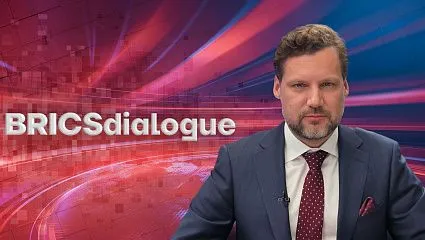
On the BRICSdialogue programme, an expert discussed scenarios for the development of the global energy sector
-
![]()
Photo source: WANAN YOSSINGKUM / iStock

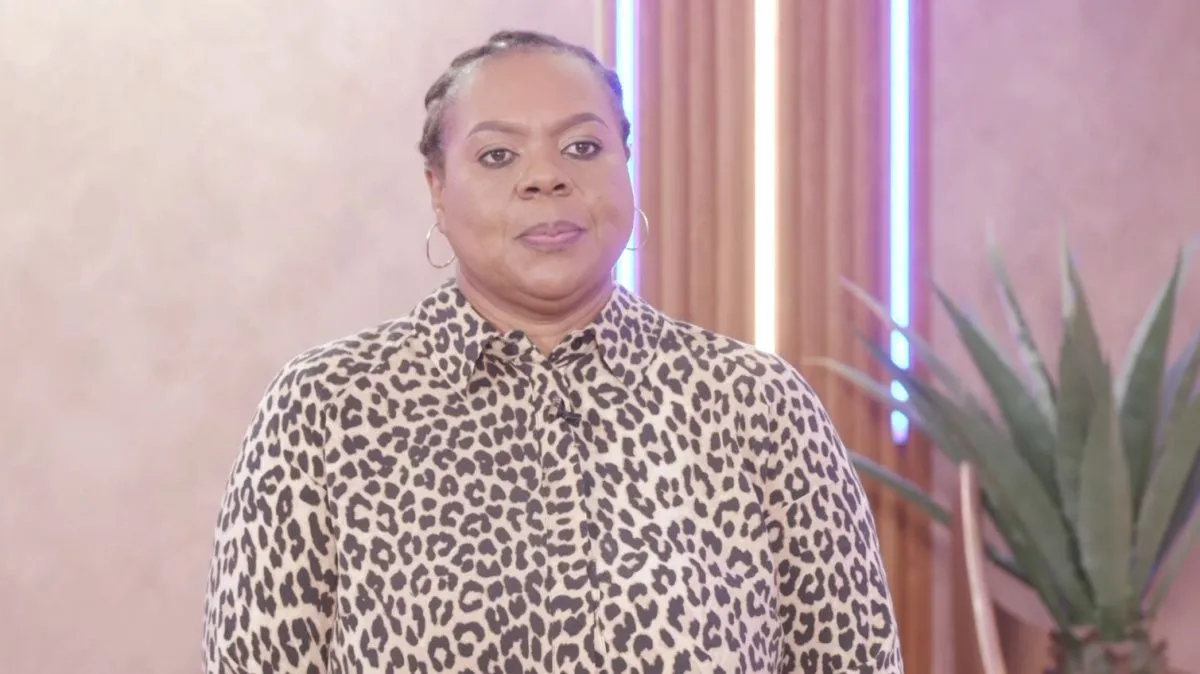
The only realistic scenario for the development of the global energy sector is a "rational technological choice", which involves retaining hydrocarbons as the primary energy source whilst simultaneously increasing the share of renewable sources. This was stated by Aleksey Kulapin, Director General of the Russian Energy Agency (REA) under the Russian Ministry of Energy, on the TV BRICS programme BRICSdialogue.
As Kulapin explained, in 2024 the REA presented its scenarios for the development of the global energy sector. The first scenario is called "business as usual", the second – "rational technological choice", and the third – "net zero".
"The most sensible scenario is the one with the telling title 'rational technological choice', in which hydrocarbons remain our key source of energy. The share of renewable energy sources is growing, which is, on the whole, logical and to be expected. At the same time, implementing this scenario makes it possible to achieve carbon neutrality," explained Kulapin.
According to REA estimates, the scenario of achieving full global carbon neutrality by 2050 (net zero) is unfeasible, as it would require annual investment of US$7–8 trillion. Furthermore, its implementation would require technologies that currently exist only as laboratory prototypes or concepts.
Kulapin noted that the member states have made climate neutrality commitments with different target dates. Brazil and South Africa are targeting 2050; Russia and China, 2060; whilst Iran and Egypt have joined the Paris Agreement under the United Nations (UN) Framework Convention on Climate Change and are therefore targeting 2100.
At the same time, all BRICS countries support the concept of a Just Energy Transition. Its main principle is technological neutrality. In other words, each country must determine for itself which technologies will enable it to achieve climate neutrality. This position was endorsed at a ministerial meeting of the group’s member states in 2024.


Joint investment projects are being implemented as part of the BRICS energy dialogue.
“Over the last few years, we have been actively cooperating with India and China in the development of energy infrastructure with regard to the transport of energy resources. We are collaborating on the construction of nuclear power stations and the development of other environmentally friendly forms of energy. As regards the tools that would enable a successful project in one country to be replicated in another, it is important to mention the common principles and approaches aimed at standardisation. [...] We are currently implementing such an approach as part of a Russian initiative to promote technologies in the fields of oil production, oil refining and petrochemicals. Voluntary standards are being developed for use at Russian enterprises, and we are inviting our BRICS colleagues to adopt these standards so that they may apply them as well. We have already had positive experience in this regard: to date, we have adopted more than 40 such documents with the United Arab Emirates,” said Kulapin.
In 2019, the BRICS Energy Research Cooperation Platform was established on Russia’s initiative, the Russian secretariat of wich is based at the REA of the Russian Ministry of Energy. In Russia alone, the platform brings together over a hundred experts from academia, the energy sector and universities. Annual reviews of the energy sectors of various countries and thematic studies are published. Russia oversees two areas: technological cooperation and human resource development. According to the expert, the first study on human resource issues was published in 2023, and work is set to continue this year, taking into account new members of the group.
The BRICS Youth Energy Agency operates under the platform, where young experts draw up their own forecast for the development of the global energy sector each year. Also, on Russia’s initiative, a youth engineering championship is held, at which specialists from BRICS countries present their projects.
Work is also underway to develop women’s leadership in the energy sector across the group’s member countries – this initiative was launched by South Africa and supported by Russia.
-
![]()

 Society12.09.26Xi Jinping: China and India should view their bilateral relations from perspective of long-term development
 -
![]()
 Society12.09.26BRICS leaders adopt New Delhi Declaration at 18th Summit
 -
![]() Society12.09.26Narendra Modi proposes reforming global governance architecture and creating BRICS continuity mechanism
Society12.09.26Narendra Modi proposes reforming global governance architecture and creating BRICS continuity mechanism -
![]() Society12.09.2618th BRICS Summit begins in India
Society12.09.2618th BRICS Summit begins in India -
![]() Society11.09.26Russian Deputy Foreign Minister: BRICS Summit in India to consolidate group's role as flagship of multilateralism
Society11.09.26Russian Deputy Foreign Minister: BRICS Summit in India to consolidate group's role as flagship of multilateralism -
![]() Society11.09.26Broadcast of BRICS Summit in India to be available to TV BRICS website users
Society11.09.26Broadcast of BRICS Summit in India to be available to TV BRICS website users











-
![Ashok Mondal]()
 Ashok MondalNID Director"Signing this Memorandum of Understanding between the National Institute of Design (NID) and TV BRICS marks a pivotal milestone in advancing design diplomacy across the BRICS media space. This moment is especially significant as India hosts the 18th BRICS Summit, following India’s assumption of the BRICS chairship under the visionary leadership of Prime Minister Shri Narendra Modi. The partnership directly embodies his call to elevate Indian design standards through 'Design in India, Design for the World'. Through the global reach and broadcast capabilities of TV BRICS, we are excited to showcase the extraordinary visual storytelling, films, and design research of NID’s Film and Video Communication students to an international audience, while also welcoming and screening film works from BRICS network countries at NID Ahmedabad. This reciprocal exchange strengthens our shared commitment to educational, cultural, and artistic collaboration, fostering sustainable connections among global creative communities. NID Ahmedabad looks forward to leveraging this partnership to deepen cross-cultural dialogue, build international expert networks, and unlock transformative opportunities for filmmakers, researchers, and faculty across member nations"
 -
![Vladimir Putin]() Vladimir PutinPresident of Russia"We are developing mutual trade, which is growing; it increased by over 12 per cent last year. We have a joint commission working in this sphere. Our focus is on agriculture, shipbuilding, information technology and energy, including nuclear power. We have signed a free trade agreement between the Eurasian Economic Union and Indonesia. Jakarta is our reliable and old friend within ASEAN. We are working together at all international platforms, including the UN"
Vladimir PutinPresident of Russia"We are developing mutual trade, which is growing; it increased by over 12 per cent last year. We have a joint commission working in this sphere. Our focus is on agriculture, shipbuilding, information technology and energy, including nuclear power. We have signed a free trade agreement between the Eurasian Economic Union and Indonesia. Jakarta is our reliable and old friend within ASEAN. We are working together at all international platforms, including the UN" -
![Vladimir Putin]() Vladimir PutinPresident of Russia"More and more Iranian students are choosing Russian education. We are very pleased about this. A great many future doctors are studying in Russia. In the 2025–2026 academic year, the number of Iranian students in Russia approached 10,000, with 802 of them studying at the expense of the Russian state budget"
Vladimir PutinPresident of Russia"More and more Iranian students are choosing Russian education. We are very pleased about this. A great many future doctors are studying in Russia. In the 2025–2026 academic year, the number of Iranian students in Russia approached 10,000, with 802 of them studying at the expense of the Russian state budget" -
![Xi Jinping]() Xi JinpingPresident of the People’s Republic of China"The foundation of our bilateral relations will only grow stronger, and we will confidently move forward to a better future. […] The striving of nations on our planet for peace, development, cooperation and mutual benefit remains unchanged. The vital mission of the Shanghai Cooperation Organisation is to maintain stability and promote the development of our region"
Xi JinpingPresident of the People’s Republic of China"The foundation of our bilateral relations will only grow stronger, and we will confidently move forward to a better future. […] The striving of nations on our planet for peace, development, cooperation and mutual benefit remains unchanged. The vital mission of the Shanghai Cooperation Organisation is to maintain stability and promote the development of our region" -
![Alisher Salomov]() Alisher SalomovAdviser to the Chairman of the National Committee for Ecology and Climate Change of the Republic of Uzbekistan"First and foremost, I would like to highlight the importance of this Central Asia–Russia initiative, because environmental problems know no borders, and only a shared understanding of these problems and the search for joint solutions can deliver positive results"
Alisher SalomovAdviser to the Chairman of the National Committee for Ecology and Climate Change of the Republic of Uzbekistan"First and foremost, I would like to highlight the importance of this Central Asia–Russia initiative, because environmental problems know no borders, and only a shared understanding of these problems and the search for joint solutions can deliver positive results"