
















Archaeologists uncover architectural elements of ancient temple in Egypt
The find in the Bahariya Oasis dates back approximately 2,500 years

New sections of a temple dating back to the 26th Dynasty, which ruled from 664 to 525 BC, have been discovered on the site of the Al-Qasr Al-Qadim temple in the Bahariya Oasis in western Egypt. This was reported by Sada El-Balad, a partner of TV BRICS, citing the Egyptian Ministry of Tourism and Antiquities.
Archaeologists have found the remains of a structure built of sandstone, as well as a number of stone blocks bearing the names and titles of Pharaoh Psamtik I. Furthermore, artefacts have been discovered that will help to reconstruct the temple’s architectural appearance more accurately and trace its history.
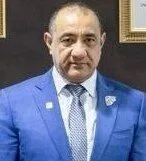
According to Hisham El-Leithy, Secretary-General of Egypt’s Supreme Council of Antiquities, the new discoveries confirm the significant historical and religious importance of the temple complex, which served as one of the region’s administrative centres during various periods.
El-Leithy added that the finds bear witness to the country’s unique archaeological heritage, which still holds many undiscovered treasures. He highlighted the high level of professionalism among Egyptian archaeologists, whose work plays a vital role in the development of cultural tourism.
Research into the temple complex in the Bahariya Oasis has been ongoing since 2014. Among the most significant discoveries are the main collonaded hall with 16 sandstone columns and several adjoining rooms and sanctuaries, as well as fragments of reliefs and hieroglyphic inscriptions bearing the names of ancient Egyptian deities, foremost among them Amun-Ra, Amunet and Khonsu.
Archaeological finds in other BRICS countries and partner nations are also attracting media attention.
A 12th-century birch-bark letter was discovered during archaeological excavations in Veliky Novgorod. The artefact was found by second-year student Viktoriya Tyupaeva and Kirill Khudin, an associate professor at the Faculty of History and a Candidate of Historical Sciences. The find has now been handed over to specialists for detailed study and deciphering of the text. This was reported on the website of the Russian State University for the Humanities (RSUH), a partner of TV BRICS.
Fragments of an ancient building with a stove and other historical artefacts were discovered by chance during excavation work in the Belarusian city of Pinsk. Among the artefacts are fragments of broken pottery and metal objects dating from the second half of the 17th century, reports BelTA, a partner of TV BRICS.
According to Xinhua News Agency, a partner of TV BRICS, a team of Chinese and Uzbek archaeologists has uncovered a section of preserved walls at the Kova settlement in the Fergana Valley in Uzbekistan. The find dates from the 3rd century BC to the 10th century AD. The discovery is of great significance for the study of the history of the Silk Road and cultural ties between the East and the West.
-
![]()

 Society12.09.26Xi Jinping: China and India should view their bilateral relations from perspective of long-term development
 -
![]()
 Society12.09.26BRICS leaders adopt New Delhi Declaration at 18th Summit
 -
![]() Society12.09.26Narendra Modi proposes reforming global governance architecture and creating BRICS continuity mechanism
Society12.09.26Narendra Modi proposes reforming global governance architecture and creating BRICS continuity mechanism -
![]() Society12.09.2618th BRICS Summit begins in India
Society12.09.2618th BRICS Summit begins in India -
![]() Society11.09.26Russian Deputy Foreign Minister: BRICS Summit in India to consolidate group's role as flagship of multilateralism
Society11.09.26Russian Deputy Foreign Minister: BRICS Summit in India to consolidate group's role as flagship of multilateralism -
![]() Society11.09.26Broadcast of BRICS Summit in India to be available to TV BRICS website users
Society11.09.26Broadcast of BRICS Summit in India to be available to TV BRICS website users












-
![Ashok Mondal]()
 Ashok MondalNID Director"Signing this Memorandum of Understanding between the National Institute of Design (NID) and TV BRICS marks a pivotal milestone in advancing design diplomacy across the BRICS media space. This moment is especially significant as India hosts the 18th BRICS Summit, following India’s assumption of the BRICS chairship under the visionary leadership of Prime Minister Shri Narendra Modi. The partnership directly embodies his call to elevate Indian design standards through 'Design in India, Design for the World'. Through the global reach and broadcast capabilities of TV BRICS, we are excited to showcase the extraordinary visual storytelling, films, and design research of NID’s Film and Video Communication students to an international audience, while also welcoming and screening film works from BRICS network countries at NID Ahmedabad. This reciprocal exchange strengthens our shared commitment to educational, cultural, and artistic collaboration, fostering sustainable connections among global creative communities. NID Ahmedabad looks forward to leveraging this partnership to deepen cross-cultural dialogue, build international expert networks, and unlock transformative opportunities for filmmakers, researchers, and faculty across member nations"
 -
![Vladimir Putin]() Vladimir PutinPresident of Russia"We are developing mutual trade, which is growing; it increased by over 12 per cent last year. We have a joint commission working in this sphere. Our focus is on agriculture, shipbuilding, information technology and energy, including nuclear power. We have signed a free trade agreement between the Eurasian Economic Union and Indonesia. Jakarta is our reliable and old friend within ASEAN. We are working together at all international platforms, including the UN"
Vladimir PutinPresident of Russia"We are developing mutual trade, which is growing; it increased by over 12 per cent last year. We have a joint commission working in this sphere. Our focus is on agriculture, shipbuilding, information technology and energy, including nuclear power. We have signed a free trade agreement between the Eurasian Economic Union and Indonesia. Jakarta is our reliable and old friend within ASEAN. We are working together at all international platforms, including the UN" -
![Vladimir Putin]() Vladimir PutinPresident of Russia"More and more Iranian students are choosing Russian education. We are very pleased about this. A great many future doctors are studying in Russia. In the 2025–2026 academic year, the number of Iranian students in Russia approached 10,000, with 802 of them studying at the expense of the Russian state budget"
Vladimir PutinPresident of Russia"More and more Iranian students are choosing Russian education. We are very pleased about this. A great many future doctors are studying in Russia. In the 2025–2026 academic year, the number of Iranian students in Russia approached 10,000, with 802 of them studying at the expense of the Russian state budget" -
![Xi Jinping]() Xi JinpingPresident of the People’s Republic of China"The foundation of our bilateral relations will only grow stronger, and we will confidently move forward to a better future. […] The striving of nations on our planet for peace, development, cooperation and mutual benefit remains unchanged. The vital mission of the Shanghai Cooperation Organisation is to maintain stability and promote the development of our region"
Xi JinpingPresident of the People’s Republic of China"The foundation of our bilateral relations will only grow stronger, and we will confidently move forward to a better future. […] The striving of nations on our planet for peace, development, cooperation and mutual benefit remains unchanged. The vital mission of the Shanghai Cooperation Organisation is to maintain stability and promote the development of our region" -
![Alisher Salomov]() Alisher SalomovAdviser to the Chairman of the National Committee for Ecology and Climate Change of the Republic of Uzbekistan"First and foremost, I would like to highlight the importance of this Central Asia–Russia initiative, because environmental problems know no borders, and only a shared understanding of these problems and the search for joint solutions can deliver positive results"
Alisher SalomovAdviser to the Chairman of the National Committee for Ecology and Climate Change of the Republic of Uzbekistan"First and foremost, I would like to highlight the importance of this Central Asia–Russia initiative, because environmental problems know no borders, and only a shared understanding of these problems and the search for joint solutions can deliver positive results"