
















Iran and Russia advance strategic economic partnership at 19th Joint Commission meeting
New monitoring system and expanded sectoral cooperation signal deeper Tehran–Moscow integration
-
![]()
Photo source: metamorworks / iStock

Iran and Russia have moved to consolidate their long-term strategic partnership as senior officials convened in Tehran for the 19th session of the Iran–Russia Joint Economic Committee, aimed at accelerating bilateral projects and formalising new cooperation agreements, as reported by Tehran Times, a partner of TV BRICS.
Seyed Ali-Mohammad Mousavi, Iran’s Deputy Oil Minister for International Affairs and Commerce, described the meeting as a key opportunity to record progress achieved by expert delegations and to finalise a new joint document with clearly defined timelines and responsibilities.
He emphasised that relations between Iran and Russia are grounded in mutual respect, shared interests and aligned positions on regional and international developments. In recent years, cooperation has expanded across energy, trade, transport, science, and technology.
Khalimat Budunova, the Russian secretary of the joint committee, characterised Iran as a strategic partner and stressed both countries’ determination to translate political agreements into practical, outcome-orientated projects. She noted that the commission provides an effective institutional platform to monitor progress and ensure implementation through coordinated working groups.
According to officials, more than 75 per cent of the 193 clauses agreed upon during the 18th committee meeting – held in Moscow in May – have already been implemented. Sixteen specialised expert groups are now holding discussions over two days, followed by meetings of commission heads and a plenary session.
For the first time, the commission has introduced a dedicated monitoring mechanism to track implementation of resolutions and agreements. Launched on a pilot basis, the system is designed to improve accountability and streamline preparation of future memoranda, including groundwork for the 19th cooperation framework.
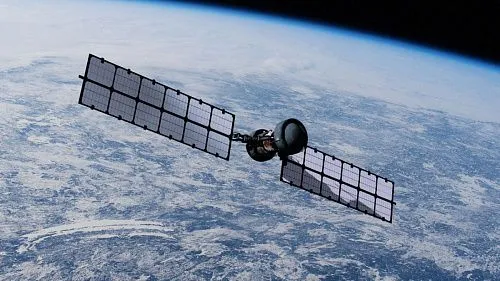
Discussions at Tehran’s International Conference Center span a broad agenda, including completion of the International North–South Transit Corridor (INSTC), gas transfers from Russia to Iran, and expanded collaboration in space industries, peaceful nuclear energy, finance and banking, customs, industry and mining, agriculture, healthcare, culture, tourism, and advanced technologies.
Officials described the session as a pivotal moment to deepen strategic ties and open a new phase in bilateral economic relations. They also highlighted the importance of coordinated action among Iranian institutions to accelerate priority projects and ensure tangible outcomes.
Finalised cooperation documents are expected to be signed at the conclusion of the meeting.
-
![]()
 Economy20.09.26Brazil introduces tax incentives to attract investment in data centres and digital infrastructure
 -
![]()
 Economy19.09.26Oman strengthens trade links as non-oil exports rise 11.4%
 -
![]()

 Economy18.09.26Iran reports US$60 billion in trade with BRICS countries and plans to expand economic ties
 -
![]()
 Economy18.09.26Textile exports from India rise by 16.1% in August
 -
![]()
 Economy17.09.26Authorities: Gold becomes Ethiopia's key source of export revenue
 -
![]()
 Economy16.09.26South Africa to receive US$1 billion from New Development Bank for urban modernisation

















-
![Ashok Mondal]()
 Ashok MondalNID Director"Signing this Memorandum of Understanding between the National Institute of Design (NID) and TV BRICS marks a pivotal milestone in advancing design diplomacy across the BRICS media space. This moment is especially significant as India hosts the 18th BRICS Summit, following India’s assumption of the BRICS chairship under the visionary leadership of Prime Minister Shri Narendra Modi. The partnership directly embodies his call to elevate Indian design standards through 'Design in India, Design for the World'. Through the global reach and broadcast capabilities of TV BRICS, we are excited to showcase the extraordinary visual storytelling, films, and design research of NID’s Film and Video Communication students to an international audience, while also welcoming and screening film works from BRICS network countries at NID Ahmedabad. This reciprocal exchange strengthens our shared commitment to educational, cultural, and artistic collaboration, fostering sustainable connections among global creative communities. NID Ahmedabad looks forward to leveraging this partnership to deepen cross-cultural dialogue, build international expert networks, and unlock transformative opportunities for filmmakers, researchers, and faculty across member nations"
 -
![Vladimir Putin]() Vladimir PutinPresident of Russia"We are developing mutual trade, which is growing; it increased by over 12 per cent last year. We have a joint commission working in this sphere. Our focus is on agriculture, shipbuilding, information technology and energy, including nuclear power. We have signed a free trade agreement between the Eurasian Economic Union and Indonesia. Jakarta is our reliable and old friend within ASEAN. We are working together at all international platforms, including the UN"
Vladimir PutinPresident of Russia"We are developing mutual trade, which is growing; it increased by over 12 per cent last year. We have a joint commission working in this sphere. Our focus is on agriculture, shipbuilding, information technology and energy, including nuclear power. We have signed a free trade agreement between the Eurasian Economic Union and Indonesia. Jakarta is our reliable and old friend within ASEAN. We are working together at all international platforms, including the UN" -
![Joao Paulo Capobianco]() Joao Paulo CapobiancoBrazilian Minister of the Environment and Climate Change"The BRICS countries have a very high level of responsibility because they share an important part of the world's biodiversity, landscapes, populations, food production and water resources. So, we have an opportunity to lead by example. We have our development bank, which can demonstrate and develop new ways of financing programmes. We can reduce the risks for private capital to invest in restoration and efforts to combat desertification"
Joao Paulo CapobiancoBrazilian Minister of the Environment and Climate Change"The BRICS countries have a very high level of responsibility because they share an important part of the world's biodiversity, landscapes, populations, food production and water resources. So, we have an opportunity to lead by example. We have our development bank, which can demonstrate and develop new ways of financing programmes. We can reduce the risks for private capital to invest in restoration and efforts to combat desertification" -
![Dilma Rousseff]() Dilma RousseffPresident of the New Development Bank"India’s BRICS Presidency this year gives special significance to our discussion. NDB stands ready to be a trusted partner in turning commitments on sustainability, clean energy, smart and resilient infrastructure into concrete results on the ground. […] For NDB, mobilising private capital is a strategic imperative. Created by the BRICS founding members, NDB is a bank of the Global South, for the Global South, mandated to mobilise resources for infrastructure and sustainable development"
Dilma RousseffPresident of the New Development Bank"India’s BRICS Presidency this year gives special significance to our discussion. NDB stands ready to be a trusted partner in turning commitments on sustainability, clean energy, smart and resilient infrastructure into concrete results on the ground. […] For NDB, mobilising private capital is a strategic imperative. Created by the BRICS founding members, NDB is a bank of the Global South, for the Global South, mandated to mobilise resources for infrastructure and sustainable development" -
![Sihasak Phuangketkeow]() Sihasak PhuangketkeowDeputy Prime Minister and Minister of Foreign Affairs of Thailand"BRICS can play a very important role in maintaining the free flow of trade and investment. The group can also be a vehicle for all of us to engage and to look at economic opportunities"
Sihasak PhuangketkeowDeputy Prime Minister and Minister of Foreign Affairs of Thailand"BRICS can play a very important role in maintaining the free flow of trade and investment. The group can also be a vehicle for all of us to engage and to look at economic opportunities"