















Expert: China's experience in digital infrastructure, e-commerce and skills development can support BRICS economic transformation
He identified infrastructure development and cybersecurity as key conditions for digital growth
-
![]()
Photo source: Igor Kutyaev / iStock

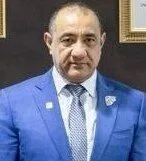
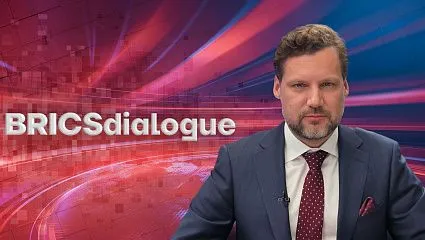
China can support BRICS countries in their digital transformation in three key areas: infrastructure, e-commerce platforms and innovation coordination. This was stated by Xie Hongjun, Researcher at the BRICS Research Centre at the University of International Business and Economics of China, in the TV BRICS programme BRICSdialogue.
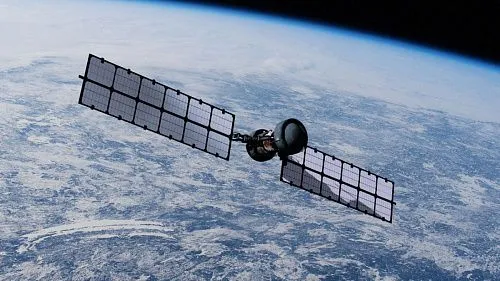
According to Xie Hongjun, over the past decade China has made significant progress in developing 5G networks, cloud computing and data centres. Today, the country has more than 5 million 5G base stations, which, according to the expert, makes China's network the largest in the world.


The expert also identified digital skills development as another area of cooperation. He explained that China is expanding higher education programmes in digital fields, encouraging closer cooperation between universities and industry, and developing lifelong learning systems to retrain existing specialists. He noted that the number of digitally skilled workers in China currently exceeds 300 million people, and demand for such professionals continues to grow.
"China can share two important lessons with BRICS countries. The first is interdisciplinary training. Future digital talent should understand technology, economics, management, and international rules at the same time. The second is inclusive access. Digital education should not only serve people in major cities or in top institutions. It should reach everyone," the expert said.
Answering a question about the main priority for accelerating the digitalisation of BRICS economies, Xie Hongjun named digital infrastructure and cybersecurity. Without a strong foundation and user trust, he explained, it is impossible to develop artificial intelligence, big data and digital trade – areas that serve as the basis for everything else.
-
![]()
 Economy12.09.26Kyrgyzstan records fastest economic growth in Central Asia
 -
![]()

 Economy12.09.26Finance to be key topic at BRICS Summit as countries discuss payment system integration and trade in national currencies
 -
![]()

 Economy12.09.26Iran and Vietnam seek to expand scientific and academic cooperation
 -
![]()

 Economy12.09.26Russian President meets with head of New Development Bank in New Delhi
 -
![]()
 Economy12.09.26Expert: BRICS strengthens Global South’s role in global economy
 -
![]() Economy12.09.26Indian Prime Minister Narendra Modi holds series of bilateral talks
Economy12.09.26Indian Prime Minister Narendra Modi holds series of bilateral talks








-
![Ashok Mondal]()
 Ashok MondalNID Director"Signing this Memorandum of Understanding between the National Institute of Design (NID) and TV BRICS marks a pivotal milestone in advancing design diplomacy across the BRICS media space. This moment is especially significant as India hosts the 18th BRICS Summit, following India’s assumption of the BRICS chairship under the visionary leadership of Prime Minister Shri Narendra Modi. The partnership directly embodies his call to elevate Indian design standards through 'Design in India, Design for the World'. Through the global reach and broadcast capabilities of TV BRICS, we are excited to showcase the extraordinary visual storytelling, films, and design research of NID’s Film and Video Communication students to an international audience, while also welcoming and screening film works from BRICS network countries at NID Ahmedabad. This reciprocal exchange strengthens our shared commitment to educational, cultural, and artistic collaboration, fostering sustainable connections among global creative communities. NID Ahmedabad looks forward to leveraging this partnership to deepen cross-cultural dialogue, build international expert networks, and unlock transformative opportunities for filmmakers, researchers, and faculty across member nations"
 -
![Vladimir Putin]() Vladimir PutinPresident of Russia"We are developing mutual trade, which is growing; it increased by over 12 per cent last year. We have a joint commission working in this sphere. Our focus is on agriculture, shipbuilding, information technology and energy, including nuclear power. We have signed a free trade agreement between the Eurasian Economic Union and Indonesia. Jakarta is our reliable and old friend within ASEAN. We are working together at all international platforms, including the UN"
Vladimir PutinPresident of Russia"We are developing mutual trade, which is growing; it increased by over 12 per cent last year. We have a joint commission working in this sphere. Our focus is on agriculture, shipbuilding, information technology and energy, including nuclear power. We have signed a free trade agreement between the Eurasian Economic Union and Indonesia. Jakarta is our reliable and old friend within ASEAN. We are working together at all international platforms, including the UN" -
![Vladimir Putin]() Vladimir PutinPresident of Russia"More and more Iranian students are choosing Russian education. We are very pleased about this. A great many future doctors are studying in Russia. In the 2025–2026 academic year, the number of Iranian students in Russia approached 10,000, with 802 of them studying at the expense of the Russian state budget"
Vladimir PutinPresident of Russia"More and more Iranian students are choosing Russian education. We are very pleased about this. A great many future doctors are studying in Russia. In the 2025–2026 academic year, the number of Iranian students in Russia approached 10,000, with 802 of them studying at the expense of the Russian state budget" -
![Xi Jinping]() Xi JinpingPresident of the People’s Republic of China"The foundation of our bilateral relations will only grow stronger, and we will confidently move forward to a better future. […] The striving of nations on our planet for peace, development, cooperation and mutual benefit remains unchanged. The vital mission of the Shanghai Cooperation Organisation is to maintain stability and promote the development of our region"
Xi JinpingPresident of the People’s Republic of China"The foundation of our bilateral relations will only grow stronger, and we will confidently move forward to a better future. […] The striving of nations on our planet for peace, development, cooperation and mutual benefit remains unchanged. The vital mission of the Shanghai Cooperation Organisation is to maintain stability and promote the development of our region" -
![Alisher Salomov]() Alisher SalomovAdviser to the Chairman of the National Committee for Ecology and Climate Change of the Republic of Uzbekistan"First and foremost, I would like to highlight the importance of this Central Asia–Russia initiative, because environmental problems know no borders, and only a shared understanding of these problems and the search for joint solutions can deliver positive results"
Alisher SalomovAdviser to the Chairman of the National Committee for Ecology and Climate Change of the Republic of Uzbekistan"First and foremost, I would like to highlight the importance of this Central Asia–Russia initiative, because environmental problems know no borders, and only a shared understanding of these problems and the search for joint solutions can deliver positive results"