
















UN Global Business Forum participants discuss role of private sector in achieving Sustainable Development Goals
The agenda focused on industrial development and the implementation of the Pact for the Future
-
![]()
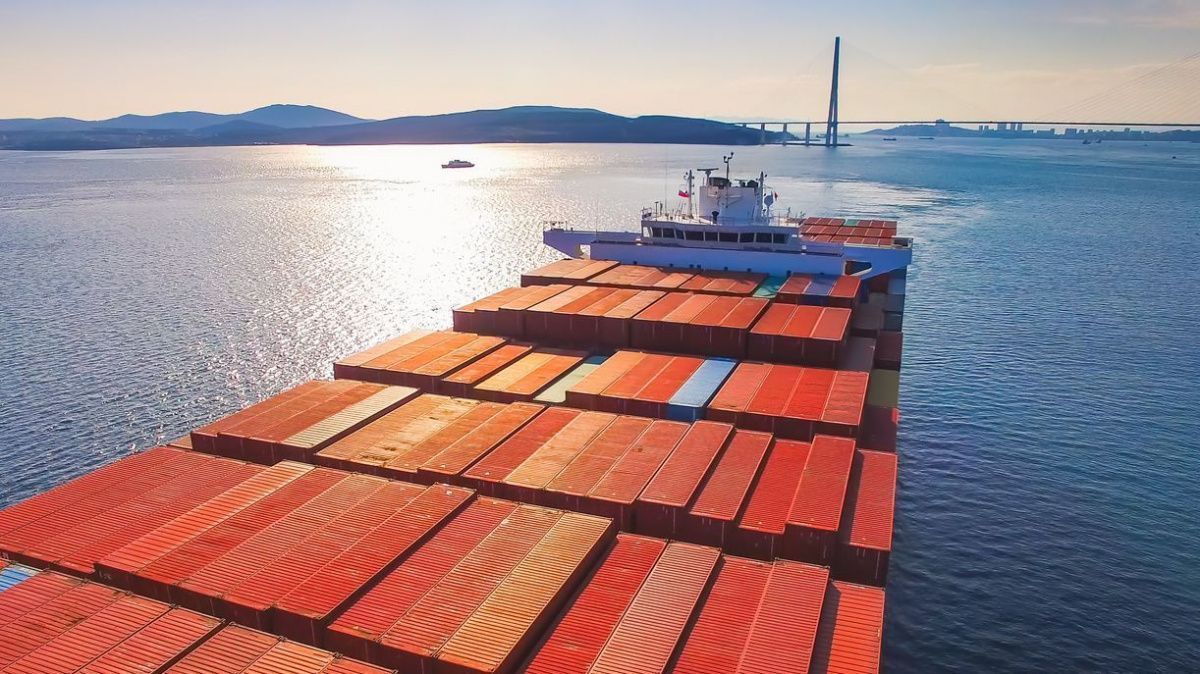
Photo source: jacoblund / iStock

The United Nations (UN) Global Business Forum on the Sustainable Development Goals (SDGs) concluded on 14 July 2026. This year, it was held under the theme "Business and the Real Economy: Delivering Sustainable Development in a Changing Global Context". Business leaders, government representatives, and international organisations discussed the contribution of the private sector to accelerating progress towards the Sustainable Development Goals.
Participants focused on Goal 9, dedicated to industry, innovation and infrastructure, as well as the implementation of action 55(c) of the Pact for the Future. The document was adopted by UN Member States at the Summit of the Future in 2024 and outlined directions for modernising global governance and accelerating the implementation of the 2030 Agenda for Sustainable Development. Action 55(c), in particular, provides for strengthening cooperation with the private sector and increasing business accountability.
The business forum programme included two thematic discussions. The first focused on key trends shaping modern industrial policy, including digitalisation, the development of artificial intelligence, the green transition and the transformation of global supply chains. During the second session, participants examined practical aspects of implementing action 55(c) at the national level, presenting examples of cooperation between government bodies and businesses, including in the preparation of Voluntary National Reviews (VNRs).
Opening the forum, CEO and Executive Director of the United Nations Global Compact Sanda Ojiambo noted that timely investments in sustainable development can not only reduce long-term economic costs but also become a driver of global economic growth and energy transformation.
"In the energy sphere, we know that 90 per cent of new renewables are cheaper than the lowest-cost fossil fuel alternatives, and clean energy investment is attracting almost twice as much as fossil fuel investment, building energy security, and providing close to 30 per cent and growing of global power," she said.
In turn, Chair of the Board of the UN Global Compact Network in Central Asia Umut Shayakhmetova highlighted the importance of regional cooperation in achieving the Sustainable Development Goals.
"Partnership is no longer an option; it is the only path forward. [...] When Central Asia moves forward together, every nation in the region becomes stronger. For many years, Central Asia was viewed as a bridge between continents. Today, it's becoming something far more important, a bridge between global ambition and practical action. [...] We welcome the establishment of the UN Regional Centre for the Sustainable Development Goals [...] in Almaty, an initiative first proposed by the President of Kazakhstan, Kassym-Jomart Tokayev, and now becoming an important platform for governments, businesses, the United Nations, and the development partners to transform shared ambition into measurable impact," Shayakhmetova said.
Fatou Haidara, Deputy to the Director General and Managing Director of the Directorate of Global Partnerships and External Relations (UNIDO), said that private business has already become a major driving force behind modern industrial transformations.
"When we think about the future of industrialisation, we can say that the private sector is already at the centre of ongoing transformations – from the green transition to the restructuring of global supply chains. Therefore, we seek to work together with the private sector to create solutions, markets and production chains that will shape the future of sustainable industrialisation. [...] The first example directly related to today's discussion is our Global Alliance on Artificial Intelligence for Industry and Manufacturing. This digital initiative brings together industry leaders, governments, academia and innovators to integrate AI into manufacturing processes and bridge the digital divide. Another example is our Centres of Excellence in China, Belarus [...] and other countries. These platforms serve as a link between global technology providers and local SMEs, helping to develop skills and accelerate the adoption of artificial intelligence," Haidara noted.
President and CEO of the African Finance Corporation (AFC) Samaila Zubairu said that the continent has reached a point where it needs to move from discussing financing needs to creating competitive economies.
"Prosperity is intentional. It is built by aligning capital, infrastructure, industry, and markets to create value where people live. Africa, future generations will inherit and inhabit the Africa we choose to build today. [...] Across Africa we are moving from extraction to transformation. We are helping build the world's largest refinery and fertiliser platforms in Nigeria, producing low-carbon copper anodes in the Democratic Republic of Congo and developing strategic transport corridors like the Lubito corridor that connects mines to markets and countries to opportunities," he added.
The speeches by forum participants were complemented by assessments from representatives of the technology sector, who highlighted the importance of digital solutions in advancing the sustainable development agenda.
"The agenda of the SDG Global Business Forum reflects an important trend: sustainable development is increasingly assessed not through declarations but through real changes in the economy. For industry, logistics and retail, this means accurate resource accounting, operational traceability, reduced losses and increased productivity. Digital identification is becoming the foundation of these changes – a basic infrastructure without which it is difficult today to imagine managed production, warehouse and retail processes. Barcodes, QR codes and automated data collection tools connect goods, equipment and operations with corporate information systems. This data becomes the basis for automation, analytics and the use of artificial intelligence. Therefore, the practical contribution of business to achieving sustainable development goals is largely determined by its ability to implement technologies with clear and measurable results. Solutions for automatic identification, data collection and robotics are already in demand in international markets, as they help address specific practical challenges: reducing errors, improving process management and ensuring more efficient use of resources," said Valery Sherman, Technical Director of MEFERI.
The outcomes of the forum are expected to be used in preparing subsequent intergovernmental events in 2026, including the Private Sector Forum and the United Nations Water Conference.
The SDG Global Business Forum was held as a special event within the framework of the High-Level Political Forum on Sustainable Development (HLPF). Its theme in 2026 is "Transformative, Equitable, Innovative and Coordinated Actions for the Implementation of the 2030 Agenda". During the HLPF, an in-depth review of five Sustainable Development Goals is being conducted, while 36 countries, including Brazil, Tanzania, Saudi Arabia and Uruguay, will present their Voluntary National Reviews.
-
![]()

 Economy13.09.26China and Egypt deepen cooperation in renewable energy
 -
![]()
 Economy13.09.26Belarus ranks among leaders in achieving sustainable development goals
 -
![]()

 Economy13.09.26BRICS Summit in New Delhi outlines new mechanisms for cooperation in technology, security and economy
 -
![]()
 Economy13.09.26Brazilian Foreign Minister: BRICS prioritises integration of new members and stronger dialogue with partners
 -
![]()
 Economy12.09.26Kyrgyzstan records fastest economic growth in Central Asia
 -
![]() Economy12.09.26Finance to be key topic at BRICS Summit as countries discuss payment system integration and trade in national currencies
Economy12.09.26Finance to be key topic at BRICS Summit as countries discuss payment system integration and trade in national currencies






-
![Ashok Mondal]()
 Ashok MondalNID Director"Signing this Memorandum of Understanding between the National Institute of Design (NID) and TV BRICS marks a pivotal milestone in advancing design diplomacy across the BRICS media space. This moment is especially significant as India hosts the 18th BRICS Summit, following India’s assumption of the BRICS chairship under the visionary leadership of Prime Minister Shri Narendra Modi. The partnership directly embodies his call to elevate Indian design standards through 'Design in India, Design for the World'. Through the global reach and broadcast capabilities of TV BRICS, we are excited to showcase the extraordinary visual storytelling, films, and design research of NID’s Film and Video Communication students to an international audience, while also welcoming and screening film works from BRICS network countries at NID Ahmedabad. This reciprocal exchange strengthens our shared commitment to educational, cultural, and artistic collaboration, fostering sustainable connections among global creative communities. NID Ahmedabad looks forward to leveraging this partnership to deepen cross-cultural dialogue, build international expert networks, and unlock transformative opportunities for filmmakers, researchers, and faculty across member nations"
 -
![Vladimir Putin]() Vladimir PutinPresident of Russia"We are developing mutual trade, which is growing; it increased by over 12 per cent last year. We have a joint commission working in this sphere. Our focus is on agriculture, shipbuilding, information technology and energy, including nuclear power. We have signed a free trade agreement between the Eurasian Economic Union and Indonesia. Jakarta is our reliable and old friend within ASEAN. We are working together at all international platforms, including the UN"
Vladimir PutinPresident of Russia"We are developing mutual trade, which is growing; it increased by over 12 per cent last year. We have a joint commission working in this sphere. Our focus is on agriculture, shipbuilding, information technology and energy, including nuclear power. We have signed a free trade agreement between the Eurasian Economic Union and Indonesia. Jakarta is our reliable and old friend within ASEAN. We are working together at all international platforms, including the UN" -
![Vladimir Putin]() Vladimir PutinPresident of Russia"More and more Iranian students are choosing Russian education. We are very pleased about this. A great many future doctors are studying in Russia. In the 2025–2026 academic year, the number of Iranian students in Russia approached 10,000, with 802 of them studying at the expense of the Russian state budget"
Vladimir PutinPresident of Russia"More and more Iranian students are choosing Russian education. We are very pleased about this. A great many future doctors are studying in Russia. In the 2025–2026 academic year, the number of Iranian students in Russia approached 10,000, with 802 of them studying at the expense of the Russian state budget" -
![Xi Jinping]() Xi JinpingPresident of the People’s Republic of China"The foundation of our bilateral relations will only grow stronger, and we will confidently move forward to a better future. […] The striving of nations on our planet for peace, development, cooperation and mutual benefit remains unchanged. The vital mission of the Shanghai Cooperation Organisation is to maintain stability and promote the development of our region"
Xi JinpingPresident of the People’s Republic of China"The foundation of our bilateral relations will only grow stronger, and we will confidently move forward to a better future. […] The striving of nations on our planet for peace, development, cooperation and mutual benefit remains unchanged. The vital mission of the Shanghai Cooperation Organisation is to maintain stability and promote the development of our region" -
![Alisher Salomov]() Alisher SalomovAdviser to the Chairman of the National Committee for Ecology and Climate Change of the Republic of Uzbekistan"First and foremost, I would like to highlight the importance of this Central Asia–Russia initiative, because environmental problems know no borders, and only a shared understanding of these problems and the search for joint solutions can deliver positive results"
Alisher SalomovAdviser to the Chairman of the National Committee for Ecology and Climate Change of the Republic of Uzbekistan"First and foremost, I would like to highlight the importance of this Central Asia–Russia initiative, because environmental problems know no borders, and only a shared understanding of these problems and the search for joint solutions can deliver positive results"