














Prehistoric Neolithic and Chalcolithic site reveals early cultural transition in Iran
The site dates back to 5200 and 4500 BC
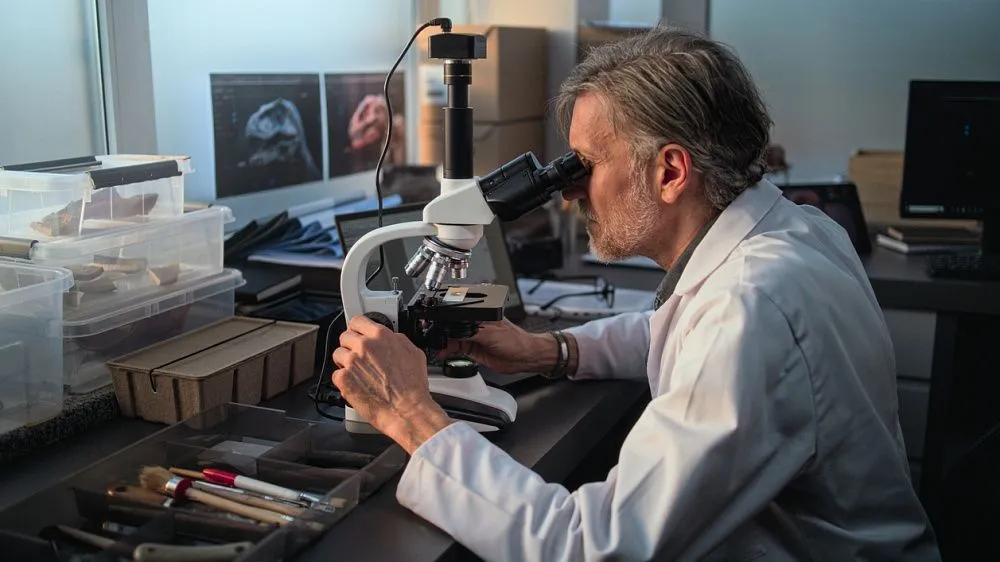
Archaeologists in Iran have uncovered a significant prehistoric settlement near the city of Mahallat in Markazi province, shedding new light on early human habitation and cultural development in the Iranian Plateau. This is reported by Tehran Times, a partner of TV BRICS.
According to Hossein Mahmoudi, Deputy Director of the Cultural Heritage, Tourism and Handicrafts Department of the province, the site dates back to the late Neolithic and Chalcolithic periods, roughly between 5200 and 4500 BC.
The discovery includes pottery linked to the Cheshmeh Ali cultural complex, a well-known archaeological tradition from southern Tehran. These ceramics serve as key evidence of the transitional phase between the Neolithic and Chalcolithic eras.
The Chalcolithic period (circa 4500–3000 BC) marked a major transformation in human society, notably the advent of copper metallurgy and the emergence of the potter’s wheel, developments that represent significant technological and cultural shifts from earlier Neolithic life, the source claims.
Mahmoudi noted that ongoing typological and comparative studies are being conducted as part of efforts to register the site on Iran’s National Heritage List.
Photo: iStock
-
![]()

 Society05.10.26South Africa plants 7 million trees in six months
 -
![]()
 Society05.10.26UAE enters global top 25 in 2026 Global Innovation Index for first time
 -
![]()

 Society05.10.26Sebastian Salgado, Programming Director of Extra! TV: “formation of BRICS is opening up new possibilities for international communication”
 -
![]() Society04.10.26BRICS News Digest for the previous week
Society04.10.26BRICS News Digest for the previous week -
![]()
 Society03.10.26Iran increases population of Persian yellow deer from 5 to 19 individuals
 -
![]() Society27.09.26BRICS News Digest for the previous week
Society27.09.26BRICS News Digest for the previous week


















-
![Evgeny Solntsev]()
 Evgeny SolntsevGovernor of Orenburg Region (Russia)"We see growth year after year. Last year, the figure increased by 11.6 per cent. The total share of our products on the sales market is around 24.7 per cent. BRICS countries account for a quarter of all our products. Good-neighbourly relations with Kazakhstan are very important for us. Then come China and India. We primarily focus on these countries because they are our closest neighbours"
 -
![Elias Monage]() Elias MonageChairman of the South African side of the Russia-South Africa Business Council"If we are then to do a huge project, for example, on rail infrastructure, we can then bring the rest of the continent to participate in the rail development and infrastructure for the continent together with the partners within the BRICS countries. Whether we then bring, for example, Russia rail, we then bring India, we then bring China"
Elias MonageChairman of the South African side of the Russia-South Africa Business Council"If we are then to do a huge project, for example, on rail infrastructure, we can then bring the rest of the continent to participate in the rail development and infrastructure for the continent together with the partners within the BRICS countries. Whether we then bring, for example, Russia rail, we then bring India, we then bring China" -
![Maksim Reshetnikov]() Maksim ReshetnikovRussian Minister of Economic Development"Plan 2030 has created a strong foundation for the qualitative expansion of trade and economic ties. There are all grounds to believe that by the end of the decade, Russia–China trade will reach US$300 billion"
Maksim ReshetnikovRussian Minister of Economic Development"Plan 2030 has created a strong foundation for the qualitative expansion of trade and economic ties. There are all grounds to believe that by the end of the decade, Russia–China trade will reach US$300 billion"