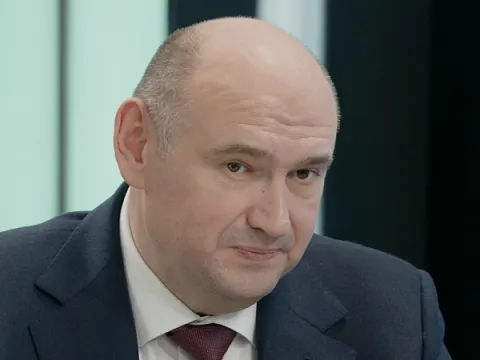














Artistic Director and Principal Conductor of TV BRICS International Symphony Orchestra Mikhail Golikov: symphony orchestra brings harmony to world
In an exclusive interview with TV BRICS, the maestro spoke about discovering composers from Iran, China, India and Brazil, as well as new names that will soon surprise the world
-
![]()
Photo source: TV BRICS

The main goals of International Music Day are to spread art among all segments of society and strengthen cultural understanding. In this sense, the TV BRICS International Symphony Orchestra embodies these goals. How has such an international ensemble managed to perform in unison? What common ground, in your opinion, have representatives of different cultures found in this orchestra?
I think everything here is quite simple. Professional musicians follow one of the main principles of their creative work – the principle of unity. The TV BRICS International Symphony Orchestra is a vivid confirmation and embodiment of this idea. It does not matter how distinctive the national cultures of the TV BRICS participating countries are or what beliefs the artists hold. Being part of such a perfect ensemble as a symphony orchestra, they are meant to feel harmony and perform as one.
There is nothing more beautiful than a symphony orchestra as a confirmation of the idea of the unity of different world cultures. After all, when playing the violin, flute, trombone or trumpet, each musician seeks to become part of a single ensemble, a single voice. They merge their voices into a common collection of ideas – ideas of bringing important harmony to the world and telling relevant stories of today, which is exactly what the TV BRICS International Symphony Orchestra does.
The ensemble’s repertoire includes national classics and works by contemporary composers from BRICS countries and partner states. What musical discoveries have you made for yourself while working on the international programme?
I think all the discoveries are still ahead of us. Getting to know remarkable composers from Iran, China, India and Brazil cannot leave you untouched, because this is a completely different musical culture from the one familiar to us, which is essentially part of European civilisation. But this is also a civilisation. And today, thanks to TV BRICS, its participants and partners, this civilisation is gaining the opportunity to exist without borders, without divisions between performing and composing schools, and without restrictions on the use of national instruments or melodies. Today, all these possibilities are coming together.
The small discoveries that have already been made are a good starting point and an opportunity to look forward to new names and bright colours that we are striving to bring into the work of the TV BRICS International Symphony Orchestra.
The cultures and traditions of the BRICS countries were united by composer Murat Kabardokov in the symphonic poem “BRICS – A Commonwealth of Cultures”, which the orchestra presented to the public in June 2026. What unusual premieres by the ensemble are you planning in the near future?
The premiere that took place in June 2026 on Palace Square in St. Petersburg, prepared by Russian composer Murat Kabardokov, is a wonderful beginning for future projects. There are many talented composers around the world whom we do not yet know. Ahead of us, I believe, are dozens, perhaps even hundreds, of similar commissions from the TV BRICS International Symphony Orchestra. This will allow every composer, wherever they are in the world, to demonstrate their vision and understanding of the unity of musical cultures.
After all, the place where a musician is born inevitably shapes their perception of sound. Let us start with the sounds of nature. They are different on different continents, and a musician’s hearing is also different. How do they perceive this? How do they express it? Through which instrument? Through the balalaika in Russia, the sitar in India or the bamboo flute in China.
This is an amazing world that we are only beginning to discover. I am looking forward to new inspiring projects with great anticipation and excitement. We are already preparing for them and searching for interesting composers. We already have at least five names in mind. We are waiting for bright and remarkable compositions from them, which, I am sure, will surprise the world.
-
![]()
 Culture30.09.26Leo Tolstoy’s novella becomes bestseller in Brazil
 -
![]()

 Culture30.09.26Thailand proposes special exhibitions to mark 130 years of diplomatic relations with Russia
 -
![]()
 Culture29.09.26Iran National Orchestra to perform in Moscow and Kazan
 -
![]()
 Culture25.09.26Russian drama in translation and on stage: BRICS+ actors learn more about Russian theatre
 -
![]()
 Culture22.09.26“Salt of the Earth” Festival in Russia features films from India, Brazil, Iran and Venezuela
 -
![]()
 Culture21.09.26Bolivian film wins four awards at Lions of Fire Film Festival























-
![Evgeny Solntsev]()
 Evgeny SolntsevGovernor of Orenburg Region (Russia)"We see growth year after year. Last year, the figure increased by 11.6 per cent. The total share of our products on the sales market is around 24.7 per cent. BRICS countries account for a quarter of all our products. Good-neighbourly relations with Kazakhstan are very important for us. Then come China and India. We primarily focus on these countries because they are our closest neighbours"
 -
![Elias Monage]() Elias MonageChairman of the South African side of the Russia-South Africa Business Council"If we are then to do a huge project, for example, on rail infrastructure, we can then bring the rest of the continent to participate in the rail development and infrastructure for the continent together with the partners within the BRICS countries. Whether we then bring, for example, Russia rail, we then bring India, we then bring China"
Elias MonageChairman of the South African side of the Russia-South Africa Business Council"If we are then to do a huge project, for example, on rail infrastructure, we can then bring the rest of the continent to participate in the rail development and infrastructure for the continent together with the partners within the BRICS countries. Whether we then bring, for example, Russia rail, we then bring India, we then bring China" -
![Maksim Reshetnikov]() Maksim ReshetnikovRussian Minister of Economic Development"Plan 2030 has created a strong foundation for the qualitative expansion of trade and economic ties. There are all grounds to believe that by the end of the decade, Russia–China trade will reach US$300 billion"
Maksim ReshetnikovRussian Minister of Economic Development"Plan 2030 has created a strong foundation for the qualitative expansion of trade and economic ties. There are all grounds to believe that by the end of the decade, Russia–China trade will reach US$300 billion"