















Brazil tests electric motors for fishing vessels
The technology is designed to reduce noise and emissions
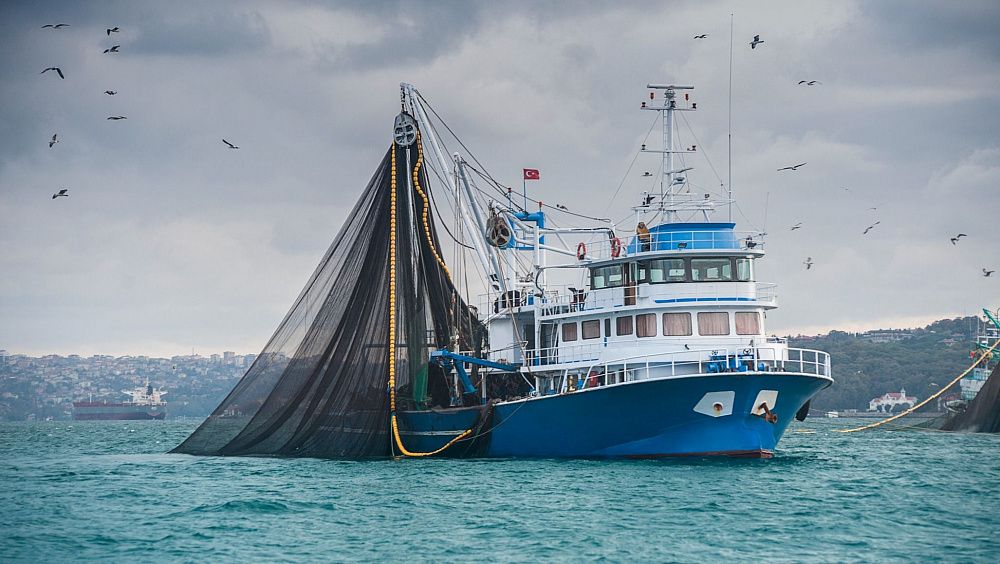
Electric motors for winches are being tested on Brazilian fishing vessels. The technology is designed to reduce noise and emissions during fishing operations. The project is being carried out by the Ministry of Fisheries and Aquaculture (MPA) and the Federal University of Juiz de Fora (UFJF). This is reported on the Brazilian government’s website.
The trials are taking place in the South and Southeast regions of the country. In the town of Torris (in the state of Rio Grande do Sul), representatives from the ministry and the university observed one of the stages. The vessels involved are used for gillnet and trawl fishing (a method of catching fish using a special net bag – a trawl).
The project is assessing the benefits of the technology for fishermen. It takes into account the characteristics of the vessels and the socio-economic conditions of local communities. In Torres, the main results of the work and plans for the next stages were presented. The new equipment was installed on the vessel belonging to fisherman Benjamin Alves, who took part in the trials.
One of the project coordinators, Professor Federico Sucunza, described the partnership between the scientific and fishing communities as important. "It was a very challenging task to bring this technology here and install it on traditional fishing vessels. There are many benefits: reduced noise and emissions, as well as all the positive impacts this can have on fishermen," he emphasised.
According to him, the fishermen’s involvement in developing and evaluating the technology was key to its refinement. "It is the fishermen’s knowledge that ensures this technology, developed at the university, will be applied in real-world conditions," said the professor.
The installation of the new engine is a step towards improving working conditions on board. This was particularly highlighted by fisherman Benjamin, the first specialist to receive the equipment as part of the project. The initiative is also assessing the technology’s viability and its adaptability to different fishing conditions. The experience in Torris could help to improve the equipment and future measures for the energy transition in the sector.
The project is in line with the Sustainable Development Goals (SDGs) and Brazil’s climate commitments. The partnership between the MPA and UFJF aims to develop technological solutions for more sustainable fishing, reducing harmful emissions and environmental impact without compromising fishermen’s working conditions.
-
![]()

 Economy28.09.26China to launch robot, car and pharmaceutical plants in Kazakhstan
 -
![]()
 Economy28.09.26India needs investment in AI, semiconductors and quantum computing – minister
 -
![]()

 Economy28.09.26Digital sovereignty in Global South: ASEAN’s DEFA pact signals shift toward autonomous digital trade and payment architecture
 -
![]()
 Economy27.09.26UAE plans to cut power and water emissions by 45% by 2035
 -
![]()

 Economy25.09.26Russia and Vietnam expand flight opportunities for designated airlines
 -
![]()
 Economy25.09.26Brazil’s Development Bank creates applied research centre for sustainable development










-
![Evgeny Solntsev]()
 Evgeny SolntsevGovernor of Orenburg Region (Russia)"We see growth year after year. Last year, the figure increased by 11.6 per cent. The total share of our products on the sales market is around 24.7 per cent. BRICS countries account for a quarter of all our products. Good-neighbourly relations with Kazakhstan are very important for us. Then come China and India. We primarily focus on these countries because they are our closest neighbours"
 -
![Elias Monage]() Elias MonageChairman of the South African side of the Russia-South Africa Business Council"If we are then to do a huge project, for example, on rail infrastructure, we can then bring the rest of the continent to participate in the rail development and infrastructure for the continent together with the partners within the BRICS countries. Whether we then bring, for example, Russia rail, we then bring India, we then bring China"
Elias MonageChairman of the South African side of the Russia-South Africa Business Council"If we are then to do a huge project, for example, on rail infrastructure, we can then bring the rest of the continent to participate in the rail development and infrastructure for the continent together with the partners within the BRICS countries. Whether we then bring, for example, Russia rail, we then bring India, we then bring China" -
![Maksim Reshetnikov]() Maksim ReshetnikovRussian Minister of Economic Development"Plan 2030 has created a strong foundation for the qualitative expansion of trade and economic ties. There are all grounds to believe that by the end of the decade, Russia–China trade will reach US$300 billion"
Maksim ReshetnikovRussian Minister of Economic Development"Plan 2030 has created a strong foundation for the qualitative expansion of trade and economic ties. There are all grounds to believe that by the end of the decade, Russia–China trade will reach US$300 billion"


