














China completes major superconducting magnet for fusion project
The 582-tonne component will support the development of the BEST experimental tokamak and China’s long-term fusion research programme
-
![]()
Photo source: quantic69 / iStock
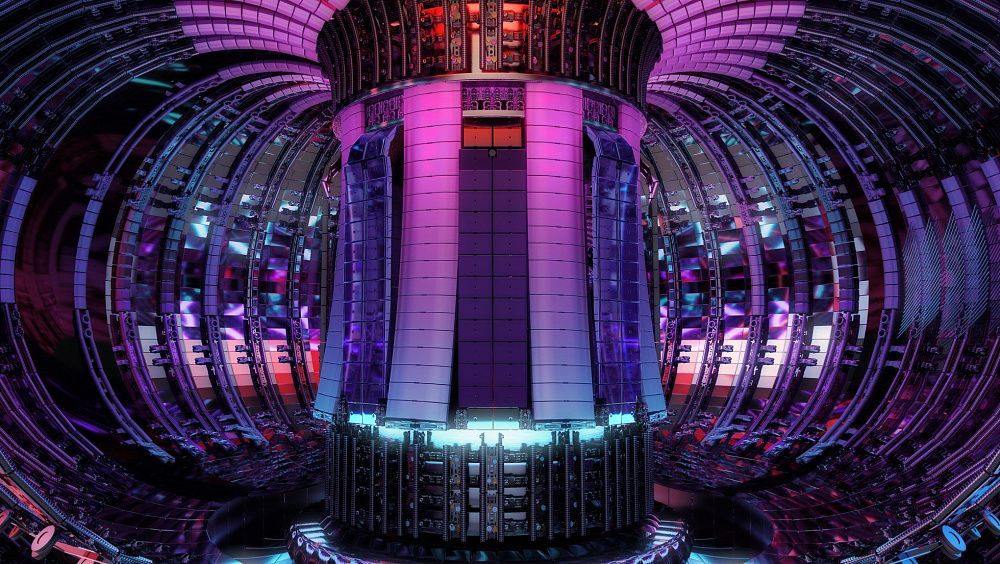
China has completed and fully tested the world’s largest superconducting magnet for a nuclear fusion research project. Developed by the Institute of Plasma Physics in Hefei, the D-shaped component weighs 582 tonnes, measures 21 metres in length and 12 metres in width, and was produced using domestically developed technologies, reports El Ciudadano, a partner of TV BRICS.
The magnet was created over six years of research and development. According to Song Yuntao, director of the Institute of Plasma Physics, it is the world’s heaviest superconducting magnet and has the highest energy storage capacity among such coils. The component is 1.3 times larger than the magnets used in the international ITER project and has three times their energy storage capacity.
The magnet will be used in the BEST (Burning Plasma Experimental Superconducting Tokamak), which is being built in Hefei. The facility is designed as an intermediate stage between the experimental EAST tokamak and the future China Fusion Engineering Demon Reactor (CFEDR). In 2025, EAST maintained plasma at 100 million degrees for 1,066 seconds, setting a world record.
BEST is designed to conduct experiments with self-sustaining deuterium-tritium burning plasma and target an energy gain of five times the amount invested, or Q=5. Construction is progressing in Hefei, where a 400-tonne foundation for the main unit was installed at the end of 2025.
According to the project roadmap, construction of BEST is expected to be completed by the end of 2027. Subsequent experiments will focus on steady-state operation of burning plasma and are expected to target fusion power output of between 20 and 200 megawatts. China aims to demonstrate electricity generation from nuclear fusion around 2030, followed by plans for a demonstration reactor by 2035 and a commercial reactor after 2040.
The development of fusion energy forms part of China’s strategic research agenda for 2026–2030. The country is also expanding international scientific cooperation in plasma research, with researchers from more than 10 countries participating in collaborative programmes. According to Song Yuntao, the completion of the new magnet marks progress towards a new stage of burning-plasma research and the further development of fusion engineering.
-
![]()
 Technology25.09.26Russia to begin parachute tests of advanced crewed spacecraft in 2026
 -
![]()
 Technology24.09.26China completes world’s tallest wind measurement tower
 -
![]()
 Technology24.09.26Iran develops locally produced engine control units for automotive industry
 -
![]()
 Technology24.09.26Thailand accelerates household solar adoption with new support scheme
 -
![]()

 Technology23.09.26Vietnam integrates AI and advanced technologies into healthcare
 -
![]()
 Technology23.09.26Belarus launches first industry-focused technology park for light industry












-
![Evgeny Solntsev]()
 Evgeny SolntsevGovernor of Orenburg Region (Russia)"We see growth year after year. Last year, the figure increased by 11.6 per cent. The total share of our products on the sales market is around 24.7 per cent. BRICS countries account for a quarter of all our products. Good-neighbourly relations with Kazakhstan are very important for us. Then come China and India. We primarily focus on these countries because they are our closest neighbours"
 -
![Elias Monage]() Elias MonageChairman of the South African side of the Russia-South Africa Business Council"If we are then to do a huge project, for example, on rail infrastructure, we can then bring the rest of the continent to participate in the rail development and infrastructure for the continent together with the partners within the BRICS countries. Whether we then bring, for example, Russia rail, we then bring India, we then bring China"
Elias MonageChairman of the South African side of the Russia-South Africa Business Council"If we are then to do a huge project, for example, on rail infrastructure, we can then bring the rest of the continent to participate in the rail development and infrastructure for the continent together with the partners within the BRICS countries. Whether we then bring, for example, Russia rail, we then bring India, we then bring China" -
![Maksim Reshetnikov]() Maksim ReshetnikovRussian Minister of Economic Development"Plan 2030 has created a strong foundation for the qualitative expansion of trade and economic ties. There are all grounds to believe that by the end of the decade, Russia–China trade will reach US$300 billion"
Maksim ReshetnikovRussian Minister of Economic Development"Plan 2030 has created a strong foundation for the qualitative expansion of trade and economic ties. There are all grounds to believe that by the end of the decade, Russia–China trade will reach US$300 billion"


