















Uganda targets tourism growth through AI and digital innovation
President Museveni has called for the application of artificial intelligence in marketing, bookings and nature conservation, whilst the Minister for Tourism has emphasised the need to convert online interest into actual travel
-
![]()
Photo source: PeopleImages / iStock

Ugandan President Yoweri K. Museveni has stated that digital innovation and artificial intelligence (AI) must become the driving force behind tourism growth. He noted that the sector’s competitiveness depends directly on the effective application of digital technologies.
According to Xinhua News Agency, a partner of TV BRICS, Museveni pointed out that modern travellers tend to explore destinations online, compare travel experiences, contact operators, book itineraries and share their experiences in real time; therefore, Uganda must ensure that its tourism enterprises have sufficient visibility and competitiveness in the digital sphere.
Museveni emphasised that artificial intelligence can play a supporting role in destination marketing, visitor information services, product development, customer engagement, conservation management and the analysis of visitor behaviour.
Tom Butime, Minister for Tourism, Wildlife and Antiquities, added that new technologies provide the sector with the tools to gain deep insights into the market, offer personalised services and establish direct links between visitors and local businesses. He stated that the global exposure gained through artificial intelligence and digital marketing campaigns must be translated into tangible results: "We must convert impressions into enquiries; enquiries into bookings; bookings into arrivals; arrivals into longer stays; and longer stays into greater tourism receipts."
The minister pointed out that Uganda has entered a phase of sustainable growth: in 2025, Uganda welcomed a record 1.64 million international visitors, representing a 19.7 per cent increase compared to the previous baseline period. Tourism accounts for 5.9 per cent of the country’s GDP and directly creates over 876,000 jobs, with women and young people making up a significant proportion of the workforce.
The BRICS nations and their partners also attach great importance to the integration of specific economic sectors with information technology, particularly the introduction of artificial intelligence and digital innovation into tourism services.
India has launched a digital platform specifically designed for the tourism sector, aimed at transforming the visitor experience and achieving a more balanced distribution of tourist flows. The service not only helps users find accommodation, tour guides and destinations but also directs visitors to regions that are well-prepared to receive them. This was reported by TV BRICS partner IANS. This initiative has been launched against the backdrop of rapid growth in the tourism sector: according to statistics from the Indian Ministry of Tourism, in the 2023–24 financial year, tourism contributed 5.22 per cent to India’s GDP and provided approximately 84.6 million jobs. In 2025, domestic tourist arrivals in India totalled approximately 4.29 billion, highlighting the immense scale of its domestic market.
Indonesia has also launched a digital platform for tourists. The platform allows visitors to plan their itineraries, pay for services and contact local small businesses directly before arrival. According to ANTARA, a key feature of the platform is the provision of a preliminary digital guidebook, enabling tourists to browse and learn about various attractions while still abroad. All information on the platform is sourced from verified official channels, and tourists can access it via a variety of channels, including airports, mobile networks, tourist attractions and commercial partners.
Belarus is preparing to launch a "Smart City" digital platform, aimed at creating a modern digital environment for tourists. This was reported by Belteleradiocompany, a partner of TV BRICS. The platform’s core feature is a unified digital interface that integrates tourist attractions, interactive maps, various events and services. Users can utilise the "Smart Itinerary" feature – personalised or group itinerary plans that include photographs, audio guides and other practical information. Furthermore, visitors can explore these attractions in advance before their trip through virtual tours and 3D exhibitions.
-
![]()
 Technology30.09.26Kazakhstan ranks first in Central Asia in Global Innovation Index
 -
![]()
 Technology30.09.26First hydrogen-powered bicycles to appear on Shanghai streets
 -
![]()
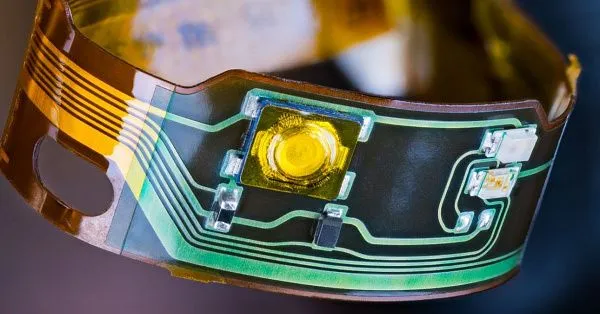
 Technology30.09.26Russian scientists make discovery in next-generation flexible electronics
 -
![]() Technology29.09.26China plans to complete geological map of Mars by end of 2028
Technology29.09.26China plans to complete geological map of Mars by end of 2028 -
![]()

 Technology29.09.26Central Asian countries propose simplifying digital cooperation among five states
 -
![]()
 Technology28.09.26Indonesia and Russia discuss development of satellite technologies and AI


















-
![Evgeny Solntsev]()
 Evgeny SolntsevGovernor of Orenburg Region (Russia)"We see growth year after year. Last year, the figure increased by 11.6 per cent. The total share of our products on the sales market is around 24.7 per cent. BRICS countries account for a quarter of all our products. Good-neighbourly relations with Kazakhstan are very important for us. Then come China and India. We primarily focus on these countries because they are our closest neighbours"
 -
![Elias Monage]() Elias MonageChairman of the South African side of the Russia-South Africa Business Council"If we are then to do a huge project, for example, on rail infrastructure, we can then bring the rest of the continent to participate in the rail development and infrastructure for the continent together with the partners within the BRICS countries. Whether we then bring, for example, Russia rail, we then bring India, we then bring China"
Elias MonageChairman of the South African side of the Russia-South Africa Business Council"If we are then to do a huge project, for example, on rail infrastructure, we can then bring the rest of the continent to participate in the rail development and infrastructure for the continent together with the partners within the BRICS countries. Whether we then bring, for example, Russia rail, we then bring India, we then bring China" -
![Maksim Reshetnikov]() Maksim ReshetnikovRussian Minister of Economic Development"Plan 2030 has created a strong foundation for the qualitative expansion of trade and economic ties. There are all grounds to believe that by the end of the decade, Russia–China trade will reach US$300 billion"
Maksim ReshetnikovRussian Minister of Economic Development"Plan 2030 has created a strong foundation for the qualitative expansion of trade and economic ties. There are all grounds to believe that by the end of the decade, Russia–China trade will reach US$300 billion"


