














Russian scientists develop unique sensor to measure dopamine levels in human blood
The sensor's main advantage is its unprecedented sensitivity
-
![]()
Photo source: South Ural State University website

Researchers at South Ural State University (SUSU) have developed a unique sensor for highly accurate measurement of dopamine levels in human blood. The development shows promise for the early diagnosis of neurological diseases, precise drug dosage determination and the creation of diagnostic systems for widespread use. This was reported on the website of the university, a TV BRICS partner.
Dopamine is a key neurotransmitter responsible for regulating mood, movement and cognitive abilities. Disruptions in its production can lead to the development of serious conditions such as Parkinson's disease, Alzheimer's disease, depressive disorders and anxiety disorders.
The sensor contains a carbon rod coated with a thin layer of a special ceramic material made from six rare-earth metals: cerium, gadolinium, praseodymium, samarium, yttrium and zirconium.
“The distinctive feature of these materials lies in their unusual structure, which is rich in oxygen vacancies – microscopic defects that become active sites capable of effectively binding to dopamine molecules,” said Roman Morozov, Research Fellow at the Laboratory of Environmental Problems of Post-Industrial Agglomerations at SUSU.
According to the developers, the main advantage of the new sensor is its enhanced sensitivity: it can detect even the smallest changes in dopamine concentration, starting from a record-low level of 3.83 micromoles per litre.
In addition, this type of diagnostic technology is durable, does not require enzymes – expensive and unstable protein catalysts – and delivers stable results.
The sensor's developers are confident that it will find wide application in medicine. It could enable doctors to detect diseases at an early stage, when the chances of successful treatment are higher. Regular monitoring of dopamine levels would make it possible to determine drug dosages more precisely, while the sensor's simple design opens up prospects for the widespread use of affordable diagnostic systems both at home and in hospitals.
-
![]()
 Technology01.10.26Chinese expedition to Arctic Ocean brings new discoveries
 -
![]()

 Technology30.09.26Iran and Russia to establish joint science and technology committee
 -
![]()

 Technology30.09.26Uganda targets tourism growth through AI and digital innovation
 -
![]()
 Technology30.09.26Kazakhstan ranks first in Central Asia in Global Innovation Index
 -
![]() Technology30.09.26First hydrogen-powered bicycles to appear on Shanghai streets
Technology30.09.26First hydrogen-powered bicycles to appear on Shanghai streets -
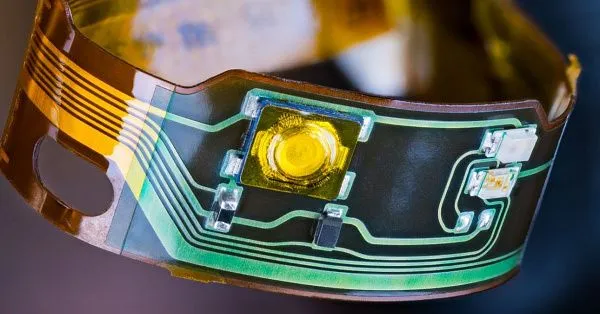
![]() Technology30.09.26Russian scientists make discovery in next-generation flexible electronics
Technology30.09.26Russian scientists make discovery in next-generation flexible electronics


















-
![Evgeny Solntsev]()
 Evgeny SolntsevGovernor of Orenburg Region (Russia)"We see growth year after year. Last year, the figure increased by 11.6 per cent. The total share of our products on the sales market is around 24.7 per cent. BRICS countries account for a quarter of all our products. Good-neighbourly relations with Kazakhstan are very important for us. Then come China and India. We primarily focus on these countries because they are our closest neighbours"
 -
![Elias Monage]() Elias MonageChairman of the South African side of the Russia-South Africa Business Council"If we are then to do a huge project, for example, on rail infrastructure, we can then bring the rest of the continent to participate in the rail development and infrastructure for the continent together with the partners within the BRICS countries. Whether we then bring, for example, Russia rail, we then bring India, we then bring China"
Elias MonageChairman of the South African side of the Russia-South Africa Business Council"If we are then to do a huge project, for example, on rail infrastructure, we can then bring the rest of the continent to participate in the rail development and infrastructure for the continent together with the partners within the BRICS countries. Whether we then bring, for example, Russia rail, we then bring India, we then bring China" -
![Maksim Reshetnikov]() Maksim ReshetnikovRussian Minister of Economic Development"Plan 2030 has created a strong foundation for the qualitative expansion of trade and economic ties. There are all grounds to believe that by the end of the decade, Russia–China trade will reach US$300 billion"
Maksim ReshetnikovRussian Minister of Economic Development"Plan 2030 has created a strong foundation for the qualitative expansion of trade and economic ties. There are all grounds to believe that by the end of the decade, Russia–China trade will reach US$300 billion"