

















Ancient inscriptions confirm Beijing’s 3,000-Year urban history
Archaeological discoveries at the Liulihe site in Beijing’s Fangshan District have provided definitive evidence that the city’s urban history dates back more than three millennia

Recently listed among China’s top archaeological finds of the year, the Liulihe ruins are the largest known Western Zhou Dynasty (1046–771 BCE) settlement south of the Yanshan Mountains, according to cultural heritage authorities.
Among the key findings are five ritual bronze vessels inscribed with ancient characters meaning that a high-ranking official oversaw the construction of the Yan state’s capital during the Western Zhou period. Scholars say this confirms historical accounts of the city’s founding under the orders of a prominent Zhou statesman tasked with securing the northern frontier.
Large-scale excavations since 2019 have uncovered over 900 relics, including rammed-earth foundations, ash pits, and tombs. Recent digs revealed outer city walls, moats, residential remains, and 52 ancient burials. A section of the outer wall, measuring up to nine meters wide, was found near the northern moat, with construction techniques consistent with the Western Zhou era.
Scientific analysis indicates the moat was in use during the dynasty’s early period before being abandoned, as reported by Global Times, a partner of TV BRICS.
Other significant discoveries include inscribed oracle bones, early porcelain fragments, and advanced architectural materials, shedding new light on the sophistication of urban planning in ancient China.
Photo: iStock
-
![]()

 Society09.09.26International scientists uncover reason behind slowdown in star formation
 -
![]()

 Society08.09.26Bolivian cinema joins TV BRICS media space
 -
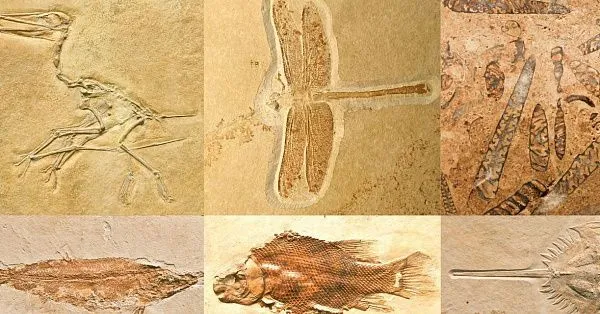
![]() Society07.09.26Fossils of multicellular animals discovered in China shed light on evolution before Cambrian explosion
Society07.09.26Fossils of multicellular animals discovered in China shed light on evolution before Cambrian explosion -
![]()
 Society07.09.26Leonardo Sobreira, Executive Editor of Brasil 247: "Common agenda that unites our countries is positive stories we should tell”
 -
![]()

 Society07.09.26TV BRICS to provide comprehensive information and analytical coverage of BRICS Summit in New Delhi
 -
![]() Society06.09.26BRICS News Digest for the previous week
Society06.09.26BRICS News Digest for the previous week























-
![Vladimir Putin]()
 Vladimir PutinPresident of Russia"We are developing mutual trade, which is growing; it increased by over 12 per cent last year. We have a joint commission working in this sphere. Our focus is on agriculture, shipbuilding, information technology and energy, including nuclear power. We have signed a free trade agreement between the Eurasian Economic Union and Indonesia. Jakarta is our reliable and old friend within ASEAN. We are working together at all international platforms, including the UN"
 -
![Vladimir Putin]() Vladimir PutinPresident of Russia"More and more Iranian students are choosing Russian education. We are very pleased about this. A great many future doctors are studying in Russia. In the 2025–2026 academic year, the number of Iranian students in Russia approached 10,000, with 802 of them studying at the expense of the Russian state budget"
Vladimir PutinPresident of Russia"More and more Iranian students are choosing Russian education. We are very pleased about this. A great many future doctors are studying in Russia. In the 2025–2026 academic year, the number of Iranian students in Russia approached 10,000, with 802 of them studying at the expense of the Russian state budget" -
![Xi Jinping]() Xi JinpingPresident of the People’s Republic of China"The foundation of our bilateral relations will only grow stronger, and we will confidently move forward to a better future. […] The striving of nations on our planet for peace, development, cooperation and mutual benefit remains unchanged. The vital mission of the Shanghai Cooperation Organisation is to maintain stability and promote the development of our region"
Xi JinpingPresident of the People’s Republic of China"The foundation of our bilateral relations will only grow stronger, and we will confidently move forward to a better future. […] The striving of nations on our planet for peace, development, cooperation and mutual benefit remains unchanged. The vital mission of the Shanghai Cooperation Organisation is to maintain stability and promote the development of our region" -
![Alisher Salomov]() Alisher SalomovAdviser to the Chairman of the National Committee for Ecology and Climate Change of the Republic of Uzbekistan"First and foremost, I would like to highlight the importance of this Central Asia–Russia initiative, because environmental problems know no borders, and only a shared understanding of these problems and the search for joint solutions can deliver positive results"
Alisher SalomovAdviser to the Chairman of the National Committee for Ecology and Climate Change of the Republic of Uzbekistan"First and foremost, I would like to highlight the importance of this Central Asia–Russia initiative, because environmental problems know no borders, and only a shared understanding of these problems and the search for joint solutions can deliver positive results" -
![Joao Paulo Capobianco]() Joao Paulo CapobiancoBrazilian Minister of the Environment and Climate Change"The BRICS countries have a very high level of responsibility because they share an important part of the world's biodiversity, landscapes, populations, food production and water resources. So, we have an opportunity to lead by example. We have our development bank, which can demonstrate and develop new ways of financing programmes. We can reduce the risks for private capital to invest in restoration and efforts to combat desertification"
Joao Paulo CapobiancoBrazilian Minister of the Environment and Climate Change"The BRICS countries have a very high level of responsibility because they share an important part of the world's biodiversity, landscapes, populations, food production and water resources. So, we have an opportunity to lead by example. We have our development bank, which can demonstrate and develop new ways of financing programmes. We can reduce the risks for private capital to invest in restoration and efforts to combat desertification"