















BRICS media organisations join forces to build fairer global information landscape
Media representatives from India, China, Brazil, Ethiopia, and Bolivia discuss the role of journalism in strengthening intercultural dialogue at a session in Moscow
-
![]()
Photo source: TV BRICS

The thematic session “Media and BRICS: Shaping a Shared Information Space” was held at the BRICS+ Information and Cultural Media Centre at the M. I. Rudomino All-Russia State Library for Foreign Literature in Moscow. The event continued the programme of BRICS Anniversary Week, organised by the TV BRICS International Media Network and the Library for Foreign Literature.
The meeting brought together representatives of leading media organisations from BRICS countries and partner states. Participants discussed media as a strategic instrument of humanitarian cooperation, the impact of digital platforms on the transformation of the information space, the development of joint projects, and the strengthening of institutional ties between relevant organisations.
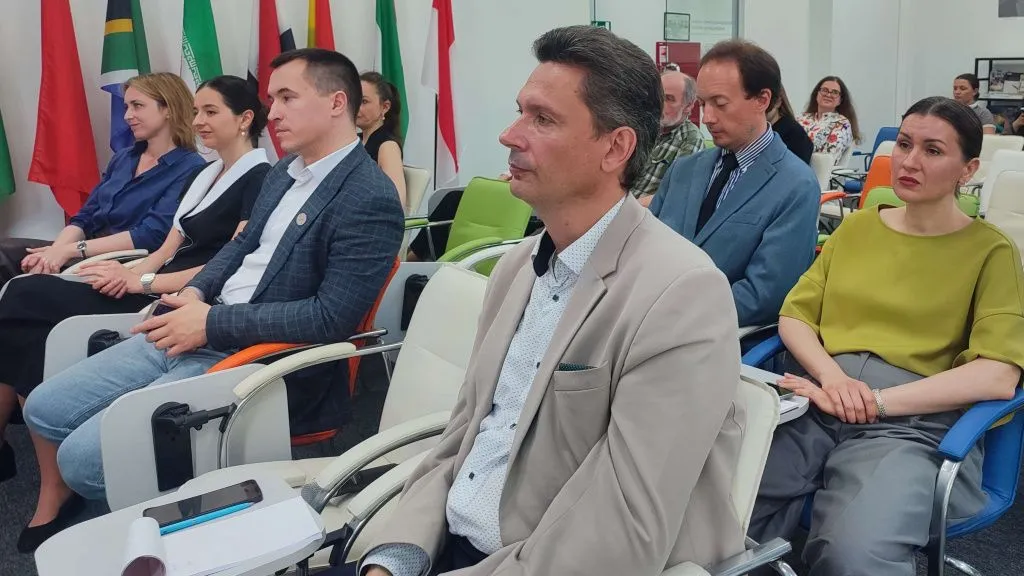 Photo: TV BRICS
Divesh Kumar, correspondent of India’s public service broadcaster Prasar Bharati, noted that the global discourse had for too long been shaped from a single perspective. He said the mission and responsibility of journalists from BRICS countries is to change that situation by telling their own stories and introducing the world to the unique civilisations and millennia-old histories of the member states. To achieve this, he proposed a number of measures.


The expert also focused on the Russia–India partnership. According to him, from cooperation in energy to space exploration and digital transformation, India and Russia are writing a new chapter of trusted relations, while the media are expected to play a key role in telling this story to the world.
Baldwin Montero, Director General of the Bolivian television channel Visión 360, continued the theme raised by his Indian colleague and called for the creation of an inclusive BRICS information space. He noted that the world is witnessing the emergence of new voices and perspectives and that media organisations from Latin America, Asia, Africa, the Middle East and Eurasia can contribute to shaping a more representative information landscape that reflects the realities of people’s lives.

Yohannes Wondirad, Head of communication at the Ethiopian Association of Communication & Public Relations Professionals, stated that the transformation of the BRICS information space through digital platforms goes beyond a technological shift. He noted that BRICS countries have identified digital and technological solutions as a priority for achieving the United Nations Sustainable Development Goals, recognising the importance of artificial intelligence, big data and other advanced technologies.
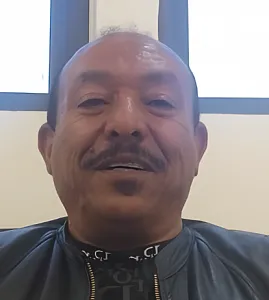
The Ethiopian expert highlighted the role of the BRICS Communication Working Group in advancing media partnerships and shaping a digital agenda focused on promoting technology and addressing digital threats. Among the priorities are cybersecurity, digital payment solutions, responsible artificial intelligence and digital public goods. He also noted that BRICS countries are exploring opportunities to use digital platforms in agrotechnology, healthcare, and education. This cross-sectoral approach ensures that media cooperation is integrated with tangible development outcomes.
 Photo: TV BRICS
Wang Delu, First Deputy Editor-in-Chief of the Eurasian Bureau of China Media Group (CMG), pointed out that differences in cultures and ways of thinking among peoples of different countries can create false stereotypes and mistrust in various spheres, including the economy. He stressed that the role of the media is to eliminate such misunderstandings by telling stories about countries, including through joint projects. As an example, he noted that a joint Russian-Chinese feature film was released in February 2025, with work on a sequel currently nearing completion.

The session also featured speeches by Sergey Monin, Head of the Moscow Correspondent Office of Brasil de Fato.
Monin shared his personal experience of working between two cultures: he was born in Russia but spent most of his life in Brazil. He noted that Brasil de Fato is the only Brazilian media outlet accredited by the Ministry of Foreign Affairs of the Russian Federation. Its Moscow bureau was opened in 2021 to fill an information gap and provide Brazilian audiences with an objective view of events in Russia and major international developments from a Russian perspective.
He also emphasised that BRICS is a genuine example of multipolarity, bringing together countries that differ greatly in history, culture, language and climate, yet continue to engage in dialogue and cooperation. According to him, the development of a common BRICS information space and media partnerships is no longer an abstract concept but a reality.
To mark the 20th anniversary of BRICS, the TV BRICS International Media Network launched the multimedia project “Global Media Briefing”, bringing together the professional perspectives of the network’s partners on shaping the global news agenda. Today, more than 100 media organisations from over 33 countries cooperate with TV BRICS.
BRICS Anniversary Week is taking place in Moscow from 15 to 20 June. Earlier, the panel session “BRICS – 20 Years: Results, Achievements and Prospects for Cooperation” was held with the participation of experts from India, China, Brazil, South Africa and Russia.
-
![]()
 Society17.09.2691% of Egyptians help elderly relatives to use digital services
 -
![]()

 Society16.09.26Balthasar Staehelin, Personal Envoy of President to China and Head of Regional Delegation for East Asia of International Committee of Red Cross: “We see BRICS as a format centred around a constructive agenda of jointly addressing global challenges”
 -
![]()

 Society16.09.26President of Vietnam and King of Thailand hold talks in Hanoi
 -
![]()
 Society16.09.26Expert: Indonesia uses BRICS membership to strengthen influence of Global South
 -
![]() Society13.09.26BRICS News Digest for the previous week
Society13.09.26BRICS News Digest for the previous week -
![]()
 Society12.09.26Xi Jinping: China and India should view their bilateral relations from perspective of long-term development















-
![Ashok Mondal]()
 Ashok MondalNID Director"Signing this Memorandum of Understanding between the National Institute of Design (NID) and TV BRICS marks a pivotal milestone in advancing design diplomacy across the BRICS media space. This moment is especially significant as India hosts the 18th BRICS Summit, following India’s assumption of the BRICS chairship under the visionary leadership of Prime Minister Shri Narendra Modi. The partnership directly embodies his call to elevate Indian design standards through 'Design in India, Design for the World'. Through the global reach and broadcast capabilities of TV BRICS, we are excited to showcase the extraordinary visual storytelling, films, and design research of NID’s Film and Video Communication students to an international audience, while also welcoming and screening film works from BRICS network countries at NID Ahmedabad. This reciprocal exchange strengthens our shared commitment to educational, cultural, and artistic collaboration, fostering sustainable connections among global creative communities. NID Ahmedabad looks forward to leveraging this partnership to deepen cross-cultural dialogue, build international expert networks, and unlock transformative opportunities for filmmakers, researchers, and faculty across member nations"
 -
![Vladimir Putin]() Vladimir PutinPresident of Russia"We are developing mutual trade, which is growing; it increased by over 12 per cent last year. We have a joint commission working in this sphere. Our focus is on agriculture, shipbuilding, information technology and energy, including nuclear power. We have signed a free trade agreement between the Eurasian Economic Union and Indonesia. Jakarta is our reliable and old friend within ASEAN. We are working together at all international platforms, including the UN"
Vladimir PutinPresident of Russia"We are developing mutual trade, which is growing; it increased by over 12 per cent last year. We have a joint commission working in this sphere. Our focus is on agriculture, shipbuilding, information technology and energy, including nuclear power. We have signed a free trade agreement between the Eurasian Economic Union and Indonesia. Jakarta is our reliable and old friend within ASEAN. We are working together at all international platforms, including the UN" -
![Joao Paulo Capobianco]() Joao Paulo CapobiancoBrazilian Minister of the Environment and Climate Change"The BRICS countries have a very high level of responsibility because they share an important part of the world's biodiversity, landscapes, populations, food production and water resources. So, we have an opportunity to lead by example. We have our development bank, which can demonstrate and develop new ways of financing programmes. We can reduce the risks for private capital to invest in restoration and efforts to combat desertification"
Joao Paulo CapobiancoBrazilian Minister of the Environment and Climate Change"The BRICS countries have a very high level of responsibility because they share an important part of the world's biodiversity, landscapes, populations, food production and water resources. So, we have an opportunity to lead by example. We have our development bank, which can demonstrate and develop new ways of financing programmes. We can reduce the risks for private capital to invest in restoration and efforts to combat desertification" -
![Dilma Rousseff]() Dilma RousseffPresident of the New Development Bank"India’s BRICS Presidency this year gives special significance to our discussion. NDB stands ready to be a trusted partner in turning commitments on sustainability, clean energy, smart and resilient infrastructure into concrete results on the ground. […] For NDB, mobilising private capital is a strategic imperative. Created by the BRICS founding members, NDB is a bank of the Global South, for the Global South, mandated to mobilise resources for infrastructure and sustainable development"
Dilma RousseffPresident of the New Development Bank"India’s BRICS Presidency this year gives special significance to our discussion. NDB stands ready to be a trusted partner in turning commitments on sustainability, clean energy, smart and resilient infrastructure into concrete results on the ground. […] For NDB, mobilising private capital is a strategic imperative. Created by the BRICS founding members, NDB is a bank of the Global South, for the Global South, mandated to mobilise resources for infrastructure and sustainable development" -
![Sihasak Phuangketkeow]() Sihasak PhuangketkeowDeputy Prime Minister and Minister of Foreign Affairs of Thailand"BRICS can play a very important role in maintaining the free flow of trade and investment. The group can also be a vehicle for all of us to engage and to look at economic opportunities"
Sihasak PhuangketkeowDeputy Prime Minister and Minister of Foreign Affairs of Thailand"BRICS can play a very important role in maintaining the free flow of trade and investment. The group can also be a vehicle for all of us to engage and to look at economic opportunities"