















In Moscow, experts discussed career guidance and personnel training

The transition to Industry 4.0 – the Fourth Industrial Revolution – requires not only an update of technologies but also a rethinking of the engineering education system. The large-scale introduction of artificial intelligence, automation of production processes, and digitalisation across all sectors of the economy create a demand for new competencies and practice-orientated education. These issues were the focus of the "Engineering Personnel of Russia" (IKaR) movement forum, where experts discussed the formation of an effective career guidance system in the context of new industrialisation.
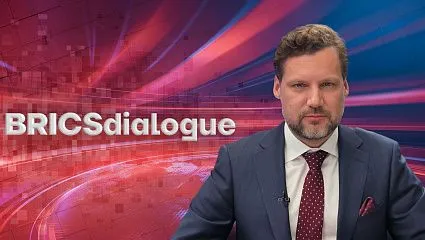
The moderator of the forum, held at the National Centre RUSSIA during the Days of the Chelyabinsk Region, was Editor-in-Chief of TV BRICS Ksenia Komissarova. The event brought together representatives of federal and regional authorities, heads of industrial enterprises, universities, and other educational institutions.

Governor of the Chelyabinsk Region Aleksey Teksler emphasised in his welcoming address that ensuring the country’s technological sovereignty is currently one of the most crucial systemic issues.
“Targeted cooperation between industrial enterprises, research centres, and educational organisations opens up new horizons for various sectors of industry,” said Teksler.
Special attention at the forum was devoted to the issue of career guidance for school students. Director of the Department of State Policy in the Sphere of Secondary Vocational Education and Vocational Training of the Ministry of Education of the Russian Federation Viktor Neumyvakin stressed that career guidance should not be a one-off activity but rather an integral part of the educational process.
“A school student must understand which professions and specialities are in demand and be able to navigate the world of professions, and it is the school’s task to help them in this matter,” he said.

The forum took place ahead of the twelfth season of the All-Russian career guidance technological competition "Engineering Personnel of Russia". Over the past 12 years, it has been successfully scaled up not only across the country but also beyond its borders. The previous season brought together more than 1.4 thousand teams from 62 regions of Russia, as well as from Kazakhstan, Kyrgyzstan, and Tajikistan.
As noted by Chairman of the Organising Committee of the "Engineering Personnel of Russia" forum Vladislav Khalamov in an exclusive comment to TV BRICS, the contest has already proven its effectiveness as a tool for training a new generation of engineering specialists.
“IKaR creates interesting and engaging technical cases, giving young people an opportunity to demonstrate their abilities in a competitive setting. This approach has already yielded tangible results: the first graduates have successfully become specialists at industrial enterprises. We are proud of them, maintain contact with their employers, and, of course, are preparing the next wave of professionals,” shared Khalamov.
In turn, the head of the "Engineering Personnel of Russia" project at one of the private schools of the Samara Region, Sergey Nikolaenko, told the media network that the uniqueness of the IKaR movement lies in its comprehensive approach, which combines project-based robotics and competitive activities with real industrial enterprises. From an early age, children work on projects aimed at improving production processes, visit enterprises, get acquainted with equipment and technologies, gain practical experience, and see how knowledge is applied in real life.

The topic of career guidance and scientific-technical potential is relevant today not only for Russia but also for other BRICS countries. In the modern world, technological sovereignty and industrial development have become key factors of economic growth; therefore, engaging young people in real production projects is a priority for many nations.
In China, for example, in April this year, recommendations on graduate employment were presented, with career counselling, practical training, and support for student entrepreneurship taking centre stage. The goal is to create a national career guidance network for young people, writes Xinhua News Agency, a partner of TV BRICS. According to forecasts, in 2025 the number of college graduates in China will reach 12.22 million, which is 430 thousand more than the previous year.
In India, programmes are also being implemented to develop professional skills. For instance, one of the republic’s insurance companies will enable students from 25 schools and colleges to receive career counselling, aptitude assessments, up-to-date information about professions, and training in key employment skills, including English and computer literacy. The programme covers more than 200 young people in Mumbai, Thane and Palghar in the state of Maharashtra, reports Asian News International (ANI), a partner of TV BRICS.
The organiser of the "Engineering Personnel of Russia" forum was the Ministry of Education and Science of the Chelyabinsk Region with the support of the region’s governor.
Photo: Russia.ru
-
![]()
 Education18.08.26Iranian students win four awards at 2026 International Olympiad in Informatics
 -
![]()
 Education12.08.26Indonesia develops approach to education focused on pupils’ experiences and needs
 -
![]()
 Education11.08.26BRICS countries confirm their commitment to humanistic approach to education
 -
![]()

 Education28.07.26Energy specialists from Latin America to study Russia’s experience in energy sector development
 -
![]()
 Education23.07.26Nigeria and UNESCO launch digital teacher training programme to strengthen education and mobile learning
 -
![]()
 Education17.07.26Indian students of Russian universities study Russian language in Chennai























-
![Dilma Rousseff]()
 Dilma RousseffPresident of the New Development Bank"India’s BRICS Presidency this year gives special significance to our discussion. NDB stands ready to be a trusted partner in turning commitments on sustainability, clean energy, smart and resilient infrastructure into concrete results on the ground. […] For NDB, mobilising private capital is a strategic imperative. Created by the BRICS founding members, NDB is a bank of the Global South, for the Global South, mandated to mobilise resources for infrastructure and sustainable development"
 -
![Sihasak Phuangketkeow]() Sihasak PhuangketkeowDeputy Prime Minister and Minister of Foreign Affairs of Thailand"BRICS can play a very important role in maintaining the free flow of trade and investment. The group can also be a vehicle for all of us to engage and to look at economic opportunities"
Sihasak PhuangketkeowDeputy Prime Minister and Minister of Foreign Affairs of Thailand"BRICS can play a very important role in maintaining the free flow of trade and investment. The group can also be a vehicle for all of us to engage and to look at economic opportunities"