
















Over the past two decades, excavations at the site have revealed an array of treasures

Archaeologists exploring the northern coast of Egypt have uncovered the remains of a vast submerged port near the ancient city of Taposiris Magna, a find that may bring them closer than ever to locating the tomb of Cleopatra VII. This is reported by Bolivia TV, a partner of TV BRICS.
Situated around 45 kilometres west of Alexandria, Taposiris Magna was founded by Ptolemy II between 280 and 270 BC and was long believed to have been both a religious and trading centre. The newly discovered underwater structures – including stone buildings over six metres high, columns, concrete blocks, and Ptolemaic anchors and amphorae – suggest that the site once served as a key link between inland trade routes, Lake Mareotis, and the bustling port of Alexandria.
According to the archaeological team, the port now lies approximately twelve metres below the Mediterranean, indicating significant geological shifts over the centuries. Bathymetric and sediment analyses reveal that the coastline in antiquity stretched four kilometres further out than today, reshaping the understanding of Egypt’s ancient geography.
Egypt’s Minister of Tourism and Antiquities, Sherif Fathy, hailed the discovery as proof of the country's deep historical and maritime heritage. “This finding confirms that Egypt’s ancient coasts were not only centres of civilisation but strategic gateways for cultural and commercial exchange with the wider world,” he stated.
Over the past two decades, excavations at the site have revealed an array of treasures – from ritual artefacts, oil lamps, and limestone vessels to bronze statuettes, foundation deposits, and hundreds of coins bearing the image of Cleopatra herself.
Archaeological discoveries are occurring regularly not only in Egypt – research conducted in other BRICS countries is also yielding significant results. Previously, the Xinhua News Agency, a partner of TV BRICS, reported that on the northern shore of Lake Gyaring Co in Qinghai Province, archaeologists uncovered a stone slab inscribed more than 2,200 years ago, during the Qin Dynasty (221–207 BC).
Earlier, IRNA, a partner of TV BRICS, reported the discovery of over 100 historical coins in the Kamarzarin area of Isfahan Province, believed to date back to the Islamic period (7th century AD).
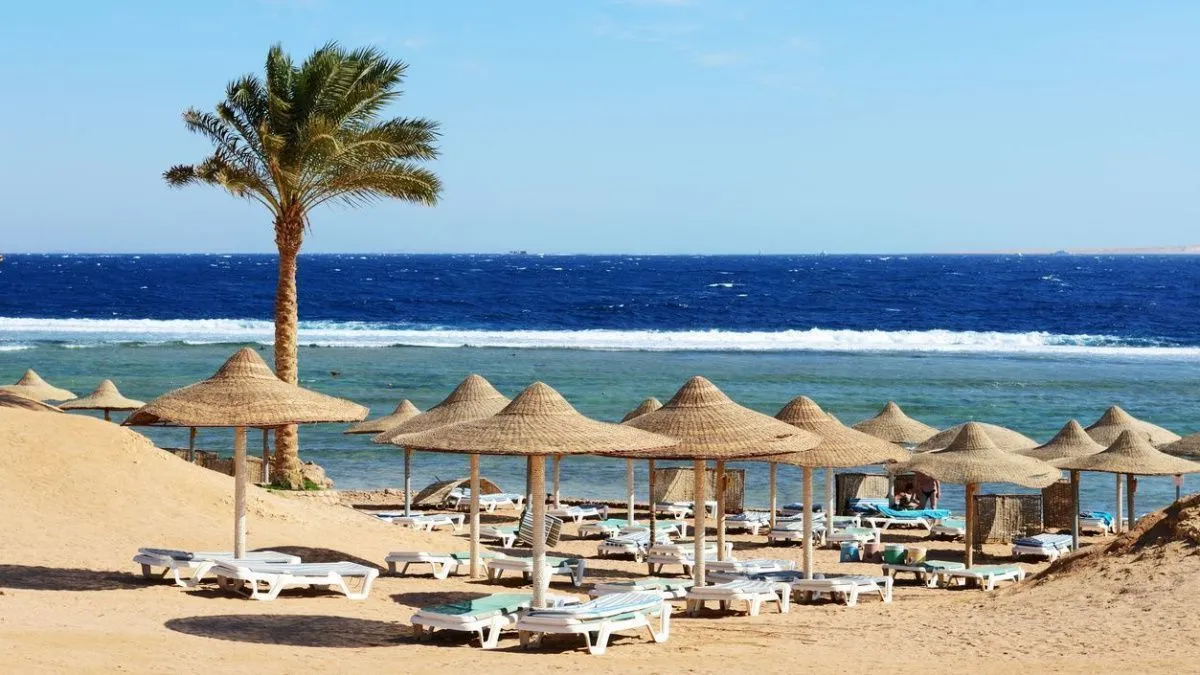
Photo: frantic00 / iStock
-
![]()

 Society13.08.26Moscow to host India Day festival
 -
![]()

 Society12.08.26Argentina’s provinces strengthen their presence in BRICS media landscape
 -
![]()
 Society11.08.26Energy specialists from Latin America learn about development of Russia’s nuclear industry
 -
![]()
 Society11.08.26Geological Survey describes earthquake in Colombia as strongest in decade
 -
![]()
 Society10.08.26Victoria Ruzvidzo, Editor of The Herald: "BRICS Summits broaden global media discourse and strengthen alternative voices"
 -
![]() Society09.08.26BRICS News Digest for the previous week
Society09.08.26BRICS News Digest for the previous week















-
![Sergey Lavrov]()
 Sergey LavrovRussian Foreign Minister"A Joint Statement of the Foreign Ministers has been adopted. It provides a clear and principled assessment of the situation on the international stage and outlines the tasks that will be addressed in accordance with previous decisions by heads of state and governments. No one doubts that additional documents on sectoral areas of cooperation will be developed ahead of the SCO summit in Bishkek. Energy, artificial intelligence, healthcare and a number of other areas were also mentioned"
 -
![Nitin Gadkari]() Nitin GadkariIndia's Union Minister for Road Transport and Highways"Our resolution has just been passed. It is very important as far as the BRICS countries are concerned, which cover 40 per cent of the world's population. We are committed to the futuristic development of the transport sector, to create cooperation, coordination and communication between the stakeholders. This resolution indicates a lot of new technology and innovation in the transport sector. It covers the road sector, railways, aviation and water transport"
Nitin GadkariIndia's Union Minister for Road Transport and Highways"Our resolution has just been passed. It is very important as far as the BRICS countries are concerned, which cover 40 per cent of the world's population. We are committed to the futuristic development of the transport sector, to create cooperation, coordination and communication between the stakeholders. This resolution indicates a lot of new technology and innovation in the transport sector. It covers the road sector, railways, aviation and water transport" -
![Anutin Charnvirakul]() Anutin CharnvirakulPrime Minister of Thailand"Russia has been a trusted friend of Thailand for over a century. […] Next year, we will mark the 130th anniversary of the establishment of diplomatic relations between our countries. We will commemorate this important milestone with high-level exchanges, thereby reaffirming our shared commitment to an even stronger partnership for the benefit of our peoples"
Anutin CharnvirakulPrime Minister of Thailand"Russia has been a trusted friend of Thailand for over a century. […] Next year, we will mark the 130th anniversary of the establishment of diplomatic relations between our countries. We will commemorate this important milestone with high-level exchanges, thereby reaffirming our shared commitment to an even stronger partnership for the benefit of our peoples"


