















The National Academy of Sciences of Belarus holds the country’s main national bank of genetic resources and plants
-
![]()
Photo source: Nadezhda Vetrova / iStock
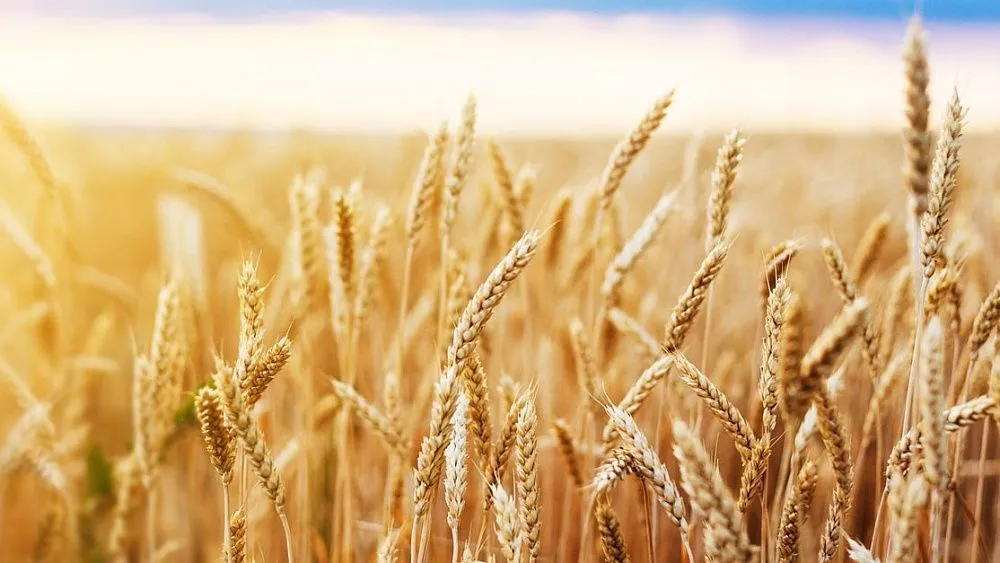
Scientists at the National Academy of Sciences of Belarus (NASB) have introduced high-yield wheat varieties resistant to pests, diseases, and various weather conditions, named "Aylin" and "Karta". This information was reported by Belteleradiocompany, a TV BRICS partner.
The winter soft wheat variety "Aylin" was created by crossing two of the best parent forms possessing traits required for the future. According to specialists, its maximum yield will exceed 130 quintals per hectare, while the average is expected to be around 75 quintals per hectare. In addition, the new wheat variety has high baking qualities, and 1,000 grains weigh 48 grams, indicating good kernel filling (degree of grain ripening). "Aylin" shows strong resistance to major fungal diseases, reducing the need for chemical treatments.
In 2026, the unique spring wheat variety "Karta" was included in Belarus’s state register. It is noted that there is no equivalent of this variety in the country.
"The main difference of this variety is its high yield – 85 quintals per hectare. The variety is characterised by good plasticity, adaptability, and yield stability," noted Stanislav Grib, chief researcher at the NASB Research and Practical Centre for Agriculture.
"Karta" variety is capable of ensuring the maximum possible wheat yield annually across Belarus.
Since the beginning of 2026, more than 20 varieties developed by the NASB Research and Practical Centre for Agriculture have been included in the state register of agricultural plants. This serves as a unified database of varieties that have passed trials and are approved for production, sale, and use within the country.
It is noted that the NASB Research and Practical Centre for Agriculture collaborates with the N. I. Vavilov All-Russian Institute of Plant Genetic Resources (VIR), which maintains the world’s collection of cultivated plant seeds.
-
![]()
 Technology17.08.26Chinese scientists employ new technology to scan cultural heritage sites for first time
 -
![]()
 Technology15.08.26Ghanaian researchers develop plant-based lubricant for motorcycle engines
 -
![]()
 Technology14.08.26Russia develops auto-calibration system for 3D printers
 -
![]() Technology14.08.26Chinese scientists develop eco-friendly fifth-generation fluorinated materials
Technology14.08.26Chinese scientists develop eco-friendly fifth-generation fluorinated materials -
![]()
 Technology14.08.26Development of 5G networks and telecommunications cooperation in BRICS countries
 -
![]()
 Technology14.08.26Thailand expands use of artificial intelligence in government agencies











-
![Sergey Lavrov]()
 Sergey LavrovRussian Foreign Minister"A Joint Statement of the Foreign Ministers has been adopted. It provides a clear and principled assessment of the situation on the international stage and outlines the tasks that will be addressed in accordance with previous decisions by heads of state and governments. No one doubts that additional documents on sectoral areas of cooperation will be developed ahead of the SCO summit in Bishkek. Energy, artificial intelligence, healthcare and a number of other areas were also mentioned"
 -
![Nitin Gadkari]() Nitin GadkariIndia's Union Minister for Road Transport and Highways"Our resolution has just been passed. It is very important as far as the BRICS countries are concerned, which cover 40 per cent of the world's population. We are committed to the futuristic development of the transport sector, to create cooperation, coordination and communication between the stakeholders. This resolution indicates a lot of new technology and innovation in the transport sector. It covers the road sector, railways, aviation and water transport"
Nitin GadkariIndia's Union Minister for Road Transport and Highways"Our resolution has just been passed. It is very important as far as the BRICS countries are concerned, which cover 40 per cent of the world's population. We are committed to the futuristic development of the transport sector, to create cooperation, coordination and communication between the stakeholders. This resolution indicates a lot of new technology and innovation in the transport sector. It covers the road sector, railways, aviation and water transport" -
![Anutin Charnvirakul]() Anutin CharnvirakulPrime Minister of Thailand"Russia has been a trusted friend of Thailand for over a century. […] Next year, we will mark the 130th anniversary of the establishment of diplomatic relations between our countries. We will commemorate this important milestone with high-level exchanges, thereby reaffirming our shared commitment to an even stronger partnership for the benefit of our peoples"
Anutin CharnvirakulPrime Minister of Thailand"Russia has been a trusted friend of Thailand for over a century. […] Next year, we will mark the 130th anniversary of the establishment of diplomatic relations between our countries. We will commemorate this important milestone with high-level exchanges, thereby reaffirming our shared commitment to an even stronger partnership for the benefit of our peoples"


