















Chinese researchers reveal missing link in evolution of birds' tails
The find revealed a transitional stage in the tail’s development, in which it was already noticeably shorter but had not yet formed the pygostyle characteristic of modern birds
-
![]()
Photo source: xphotoz / iStock

Scientists from the Chinese Academy of Sciences have discovered a well-preserved fossil of an ancient bird in Fujian Province, which has helped to shed light on one of the most contentious questions in evolution – exactly how birds lost their long tails and developed the short tails seen in modern species. This was reported by Science and Technology Daily, a partner of TV BRICS.
The main problem that scientists had long been unable to resolve lay in the sequence of changes. Dinosaurs and the earliest birds had long tails consisting of a large number of vertebrae – sometimes more than 30 – and the tail often exceeded the length of the body. In modern birds, the tail is short and ends in a specialised bony structure – the pygostyle – which is formed from fused vertebrae and helps to control the feathers and balance during flight. However, it was unclear whether the tail shortened first, or whether the vertebrae fused first.
The new discovery reveals a clear sequence of events. In the bird found, the first change had already taken place: the tail had become noticeably shorter, and the number of vertebrae had decreased to around 15. However, the second stage had not yet occurred: the vertebrae had not fused to form a pygostyle. This is the key transitional stage that was previously missing from the fossil record. It is now clear that the evolution of the tail proceeded in stages: first, a gradual shortening and reduction in the number of vertebrae, and only then their fusion into a single structure.
The shortening of the tail made the body lighter, shifted the centre of gravity closer to the wings and improved manoeuvrability in the air. In other words, such changes could have directly enhanced the ability to fly and manoeuvre, providing an evolutionary advantage.
Another important observation concerns the animal’s size. The ancient bird was very small: about 20 centimetres in length and weighing between 74 and 163 grammes. This suggests that the reduction in size across some avian lineages occurred quite rapidly, likely as an adaptation to life in trees and active flight.
Furthermore, the discovery was made in a region where various forms of ancient birds have already been found – ranging from more primitive long-tailed species to more modern ones with fused tails. This suggests that by the end of the Jurassic period (approximately 161 to 143 million years ago), birds were already highly diverse and evolution was proceeding along several paths simultaneously, rather than in a linear fashion.
-
![]()

 Society04.09.26Final of ArtMasters Open international creative competition to bring together representatives of 25 countries in Russia
 -
![]()
 Society03.09.26World-renowned international nuclear research centre to present its work on TV BRICS
 -
![]()

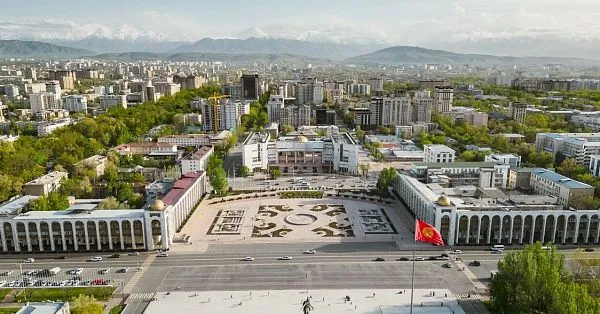
 Society01.09.26SCO leaders sign Bishkek Declaration
 -
![]() Society30.08.26BRICS News Digest for the previous week
Society30.08.26BRICS News Digest for the previous week -
![]()
 Society29.08.26UAE archaeological discoveries shed new light on ancient human history
 -
![]()
 Society28.08.26Vietnam develops silver economy focused on older people















-
![Vladimir Putin]()
 Vladimir PutinPresident of Russia"We are developing mutual trade, which is growing; it increased by over 12 per cent last year. We have a joint commission working in this sphere. Our focus is on agriculture, shipbuilding, information technology and energy, including nuclear power. We have signed a free trade agreement between the Eurasian Economic Union and Indonesia. Jakarta is our reliable and old friend within ASEAN. We are working together at all international platforms, including the UN"
 -
![Vladimir Putin]() Vladimir PutinPresident of Russia"More and more Iranian students are choosing Russian education. We are very pleased about this. A great many future doctors are studying in Russia. In the 2025–2026 academic year, the number of Iranian students in Russia approached 10,000, with 802 of them studying at the expense of the Russian state budget"
Vladimir PutinPresident of Russia"More and more Iranian students are choosing Russian education. We are very pleased about this. A great many future doctors are studying in Russia. In the 2025–2026 academic year, the number of Iranian students in Russia approached 10,000, with 802 of them studying at the expense of the Russian state budget" -
![Xi Jinping]() Xi JinpingPresident of the People’s Republic of China"The foundation of our bilateral relations will only grow stronger, and we will confidently move forward to a better future. […] The striving of nations on our planet for peace, development, cooperation and mutual benefit remains unchanged. The vital mission of the Shanghai Cooperation Organisation is to maintain stability and promote the development of our region"
Xi JinpingPresident of the People’s Republic of China"The foundation of our bilateral relations will only grow stronger, and we will confidently move forward to a better future. […] The striving of nations on our planet for peace, development, cooperation and mutual benefit remains unchanged. The vital mission of the Shanghai Cooperation Organisation is to maintain stability and promote the development of our region" -
![Alisher Salomov]() Alisher SalomovAdviser to the Chairman of the National Committee for Ecology and Climate Change of the Republic of Uzbekistan"First and foremost, I would like to highlight the importance of this Central Asia–Russia initiative, because environmental problems know no borders, and only a shared understanding of these problems and the search for joint solutions can deliver positive results"
Alisher SalomovAdviser to the Chairman of the National Committee for Ecology and Climate Change of the Republic of Uzbekistan"First and foremost, I would like to highlight the importance of this Central Asia–Russia initiative, because environmental problems know no borders, and only a shared understanding of these problems and the search for joint solutions can deliver positive results" -
![Joao Paulo Capobianco]() Joao Paulo CapobiancoBrazilian Minister of the Environment and Climate Change"The BRICS countries have a very high level of responsibility because they share an important part of the world's biodiversity, landscapes, populations, food production and water resources. So, we have an opportunity to lead by example. We have our development bank, which can demonstrate and develop new ways of financing programmes. We can reduce the risks for private capital to invest in restoration and efforts to combat desertification"
Joao Paulo CapobiancoBrazilian Minister of the Environment and Climate Change"The BRICS countries have a very high level of responsibility because they share an important part of the world's biodiversity, landscapes, populations, food production and water resources. So, we have an opportunity to lead by example. We have our development bank, which can demonstrate and develop new ways of financing programmes. We can reduce the risks for private capital to invest in restoration and efforts to combat desertification"