














Russian Ambassador to South Africa speaks about professions in demand among South Africans in Russia
Applicants choose universities across the country

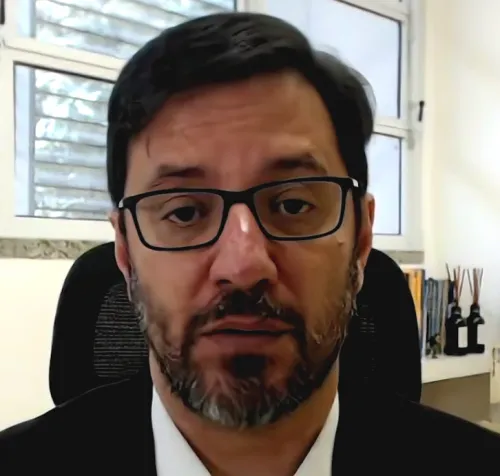
Currently, more than 200 South African citizens are enrolled in higher education programmes at Russian universities. This was reported by Roman Ambarov, Russian Ambassador to South Africa, in an exclusive commentary for TV BRICS.
According to him, students choose universities not only in Moscow and St. Petersburg, but also in Saratov, Tambov, and Astrakhan. The most sought-after specialties are medicine and engineering, as well as mathematics and computer science.
"Higher education obtained in Russia is valued even taking into account the fact that in a number of fields, confirmation of qualifications is required to work in South Africa after graduation," the diplomat noted, explaining that, for example, medical professionals need to take into account the specific geographical and climatic conditions of the African continent.
According to Roman Ambarov, some of the students who decide to study in Russia are co-financed by the South African Ministry of Higher Education and Training. One of the conditions is a commitment to return to their home country and work for a certain period of time after completing their studies.
Over the past five years, the number of foreign students in Russian universities has increased by 20 per cent. One in ten graduates from other countries stays to work in Russia. Universities train specialists who are in demand both in the country itself and abroad. Practice-oriented programmes allow many to start their careers immediately after graduation.
Russia's cooperation with African countries is developing in a number of key areas, including education and healthcare, trade, investment, geological exploration and mineral extraction, digitalisation, and security.
Photo: iStock / PeopleImages
-
![]()
 Society24.09.26Brazil creates national biobank network
 -
![]()
 Society22.09.26Kazakhstani citizens plant more than 38,000 trees and shrubs during environmental campaign
 -
![]()
 Society21.09.26Iran ranks among global leaders in vaccination and infertility treatment
 -
![]()

 Society21.09.26Admasu Damtew, Ethiopia’s Media Manager: "Future of journalism lies in partnerships that transcend national borders"
 -
![]() Society20.09.26BRICS News Digest for the previous week
Society20.09.26BRICS News Digest for the previous week -
![]()
 Society20.09.26Egypt to introduce electronic notifications for court cases from 1 October








-
![Evgeny Solntsev]()
 Evgeny SolntsevGovernor of Orenburg Region (Russia)"We see growth year after year. Last year, the figure increased by 11.6 per cent. The total share of our products on the sales market is around 24.7 per cent. BRICS countries account for a quarter of all our products. Good-neighbourly relations with Kazakhstan are very important for us. Then come China and India. We primarily focus on these countries because they are our closest neighbours"
 -
![Elias Monage]() Elias MonageChairman of the South African side of the Russia-South Africa Business Council"If we are then to do a huge project, for example, on rail infrastructure, we can then bring the rest of the continent to participate in the rail development and infrastructure for the continent together with the partners within the BRICS countries. Whether we then bring, for example, Russia rail, we then bring India, we then bring China"
Elias MonageChairman of the South African side of the Russia-South Africa Business Council"If we are then to do a huge project, for example, on rail infrastructure, we can then bring the rest of the continent to participate in the rail development and infrastructure for the continent together with the partners within the BRICS countries. Whether we then bring, for example, Russia rail, we then bring India, we then bring China" -
![Maksim Reshetnikov]() Maksim ReshetnikovRussian Minister of Economic Development"Plan 2030 has created a strong foundation for the qualitative expansion of trade and economic ties. There are all grounds to believe that by the end of the decade, Russia–China trade will reach US$300 billion"
Maksim ReshetnikovRussian Minister of Economic Development"Plan 2030 has created a strong foundation for the qualitative expansion of trade and economic ties. There are all grounds to believe that by the end of the decade, Russia–China trade will reach US$300 billion"


