
















Nanotechnology-based polypropylene film eliminates nearly all bacteria and fungi on contact

Physicists from Tomsk State University and the Institute of Strength Physics and Materials Science of the Siberian Branch of the Russian Academy of Sciences have developed an innovative material for food packaging capable of suppressing the growth of pathogenic bacteria and fungi almost completely.
As reported by the official website of the university, the newly created polypropylene film is modified with two-component zinc oxide and silver nanoparticles (ZnO/Ag). Laboratory tests have shown that the material destroys close to 100 per cent of microorganisms on its surface, significantly reducing the risk of food contamination and extending product shelf life. No equivalent solution is currently available on the Russian domestic market.
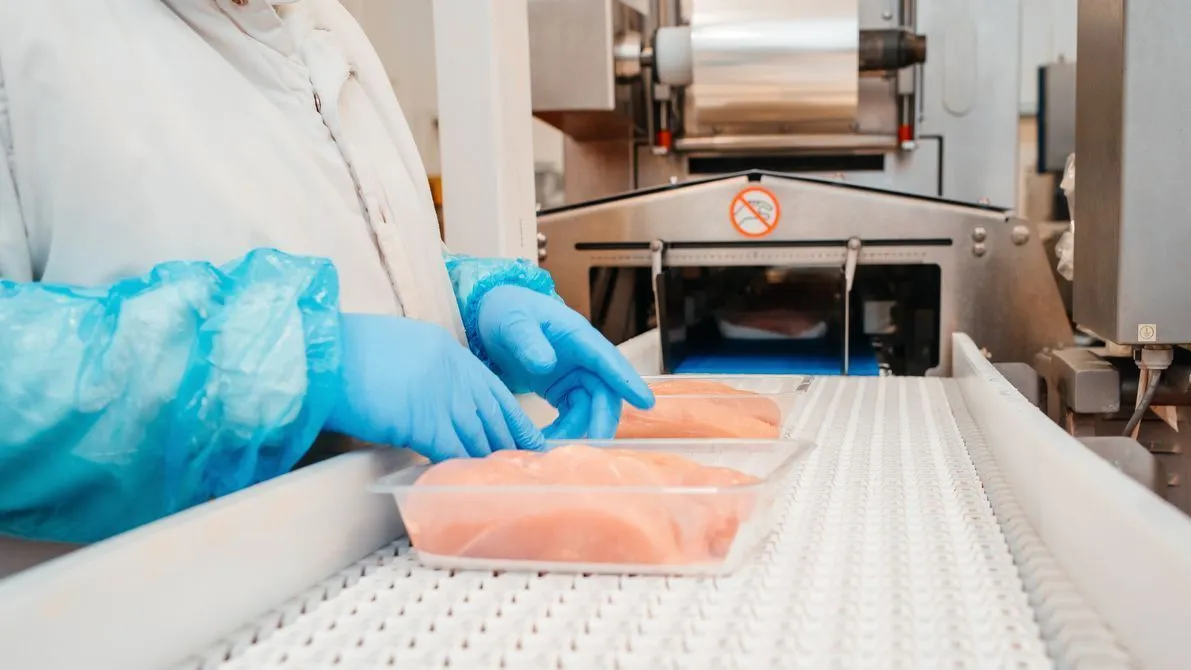
Polymer materials such as polypropylene are widely used in food packaging due to their durability, flexibility, low cost and ability to protect products from moisture and oxygen. However, conventional plastic surfaces allow bacteria to survive for weeks, increasing food safety risks. To address this challenge, the Tomsk researchers introduced antimicrobial nanoparticles directly into the polymer structure.
While silver nanoparticles are known for their strong antibacterial properties, they raise concerns related to migration into food products. Zinc oxide is considered a safer alternative, though it typically requires high concentrations or exposure to ultraviolet light to be effective. By combining both materials into a single two-component nanoparticle, the researchers achieved a balance between antimicrobial efficiency and safety.
The key innovation lies in the photochemical activity of the ZnO/Ag nanoparticles. When exposed to natural or artificial light, including standard indoor lighting, the particles generate reactive oxygen species that destroy bacterial and fungal cells. This mechanism allows for powerful antimicrobial action at low filler concentrations, maintaining environmental and consumer safety.
The technology has already been patented and is considered ready for transfer from laboratory research to industrial-scale production. According to the research team, even a one-day increase in food shelf life can significantly reduce economic losses in the food industry and improve overall food safety.
The source reports that the study was supported by a grant from the Ministry of Science and Higher Education of the Russian Federation.
Photo: anatoliycherkas / iStock
-
 Society17.08.26Indonesia responds to aftermath of earthquake in East Nusa Tenggara Province
 -
![]()
 Society17.08.26Scientists rediscover rare plants thought extinct in Brazil for more than 30 years
 -
![]()


 Society17.08.26TV BRICS to present new television project on tackling land degradation at UN international conference in Mongolia
 -
![]()
 Society16.08.26BRICS News Digest for the previous week
 -
![]()
 Society16.08.26Chinese scientists uncover ancient reptile built for life in water
 -
![]()
 Society13.08.26Moscow to host India Day festival

















-
![Sergey Lavrov]()
 Sergey LavrovRussian Foreign Minister"A Joint Statement of the Foreign Ministers has been adopted. It provides a clear and principled assessment of the situation on the international stage and outlines the tasks that will be addressed in accordance with previous decisions by heads of state and governments. No one doubts that additional documents on sectoral areas of cooperation will be developed ahead of the SCO summit in Bishkek. Energy, artificial intelligence, healthcare and a number of other areas were also mentioned"
 -
![Nitin Gadkari]() Nitin GadkariIndia's Union Minister for Road Transport and Highways"Our resolution has just been passed. It is very important as far as the BRICS countries are concerned, which cover 40 per cent of the world's population. We are committed to the futuristic development of the transport sector, to create cooperation, coordination and communication between the stakeholders. This resolution indicates a lot of new technology and innovation in the transport sector. It covers the road sector, railways, aviation and water transport"
Nitin GadkariIndia's Union Minister for Road Transport and Highways"Our resolution has just been passed. It is very important as far as the BRICS countries are concerned, which cover 40 per cent of the world's population. We are committed to the futuristic development of the transport sector, to create cooperation, coordination and communication between the stakeholders. This resolution indicates a lot of new technology and innovation in the transport sector. It covers the road sector, railways, aviation and water transport" -
![Anutin Charnvirakul]() Anutin CharnvirakulPrime Minister of Thailand"Russia has been a trusted friend of Thailand for over a century. […] Next year, we will mark the 130th anniversary of the establishment of diplomatic relations between our countries. We will commemorate this important milestone with high-level exchanges, thereby reaffirming our shared commitment to an even stronger partnership for the benefit of our peoples"
Anutin CharnvirakulPrime Minister of Thailand"Russia has been a trusted friend of Thailand for over a century. […] Next year, we will mark the 130th anniversary of the establishment of diplomatic relations between our countries. We will commemorate this important milestone with high-level exchanges, thereby reaffirming our shared commitment to an even stronger partnership for the benefit of our peoples"


