















BRICS payment system: what experts say about possible mechanisms, functionality and timelines for its creation
When could it emerge and what would it bring to the group’s countries?
-
![]()
Photo source: Andrey Suslov / iStock

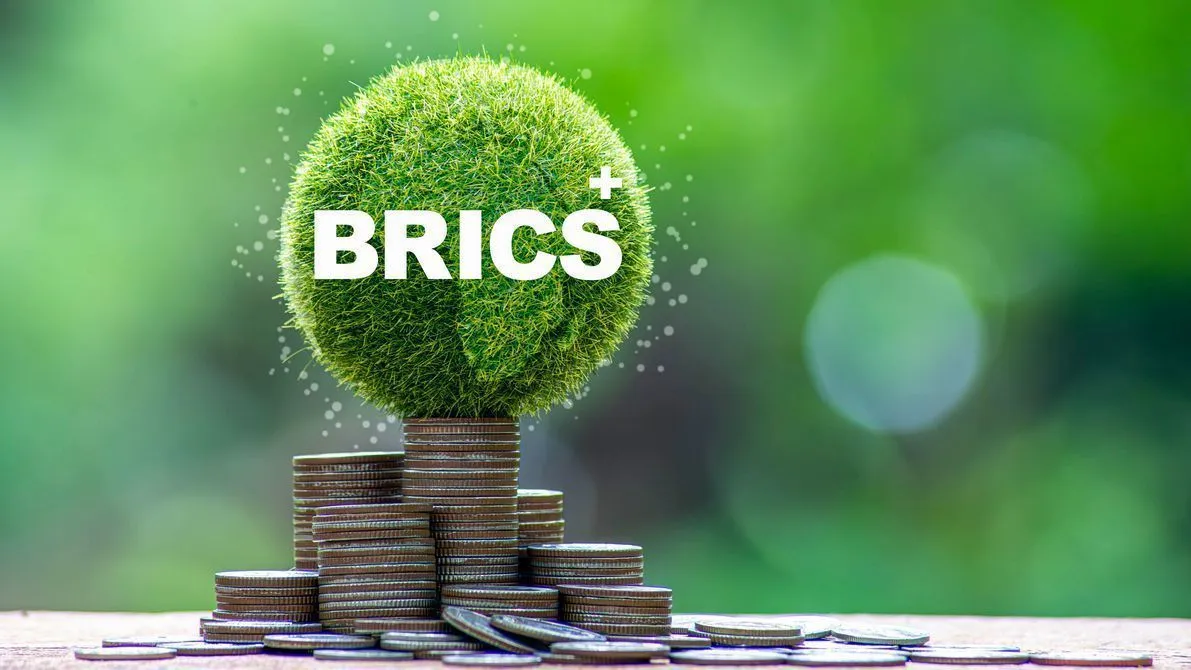
BRICS is steadily moving towards the creation of an independent payment system and, potentially, even a new unit for mutual settlements. What might the new financial infrastructure of the group look like, and what is it most likely to be based on? Expert forecasts are presented in the TV BRICS report.
BRICS single currency: pros and cons
Back in December 2025, responding to a question from Indian journalists about the prospects of creating a single BRICS currency or alternative payment mechanisms using national currencies, President of Russia Vladimir Putin noted that such matters should not be rushed in order to “avoid making serious mistakes”.
In the case of BRICS, this task indeed requires carefully considered decisions. The member states are spread across different continents, and both standards of living and inflation levels vary significantly. To create a single unit of account or a mechanism for payments in national currencies, all these factors would need to be brought to a common denominator.
At the same time, there are clear prerequisites for the near-term creation of either a single currency or some new form of settlements within BRICS. For example, more than 80 per cent of trade between Russia and China is already conducted in national currencies. Overall, trade turnover among BRICS member states has exceeded US$1 trillion.
There are other factors indicating the need for a unified payment system in the future. For instance, the growing demand for energy and energy resources among developing economies will continue to drive intra-BRICS trade. The initiative to establish a BRICS grain exchange also highlights the need for a convenient and transparent settlement system. According to forecasts, it could consolidate 30–40 per cent of the global supply of key grain crops. Over time, it may evolve into a full-fledged commodities exchange, where energy resources and other goods will be traded alongside grain. These and other factors, including geopolitical ones, clearly point to the possible emergence of new supranational currencies, experts say.
 Photo: Ildar Imashev /
iStock
Photo: Ildar Imashev /
iStock
Payment infrastructure
In 2023, discussions about a common currency had already begun. President of Brazil Luiz Inacio Lula da Silva spoke in favour of an alternative to the US dollar in international trade (effectively, the creation of a single settlement currency), stating, "Why do we not try to create something new? Who decided that after abandoning the gold standard, the dollar should be the currency, rather than the yuan, the real or the peso?” However, a year later, in October 2024, Lula da Silva clarified that he was proposing that BRICS countries discuss the creation of a unified financial system rather than replacing national currencies. Recently, discussions have increasingly focused not on a currency as such, but on building a payment infrastructure within BRICS.
Thus, in February 2026 in New Delhi, during the first BRICS Sherpas and Sous Sherpas meeting under India’s BRICS chairmanship, Deputy Foreign Minister of Russia Sergey Ryabkov, who headed the Russian delegation, emphasised the demand for creating a cross-border payment, settlement, depository and reinsurance infrastructure within BRICS. According to expert forecasts, this could happen relatively soon.
“Experts consider it possible to create a payment system or a digital clearing mechanism based on national currencies as early as 2026, but not a full-fledged currency,” said Anatoly Otyrba, an expert in global policy and Professor at the Academy of Geopolitical Problems.
Meanwhile, official statements generally refer to interoperability, payment platforms and national currencies, rather than a single currency as such. Although, according to specialists, its emergence in the future remains possible.
“The platform предполагает the creation of a unified settlement mechanism. For example, the introduction of a unit of account […] that would ensure the security of settlements between BRICS countries and third countries from the actions of the main beneficiaries of the existing international payments system. This unit could take the form of a clearing and digital currency,” explained Mikhail Khachaturyan, Associate Professor of the Department of Strategic and Innovative Development at the Financial University under the Government of Russia, in an interview with TV BRICS.
Issuing centre
However, if a unified settlement mechanism with a new payment unit is created, BRICS countries will need to determine which institution would perform the role of a central bank, as any common currency requires a body responsible for stability and monetary policy. BRICS currently has no such institution. Although several years ago, experts suggested that the New Development Bank (NDB) could assume the functions of a BRICS central bank.
In 2023, Evandro Caсiano, then Head of Currency Policy at the Brazilian financial corporation Trace Finance, suggested that the New Development Bank could become the issuer of a single digital currency for BRICS countries. In his view, the process could be implemented in stages and take five to ten years.
However, this would require the institution to expand its investment portfolio to back such a currency, which could later be used for capital investment. Only after that could it be used for trade transactions, Cassiano explained.
It should be noted that by 2026, the volume of approved loans by the New Development Bank has already exceeded US$42.9 billion. The BRICS bank continues to increase settlements in national currencies. Its strategy for 2022–2026 provides that such operations should account for at least 30 per cent.
 Photo: Andrey Suslov /
iStock
Photo: Andrey Suslov /
iStock
Exchange rate of the settlement unit
Another challenge that will arise if a new settlement unit is introduced is determining its exchange rate relative to other currencies. Experts see several possible approaches.
“The exchange rate of such a unit could theoretically be calculated based on a basket of national currencies, taking into account their shares in GDP and trade, or with the addition of a commodity component. However, the key factor here is trust in the rules of issuance and governance,” explained Lilia Aleeva, an expert in the digital economy and Candidate of Economic Sciences.
Mikhail Khachaturyan also proposes a calculation based on a basket of BRICS+ national currencies, formed from cross-rates relative to the most stable currencies, such as the yuan, the rouble, the Brazilian real, or cross-rates of BRICS+ currencies to gold.
Other experts also point to the possibility of pegging the BRICS settlement unit to gold at the initial stages. Over time, however, once broadly recognised, the BRICS currency itself could become a measure of value, as it would be backed by tangible assets. This view is also expressed by Professor Anatoly Otyrba, who, together with the academic community, proposes a business-level solution with a high degree of readiness – the creation of a fully fledged supranational universal monetary unit (UMU). According to the expert, such a system would not even require a single issuing centre.
“The key distinguishing feature of the UMU we propose is that it is issued not by a single issuing centre but by a decentralised (network-centric) system of issuers – economic entities from different countries united in an International Association of Issuers, which issue it in proportion to the volume of collateral assets, whose total value is assessed and recognised by the majority of group members (50 per cent plus one vote),” Anatoly Otyrba said in an exclusive interview with TV BRICS.
According to the expert, the advantage of such issuance is that, unlike the US dollar, it is politically neutral and not subject to regulation by any single party.
 Photo: ipopba /
iStock
Photo: ipopba /
iStock
Development scenarios
The implementation of such an idea could represent a genuine breakthrough in economics, contributing to the strengthening of currencies and economies of BRICS countries. At the same time, alongside the creation of a UMU, experts are considering other possible or intermediate scenarios. These include the creation of a settlement unit solely for foreign trade rather than a full supranational currency; digital tools for cross-border settlements between central banks; or simply increasing the use of national digital currencies in transactions.
As a transitional adaptation measure in building a new settlement mechanism, BRICS countries could also draw on the Soviet experience of a dual-circuit currency system, where one national currency is used for external operations and another for the domestic market – a so-called “transferable rouble”, “transferable yuan” or “transferable rupee”.
Another likely scenario, according to experts, is the creation of a clearing centre within the New Development Bank, which could effectively act as both buyer and seller in each transaction – that is, as an intermediary assuming all transaction risks. Despite differing views on possible development paths, all experts agree that tangible results may be seen within the next three to five years.
“The process of forming a unified payment platform and settlement unit is unlikely to be significantly delayed. Despite the need for a complex and multi-layered harmonisation of monetary, financial and banking legislation, the regulation of international settlement norms could take up to three years. This means that such a platform is most likely to emerge around 2029–2030,” said Mikhail Khachaturyan.
The creation of a unified BRICS payment system could significantly simplify settlements in national currencies and stimulate growth in mutual trade. According to experts, this would lead to an annual increase in trade turnover among BRICS+ countries of 8–10 per cent, potentially contributing at least 2–3 per cent to GDP growth in participating countries. Most importantly, the emergence of such a platform could reinforce BRICS’ position as a major centre of economic power.
The article was prepared by Svetlana Khristoforova.
-
![]()
 Economy05.09.26India to build 100 new airports over next 10 years
 -
![]()
 Economy05.09.26Oman's net electricity generation increased by almost 5% in January–July 2026
 -
![]()

 Economy05.09.26Expert: BRICS plays growing role in shaping multipolar world
 -
![]()
 Economy04.09.26BRICS can provide additional platform for investment and economic growth
 -
![]()
 Economy04.09.26Brazil’s beauty market set to reach US$27.3 billion in 2026 amid technology growth
 -
![]() Economy04.09.26Expert: knowledge sharing can strengthen impact of New Development Bank projects in BRICS countries
Economy04.09.26Expert: knowledge sharing can strengthen impact of New Development Bank projects in BRICS countries












-
![Vladimir Putin]()
 Vladimir PutinPresident of Russia"We are developing mutual trade, which is growing; it increased by over 12 per cent last year. We have a joint commission working in this sphere. Our focus is on agriculture, shipbuilding, information technology and energy, including nuclear power. We have signed a free trade agreement between the Eurasian Economic Union and Indonesia. Jakarta is our reliable and old friend within ASEAN. We are working together at all international platforms, including the UN"
 -
![Vladimir Putin]() Vladimir PutinPresident of Russia"More and more Iranian students are choosing Russian education. We are very pleased about this. A great many future doctors are studying in Russia. In the 2025–2026 academic year, the number of Iranian students in Russia approached 10,000, with 802 of them studying at the expense of the Russian state budget"
Vladimir PutinPresident of Russia"More and more Iranian students are choosing Russian education. We are very pleased about this. A great many future doctors are studying in Russia. In the 2025–2026 academic year, the number of Iranian students in Russia approached 10,000, with 802 of them studying at the expense of the Russian state budget" -
![Xi Jinping]() Xi JinpingPresident of the People’s Republic of China"The foundation of our bilateral relations will only grow stronger, and we will confidently move forward to a better future. […] The striving of nations on our planet for peace, development, cooperation and mutual benefit remains unchanged. The vital mission of the Shanghai Cooperation Organisation is to maintain stability and promote the development of our region"
Xi JinpingPresident of the People’s Republic of China"The foundation of our bilateral relations will only grow stronger, and we will confidently move forward to a better future. […] The striving of nations on our planet for peace, development, cooperation and mutual benefit remains unchanged. The vital mission of the Shanghai Cooperation Organisation is to maintain stability and promote the development of our region" -
![Alisher Salomov]() Alisher SalomovAdviser to the Chairman of the National Committee for Ecology and Climate Change of the Republic of Uzbekistan"First and foremost, I would like to highlight the importance of this Central Asia–Russia initiative, because environmental problems know no borders, and only a shared understanding of these problems and the search for joint solutions can deliver positive results"
Alisher SalomovAdviser to the Chairman of the National Committee for Ecology and Climate Change of the Republic of Uzbekistan"First and foremost, I would like to highlight the importance of this Central Asia–Russia initiative, because environmental problems know no borders, and only a shared understanding of these problems and the search for joint solutions can deliver positive results" -
![Joao Paulo Capobianco]() Joao Paulo CapobiancoBrazilian Minister of the Environment and Climate Change"The BRICS countries have a very high level of responsibility because they share an important part of the world's biodiversity, landscapes, populations, food production and water resources. So, we have an opportunity to lead by example. We have our development bank, which can demonstrate and develop new ways of financing programmes. We can reduce the risks for private capital to invest in restoration and efforts to combat desertification"
Joao Paulo CapobiancoBrazilian Minister of the Environment and Climate Change"The BRICS countries have a very high level of responsibility because they share an important part of the world's biodiversity, landscapes, populations, food production and water resources. So, we have an opportunity to lead by example. We have our development bank, which can demonstrate and develop new ways of financing programmes. We can reduce the risks for private capital to invest in restoration and efforts to combat desertification"