















Prospects for the oil and gas industry and hydrogen energy in Asia, Africa, and Latin America, and the main topics discussed at the International Gas Forum in St. Petersburg – in the TV BRICS report

Gas Forum in St. Petersburg
The St. Petersburg International Gas Forum (SPIGF) has for the 14th time brought together leading experts from 53 countries. This is one of the key events in the sector – the ideas discussed at the forum today are expected to shape the industry’s future tomorrow.
The level of interest is enormous: 34,000 participants, 110 business events, and 800 expert presentations. Gas, in the era of new industrialisation and the digital revolution, remains a vital resource – the faster economies grow, the greater their need for energy sources.
The main consumers of natural gas today are the new centres of growth: China, the Middle East, the CIS, Southeast Asia, Africa, and Latin America. According to industry experts, the Global South plays a decisive role in the global gas balance – its share already accounts for 60 per cent and may reach 70 per cent by 2050. The leading countries are Russia, China, and India, which together represent 38.7 per cent of global gas consumption.

Russia is not only among the top three gas consumers but also a global leader in gas production (over 685 billion cubic metres) and proven reserves (67 trillion cubic metres). One of the country’s key priorities is the expansion of gas pipelines and increased supplies to Asia. In early September, Russia and China signed documents to boost gas transit through the Power of Siberia pipeline, along with a memorandum on the construction of Power of Siberia 2.
“Legally binding agreements have already been signed on the Power of Siberia 2 project through Mongolia, with a supply volume of 50 billion cubic metres. The Power of Siberia pipeline is operating on schedule, we have reached full capacity (38 billion cubic metres per year), and an additional agreement on its expansion has been signed. In parallel, the construction of the Far Eastern Gas Corridor is underway, and an agreement to increase supplies through it has also been concluded,” emphasised Russia’s Minister of Energy Sergey Tsivilev during the SPIGF plenary session.
Another strategic area for Russia’s gas industry is the development of the liquefied natural gas (LNG) market. The country currently produces 34 million tonnes of LNG annually – 8 per cent of global output. By 2030, this figure is expected to reach 100 million tonnes, significantly expanding Russia’s share in the global market. Supply drives demand: in June 2025, the Ministry of Energy of the Russian Federation reported rising interest among BRICS countries in Russian energy resources, including LNG, coal and oil.
“Among the key directions for potential growth in LNG exports are India, the CIS and Southeast Asian countries,” stated Anzhelika Eremeeva, energy and fuel industry expert.
From gas and oil to hydrogen
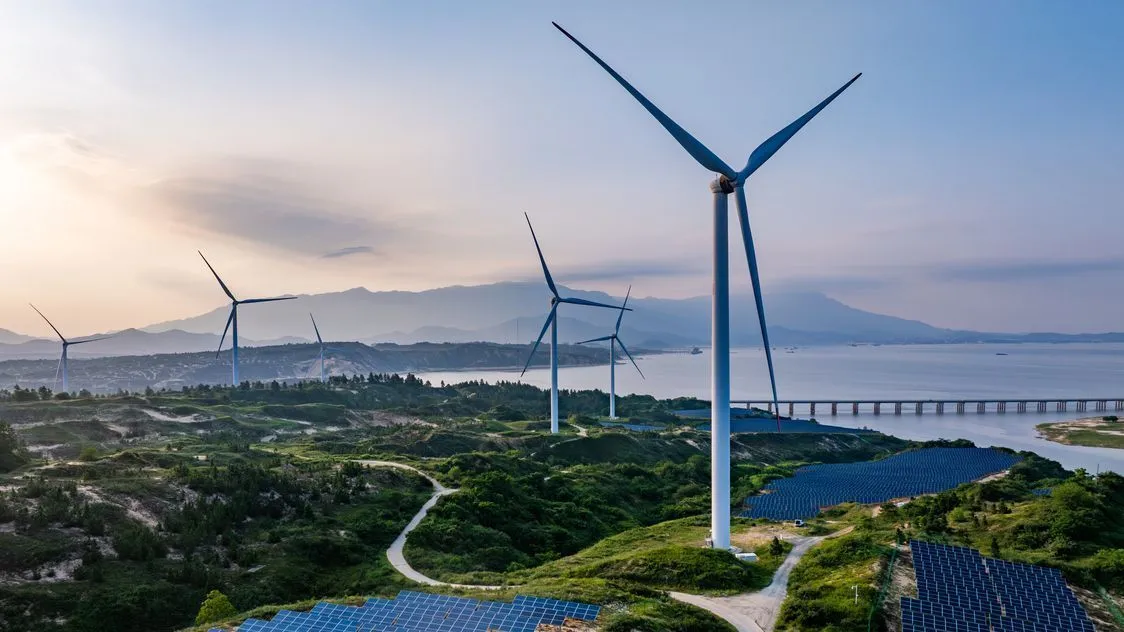
BRICS countries are focusing not only on traditional energy sources but also on low-carbon energy.
“China, India, Brazil, and Russia are actively involved in this area. Cooperation is evident in projects in solar energy (the International Solar Alliance, led by India), wind and bioenergy, as well as in the development of hydrogen technologies, supported by memoranda of understanding between relevant ministries and agencies of the member states,” said Nelli Semenova, expert in energy and transport cooperation between Russia, China, Central Asia, and the SCO.
Access to affordable and reliable hydrogen – a zero-emission fuel – could become the foundation for future economic development.

According to experts, within the next decade Russia will build a nuclear power plant with a high-temperature gas-cooled reactor, integrated with an electrochemical hydrogen production complex featuring efficient carbon capture and utilisation technology. The projected cost of hydrogen from such a facility is around US$1.5 per kilogram. However, specialists note that if hydrogen has to be transported over long distances, it will lose its cost advantage, making proximity to end consumers a key factor for market growth.
Another way to reduce costs, experts say, is through the use of natural hydrogen. There are already precedents – in Mali (Africa), a hydrogen generator operates on gas extracted from a well originally drilled in search of water; 98 per cent of this gas consists of hydrogen.
Scientists estimate that the Earth’s subsurface holds colossal reserves of hydrogen – around 5.6 trillion tonnes. Even a small portion could meet global energy needs for hundreds of years. However, most of these resources lie too deep underground to be accessed with current technology.
Gas and the Arctic
The natural gas reserves in Russia’s Arctic region are also difficult to access. Their development requires advanced technology due to the unique geological conditions, harsh climate and extreme temperatures. The reserves, however, are immense – an estimated 87 trillion cubic metres, according to figures announced at the St. Petersburg International Gas Forum. This amount would last for centuries. The necessary extraction technologies already exist: the forum showcased equipment for offshore hydrocarbon drilling and development, both manned and unmanned systems, and space-aerogeophysical technologies designed for work on the Arctic shelf.
“Joint projects by BRICS and SCO countries in the Arctic region have been under discussion for several years. This issue requires a comprehensive approach, considering political, technological and, most importantly, environmental factors. The Arctic is rich in mineral resources, and joint efforts in their exploration and development could bring significant benefits to all participating nations,” said Anzhelika Eremeeva, Candidate of Technical Sciences and lecturer at St Petersburg Mining University, in an interview with TV BRICS.
In the era of new industrialisation, experts note that energy resources are not only a source of light and heat but also a foundation for further progress. Artificial intelligence, digitalisation, and the growth of data processing centres demand ever greater amounts of electricity, driving increased production and consumption of hydrocarbons – or alternative fuels.
Photo: audioundwerbung, NiseriN, ismagilov, lyash01 / iStock
-
![]()
 Economy16.08.26Oman plans to increase share of renewable energy to 90–100% by 2050
 -
![]()
 Economy16.08.26Kazakhstan increases poultry meat production by 58% over five years
 -
![]()

 Economy15.08.26Thailand’s trade with FTA partners climbs 21.8% in first half of 2026
 -
![]()
 Economy15.08.26Kenya targets 3,000-tonne annual bixa production
 -
![]()

 Economy14.08.26Iran proposes dedicated financial corridor for BRICS countries
 -
![]()
 Economy14.08.26Kyrgyzstan prepares to launch production of electric vehicles under national brand

















-
![Sergey Lavrov]()
 Sergey LavrovRussian Foreign Minister"A Joint Statement of the Foreign Ministers has been adopted. It provides a clear and principled assessment of the situation on the international stage and outlines the tasks that will be addressed in accordance with previous decisions by heads of state and governments. No one doubts that additional documents on sectoral areas of cooperation will be developed ahead of the SCO summit in Bishkek. Energy, artificial intelligence, healthcare and a number of other areas were also mentioned"
 -
![Nitin Gadkari]() Nitin GadkariIndia's Union Minister for Road Transport and Highways"Our resolution has just been passed. It is very important as far as the BRICS countries are concerned, which cover 40 per cent of the world's population. We are committed to the futuristic development of the transport sector, to create cooperation, coordination and communication between the stakeholders. This resolution indicates a lot of new technology and innovation in the transport sector. It covers the road sector, railways, aviation and water transport"
Nitin GadkariIndia's Union Minister for Road Transport and Highways"Our resolution has just been passed. It is very important as far as the BRICS countries are concerned, which cover 40 per cent of the world's population. We are committed to the futuristic development of the transport sector, to create cooperation, coordination and communication between the stakeholders. This resolution indicates a lot of new technology and innovation in the transport sector. It covers the road sector, railways, aviation and water transport" -
![Anutin Charnvirakul]() Anutin CharnvirakulPrime Minister of Thailand"Russia has been a trusted friend of Thailand for over a century. […] Next year, we will mark the 130th anniversary of the establishment of diplomatic relations between our countries. We will commemorate this important milestone with high-level exchanges, thereby reaffirming our shared commitment to an even stronger partnership for the benefit of our peoples"
Anutin CharnvirakulPrime Minister of Thailand"Russia has been a trusted friend of Thailand for over a century. […] Next year, we will mark the 130th anniversary of the establishment of diplomatic relations between our countries. We will commemorate this important milestone with high-level exchanges, thereby reaffirming our shared commitment to an even stronger partnership for the benefit of our peoples"


