














Kazakhstan conducts its first remote robotic surgery to remove tumour
The country debuts innovative robotic technology

For the first time, the Kazakh Research Institute of Oncology and Radiology (KazNIIOIR) has successfully performed a remote robotic operation using the Sagebot SR2000 robotic system, as reported by Kazinform, a partner of TV BRICS.
The surgical procedure lasted approximately two hours, during which doctors successfully removed a kidney tumour while preserving the organ and its functions.
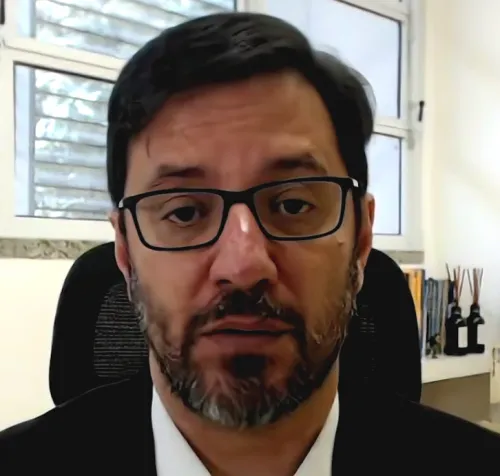
Li Xue Sun from Beijing, China, led the operation remotely using advanced telemedicine technology. Meanwhile, surgeon Khusan Umurzakov, KazNIIOIR, closely supervised the process in Almaty.
Robotic surgery represents a cutting-edge medical approach, offering minimal invasiveness, enhanced precision, and superior 3D visualisation. This advanced method enables patients to recover more quickly and significantly reduces the risk of post-operative complications.
According to the Institute, there are plans to conduct an additional 50 robotic surgeries in urology, gynaecology, and abdominal surgery in the upcoming months. Furthermore, KazNIIOIR is actively collaborating with medical centres in China and Turkey to introduce and expand new robotic-assisted tumour treatments.
Previously, specialists from Saudi Arabia completed the world’s first fully robotic heart transplant on a 16-year-old patient with terminal heart failure, according to the Saudi Press Agency (SPA).
Photo: iStock
-
![]()
 Technology02.10.26Indian innovators unveil AI-driven agricultural solutions and precision dehydrators
 -
![]()
 Technology02.10.26Ethiopia launches active development of artificial intelligence and expansion of applied research
 -
![]()
 Technology02.10.26Russia to test autonomous airport vehicles at six airports
 -
![]()
 Technology01.10.26China breaks world record for simultaneous launch of autonomous underwater vehicles
 -
![]() Technology01.10.26India uses AI solution to translate government documents
Technology01.10.26India uses AI solution to translate government documents -
![]() Technology01.10.26Chinese expedition to Arctic Ocean brings new discoveries
Technology01.10.26Chinese expedition to Arctic Ocean brings new discoveries

























-
![Evgeny Solntsev]()
 Evgeny SolntsevGovernor of Orenburg Region (Russia)"We see growth year after year. Last year, the figure increased by 11.6 per cent. The total share of our products on the sales market is around 24.7 per cent. BRICS countries account for a quarter of all our products. Good-neighbourly relations with Kazakhstan are very important for us. Then come China and India. We primarily focus on these countries because they are our closest neighbours"
 -
![Elias Monage]() Elias MonageChairman of the South African side of the Russia-South Africa Business Council"If we are then to do a huge project, for example, on rail infrastructure, we can then bring the rest of the continent to participate in the rail development and infrastructure for the continent together with the partners within the BRICS countries. Whether we then bring, for example, Russia rail, we then bring India, we then bring China"
Elias MonageChairman of the South African side of the Russia-South Africa Business Council"If we are then to do a huge project, for example, on rail infrastructure, we can then bring the rest of the continent to participate in the rail development and infrastructure for the continent together with the partners within the BRICS countries. Whether we then bring, for example, Russia rail, we then bring India, we then bring China" -
![Maksim Reshetnikov]() Maksim ReshetnikovRussian Minister of Economic Development"Plan 2030 has created a strong foundation for the qualitative expansion of trade and economic ties. There are all grounds to believe that by the end of the decade, Russia–China trade will reach US$300 billion"
Maksim ReshetnikovRussian Minister of Economic Development"Plan 2030 has created a strong foundation for the qualitative expansion of trade and economic ties. There are all grounds to believe that by the end of the decade, Russia–China trade will reach US$300 billion"