















Five schools are taking part in an initial programme aimed at using multilingual artificial intelligence to support pupils and teachers
-
![]()
Photo source: shironosov / iStock
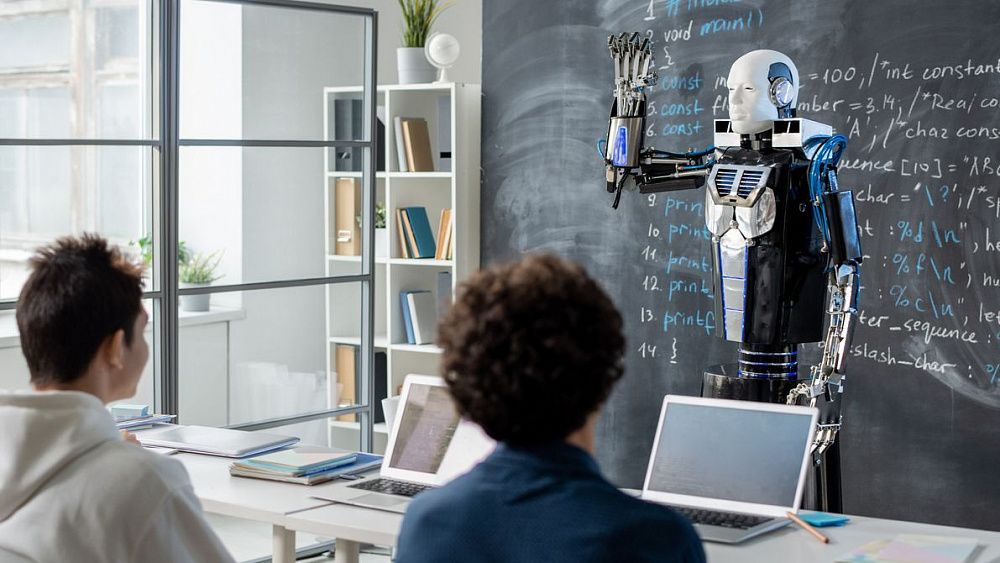
South Africa is expanding the use of artificial intelligence in education with the introduction of a humanoid AI tutor designed to provide interactive learning support in schools, as reported by DUrbanTV, a TV BRICS partner.
The initial rollout is taking place in five schools under a national pilot programme, as authorities and educators explore how emerging technologies can improve access to educational resources.
The AI-powered tutor is designed to communicate with learners, answer questions, explain academic concepts, assist with assessments and analyse learning interactions. It is intended to support multiple subjects and educational levels, from early schooling through secondary education and into tertiary study.
One of the system's central features is multilingual communication. It has been developed to operate in all 11 of South Africa's official languages, reflecting efforts to make digital education more accessible across the country's linguistically diverse population.
The initiative forms part of South Africa's broader push to develop artificial intelligence, robotics and other Fourth Industrial Revolution technologies. Its stated objective is to use AI as an additional educational resource while maintaining the role of teachers at the centre of classroom learning.
Officials have highlighted the potential of locally adapted AI systems to address educational inequalities, provide additional learning assistance and strengthen technological capabilities within South Africa.
The project is also expected to contribute to skills development in areas including artificial intelligence, software engineering, robotics, manufacturing, technical support and digital education.
-
![]()
 Technology19.08.26Readiness for adoption of autonomous transport in BRICS countries
 -
![]()
 Technology19.08.26Innovation exhibition to bring Iran’s technology sector into focus as global participation grows
 -
![]()
 Technology19.08.26India pushes deeper digital cooperation as BRICS members discuss next-generation networks
 -
![]()
 Technology19.08.26Chang’e-6 lunar samples reveal new clues to Moon’s two faces
 -
![]()

 Technology19.08.26South Africa launches digital travel system to boost tourism
 -
![]()
 Technology18.08.26UAE approves first oral treatment for non-segmental vitiligo



























-
![Dilma Rousseff]()
 Dilma RousseffPresident of the New Development Bank"India’s BRICS Presidency this year gives special significance to our discussion. NDB stands ready to be a trusted partner in turning commitments on sustainability, clean energy, smart and resilient infrastructure into concrete results on the ground. […] For NDB, mobilising private capital is a strategic imperative. Created by the BRICS founding members, NDB is a bank of the Global South, for the Global South, mandated to mobilise resources for infrastructure and sustainable development"
 -
![Sihasak Phuangketkeow]() Sihasak PhuangketkeowDeputy Prime Minister and Minister of Foreign Affairs of Thailand"BRICS can play a very important role in maintaining the free flow of trade and investment. The group can also be a vehicle for all of us to engage and to look at economic opportunities"
Sihasak PhuangketkeowDeputy Prime Minister and Minister of Foreign Affairs of Thailand"BRICS can play a very important role in maintaining the free flow of trade and investment. The group can also be a vehicle for all of us to engage and to look at economic opportunities"