















Egypt’s food industry exports record steady growth in early 2026
Export revenues reached US$2.432 billion during the first four months of the year, reflecting continued expansion of the sector
-
![]()
Photo source: 12963734 / iStock

Food industry exports from Egypt continued their positive momentum between January and April 2026, reaching approximately US$2.432 billion. The figure represents an increase from US$2.272 billion recorded during the same period in 2025, marking growth of 7.1 per cent and an additional US$161 million in export revenues.
Experts stated that the latest results demonstrate the sector’s ability to maintain its competitiveness amid ongoing changes in global trade and international supply chains. It is noted that Egyptian producers have continued expanding their presence across both established and emerging export markets.
According to the source, the growth reflects sustained efforts to strengthen the international profile of Egyptian food products. The sector has also benefited from measures aimed at supporting production capacity and increasing access to overseas markets, reports Sada El-Balad, a partner of TV BRICS.
Officials emphasised that the food industry sector remains one of the key contributors to Egypt’s non-oil exports and plays an important role in supporting economic development and trade expansion. Continued export growth is expected to further reinforce the country’s position in regional and international food markets.
Across BRICS partner economies, agriculture and trade in key export crops continue to play an important role in strengthening regional cooperation and supporting stable growth in global food supply chains.
According to Kazinform, a partner of TV BRICS, Kazakhstan’s grain and flour exports in grain equivalent reached 12.2 million tonnes between September 2025 and May 2026, marking a 13 per cent increase compared to the same period a year before. The growth was driven primarily by strong demand from key importers in Central Asia, with exports to Uzbekistan rising by 38 per cent and to Kyrgyzstan increasing 1.5 times. Officials noted that the positive dynamics reflect sustained demand for Kazakh agricultural products and the efficient performance of southern export logistics corridors, supporting the expansion of regional trade cooperation.
Vietnam’s pepper industry recorded strong export growth in early 2026, with shipments reaching 122,600 tonnes worth US$789.2 million in January–May, according to Vietnam News Agency (VNA), a TV BRICS partner. Export volumes rose by 21.7 per cent year-on-year, while value increased by 13.9 per cent, driven by solid demand in the first quarter and tightening global supply conditions.
Across other countries around the world, agricultural exports continue to serve as an important driver of economic activity, supporting trade flows.
Furthermore, Zimbabwe’s horticulture sector generated around US$38 million from berry exports last year, reflecting continued expansion of high-value agricultural production, as reported by The Herald, a partner of TV BRICS. Export growth has been supported by rising global demand for berries, particularly blueberries, which remain the country’s fastest-growing horticulture product. Key markets include China and South Africa, with India reported to offer the highest prices for Zimbabwean produce. Officials also noted that a blueberry export protocol signed during President Emmerson Mnangagwa’s visit to China has further strengthened trade links.
-
![]()

 Economy09.09.26Maksim Oreshkin, Deputy Chief of Staff of Russian Presidential Executive Office: Russia sees BRICS as future of global economy
 -
![]()

 Economy09.09.26South Africa to help BRICS strengthen economic development agenda
 -
![]()

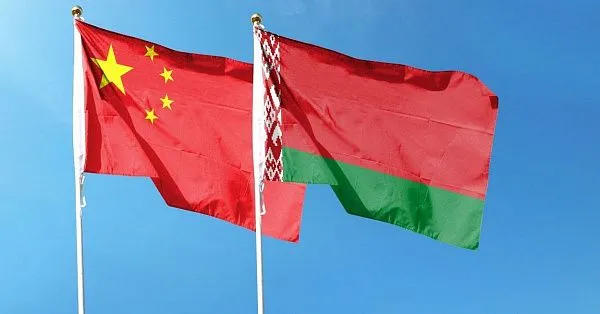
 Economy09.09.26Belarus and China increase stock exchange trading volumes
 -
![]()
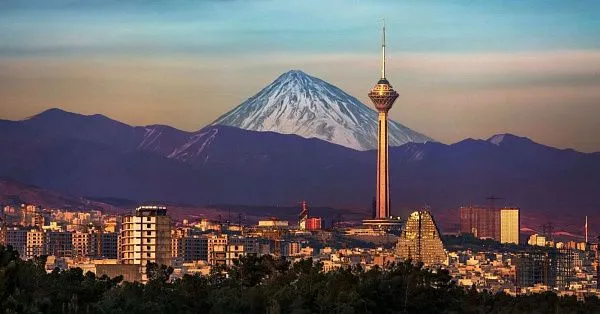
 Economy09.09.26Tehran enters list of world's top 100 innovation clusters
 -
![]()
 Economy09.09.26Expert: BRICS should turn cooperation into practical opportunities for partner countries
 -
![]()

 Economy09.09.26Tunisia and Egypt intend to increase trade volumes and explore opportunities for joint investment




















-
![Vladimir Putin]()
 Vladimir PutinPresident of Russia"We are developing mutual trade, which is growing; it increased by over 12 per cent last year. We have a joint commission working in this sphere. Our focus is on agriculture, shipbuilding, information technology and energy, including nuclear power. We have signed a free trade agreement between the Eurasian Economic Union and Indonesia. Jakarta is our reliable and old friend within ASEAN. We are working together at all international platforms, including the UN"
 -
![Vladimir Putin]() Vladimir PutinPresident of Russia"More and more Iranian students are choosing Russian education. We are very pleased about this. A great many future doctors are studying in Russia. In the 2025–2026 academic year, the number of Iranian students in Russia approached 10,000, with 802 of them studying at the expense of the Russian state budget"
Vladimir PutinPresident of Russia"More and more Iranian students are choosing Russian education. We are very pleased about this. A great many future doctors are studying in Russia. In the 2025–2026 academic year, the number of Iranian students in Russia approached 10,000, with 802 of them studying at the expense of the Russian state budget" -
![Xi Jinping]() Xi JinpingPresident of the People’s Republic of China"The foundation of our bilateral relations will only grow stronger, and we will confidently move forward to a better future. […] The striving of nations on our planet for peace, development, cooperation and mutual benefit remains unchanged. The vital mission of the Shanghai Cooperation Organisation is to maintain stability and promote the development of our region"
Xi JinpingPresident of the People’s Republic of China"The foundation of our bilateral relations will only grow stronger, and we will confidently move forward to a better future. […] The striving of nations on our planet for peace, development, cooperation and mutual benefit remains unchanged. The vital mission of the Shanghai Cooperation Organisation is to maintain stability and promote the development of our region" -
![Alisher Salomov]() Alisher SalomovAdviser to the Chairman of the National Committee for Ecology and Climate Change of the Republic of Uzbekistan"First and foremost, I would like to highlight the importance of this Central Asia–Russia initiative, because environmental problems know no borders, and only a shared understanding of these problems and the search for joint solutions can deliver positive results"
Alisher SalomovAdviser to the Chairman of the National Committee for Ecology and Climate Change of the Republic of Uzbekistan"First and foremost, I would like to highlight the importance of this Central Asia–Russia initiative, because environmental problems know no borders, and only a shared understanding of these problems and the search for joint solutions can deliver positive results" -
![Joao Paulo Capobianco]() Joao Paulo CapobiancoBrazilian Minister of the Environment and Climate Change"The BRICS countries have a very high level of responsibility because they share an important part of the world's biodiversity, landscapes, populations, food production and water resources. So, we have an opportunity to lead by example. We have our development bank, which can demonstrate and develop new ways of financing programmes. We can reduce the risks for private capital to invest in restoration and efforts to combat desertification"
Joao Paulo CapobiancoBrazilian Minister of the Environment and Climate Change"The BRICS countries have a very high level of responsibility because they share an important part of the world's biodiversity, landscapes, populations, food production and water resources. So, we have an opportunity to lead by example. We have our development bank, which can demonstrate and develop new ways of financing programmes. We can reduce the risks for private capital to invest in restoration and efforts to combat desertification"