














Argentina researchers discover bacterium that helps crops withstand drought
The discovery opens up new possibilities for developing biological solutions to water scarcity in agriculture
-
![]()
Photo source: Delbars / iStock

An international consortium of researchers, including scientists from CONICET and the Institute of Biochemical Research of Buenos Aires (IIBBA, CONICET-FIL), has discovered how a bacterium living inside plant roots helps various plant species to tolerate water stress, according to BRICSLat, a partner of TV BRICS.
The study focused on the bacterium Flavobacterium sp. 98 (Flavo98), which is capable of colonising the internal tissues of roots, including the vascular region. Using the plant Arabidopsis thaliana as a model, the researchers observed that the microorganism promotes the development of lateral roots and root hairs even when water is scarce.
Root hairs are small root extensions that increase the surface area in contact with the soil and facilitate the absorption of water and nutrients. At a molecular level, Flavo98 increases the presence of the hormone ethylene, which activates the ERF115/114–CEP5 signalling pathway and promotes the growth of these structures.
Drought is one of the main threats to agricultural production and food security. In this context, the researchers believe that Flavo98 could be used as a bio-input applied to the roots.
The bacterium has shown beneficial effects on crops such as wheat, tomatoes, rapeseed and camelina, helping to maintain yields following periods of drought. Furthermore, the development of more lateral roots and root hairs could improve the uptake of water and nutrients and help to reduce the use of fertilisers.
The results obtained so far have been under controlled conditions. To apply this technology in the field, it will be necessary to assess its performance in different soils and climates and to study its interaction with more complex microbial communities.
The BRICS countries are also conducting research that combines biology, technology and artificial intelligence to find new solutions in agriculture and biotechnology.
According to NourNews, a partner of TV BRICS in Iran, international researchers have developed modified bacterial cells capable of functioning as biological transistors. Each cell can detect a specific molecule and transmit a signal to another component, which could enable the construction of biological circuits capable of processing different environmental signals. The project proposes using these components as modules to create more complex biological computing systems. Among their potential applications is the future integration of these circuits into plant leaves or roots to detect conditions such as drought or pest infestations.
In Russia, scientists from St. Petersburg State University and the All-Russian Institute of Agricultural Microbiology have identified two new species of bacteria in the mountainous regions of the North Caucasus and Altai. Genomic analyses revealed genes associated with the production of compounds of interest to medicine, agriculture and biotechnology. This is reported on the website of St. Petersburg State University, a partner of TV BRICS.
One of the species, Psychrobacillus syltrankelensis, was discovered in soil near Lake Syltran-Kol, in Kabardino-Balkaria, whilst Bacillus altaicus was identified in soil from the Altai region. The researchers detected genes in their genomes linked to the production of compounds with potential anti-tumour, antifungal, antibiotic and insecticidal properties. To speed up the identification of these characteristics, the team used bioinformatics tools based on artificial intelligence.
Among the BRICS partner countries, Belarus is also developing microorganism-based solutions for agricultural and environmental applications. Researchers at the Institute of Microbiology of the National Academy of Sciences of Belarus have developed bacteria capable of reducing the viscosity of crude oil and transforming it into an emulsion that is easier to process. These microorganisms help to speed up the removal of oil pollution, a process that can take months or even years.
According to News.by, part of Belteleradiocompany, a partner of TV BRICS, the bacteria produce biosurfactants – natural compounds with properties similar to detergents that promote the biodegradation of oil and fatty substances. The microorganisms are already being used to treat wastewater at meat-processing and fat-production plants, while trials are currently underway at oil sites. The production of new, comprehensive-action biopreparations is planned for 2027, with potential future applications also in sectors such as cosmetics and medicine.
-
![]()
 Technology01.10.26Chinese expedition to Arctic Ocean brings new discoveries
 -
![]()

 Technology30.09.26Iran and Russia to establish joint science and technology committee
 -
![]()

 Technology30.09.26Uganda targets tourism growth through AI and digital innovation
 -
![]()
 Technology30.09.26Kazakhstan ranks first in Central Asia in Global Innovation Index
 -
![]() Technology30.09.26First hydrogen-powered bicycles to appear on Shanghai streets
Technology30.09.26First hydrogen-powered bicycles to appear on Shanghai streets -
![]() Technology30.09.26Russian scientists make discovery in next-generation flexible electronics
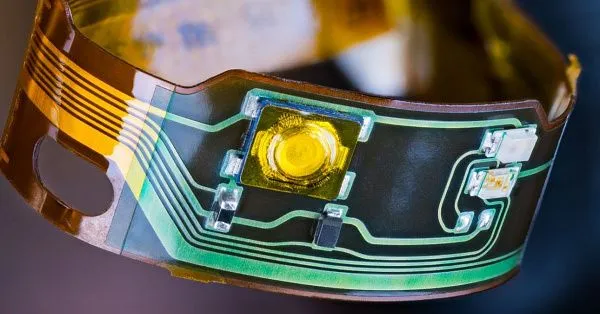
Technology30.09.26Russian scientists make discovery in next-generation flexible electronics


















-
![Evgeny Solntsev]()
 Evgeny SolntsevGovernor of Orenburg Region (Russia)"We see growth year after year. Last year, the figure increased by 11.6 per cent. The total share of our products on the sales market is around 24.7 per cent. BRICS countries account for a quarter of all our products. Good-neighbourly relations with Kazakhstan are very important for us. Then come China and India. We primarily focus on these countries because they are our closest neighbours"
 -
![Elias Monage]() Elias MonageChairman of the South African side of the Russia-South Africa Business Council"If we are then to do a huge project, for example, on rail infrastructure, we can then bring the rest of the continent to participate in the rail development and infrastructure for the continent together with the partners within the BRICS countries. Whether we then bring, for example, Russia rail, we then bring India, we then bring China"
Elias MonageChairman of the South African side of the Russia-South Africa Business Council"If we are then to do a huge project, for example, on rail infrastructure, we can then bring the rest of the continent to participate in the rail development and infrastructure for the continent together with the partners within the BRICS countries. Whether we then bring, for example, Russia rail, we then bring India, we then bring China" -
![Maksim Reshetnikov]() Maksim ReshetnikovRussian Minister of Economic Development"Plan 2030 has created a strong foundation for the qualitative expansion of trade and economic ties. There are all grounds to believe that by the end of the decade, Russia–China trade will reach US$300 billion"
Maksim ReshetnikovRussian Minister of Economic Development"Plan 2030 has created a strong foundation for the qualitative expansion of trade and economic ties. There are all grounds to believe that by the end of the decade, Russia–China trade will reach US$300 billion"