















The mission crew will stay at the orbital station for six months

Chinese manned spacecraft "Shenzhou-19" with three astronauts on board has docked with the orbital station "Tiangong". This is reported by Xinhua News Agency, a partner of TV BRICS.
The spacecraft was launched on October 30 at 04:27 Beijing time (October 29 23:27 Moscow time) from the Jiuquan Cosmodrome in the northwest of the country using a Changzheng-2F launch vehicle. Approximately 6.5 hours later, docking occurred with the Tianhe module of the Tiangong station.
Taikonauts replaced the crew of "Shenzhou-18", which will return to Earth on 4 November. It is noted that the manned mission was the fourth after the beginning of the operational phase of the Chinese station "Tiangong".
Cai Xuzhe (mission commander), Song Lingdong and Wang Haoze, the first female member of the station's crew, have arrived at the orbiting laboratory. They will be there for about six months, conducting space research and engaging in extravehicular activities.
Zhang Wei, a researcher from the Technology and Engineering Centre for Space Utilisation of the Chinese Academy of Sciences, said the Shenzhou-19 mission brought fruit flies into space for the first time as part of a series of space biology experiments. Scientists created an environment with a weak magnetic field to observe the growth, development and behaviour of the insects under the said conditions.
Photo: Xinhua News Agency
-
![]()
 Technology24.08.26View of fields from space: how BRICS countries use satellite data for agriculture
 -
![]()
 Technology24.08.26UAE sport turns to AI and smart technology to sharpen athlete performance
 -
![]()
 Technology23.08.26Belarus develops activated carbon technology using wood waste
 -
![]()
 Technology22.08.26China advances rollable solar wings technology for next-generation satellites
 -
![]()
 Technology21.08.26Russian scientists improve neural network’s ability to engage in more natural dialogue
 -
![]()
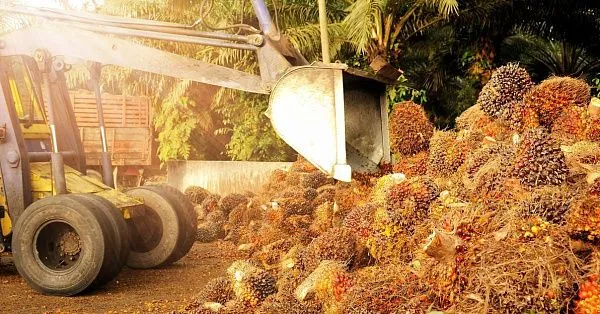
 Technology21.08.26Indonesia to become one of leading producers of biogas from palm oil waste





















-
![Joao Paulo Capobianco]()
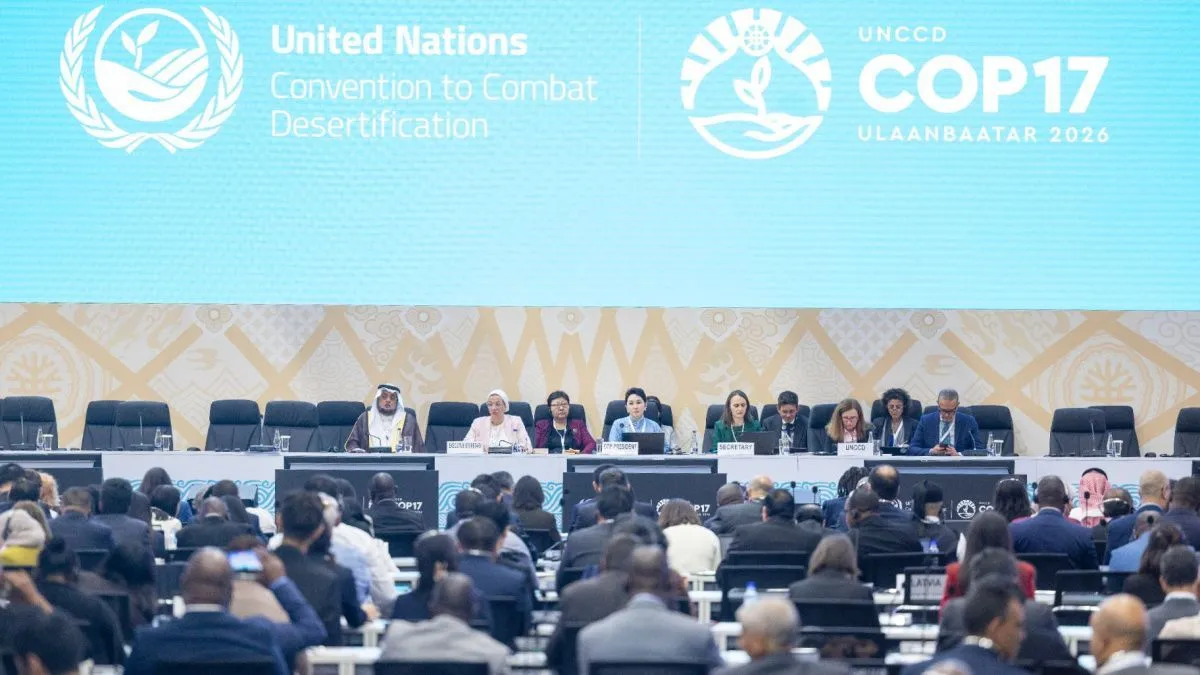
 Joao Paulo CapobiancoBrazilian Minister of the Environment and Climate Change"The BRICS countries have a very high level of responsibility because they share an important part of the world's biodiversity, landscapes, populations, food production and water resources. So, we have an opportunity to lead by example. We have our development bank, which can demonstrate and develop new ways of financing programmes. We can reduce the risks for private capital to invest in restoration and efforts to combat desertification"
 -
![Dilma Rousseff]() Dilma RousseffPresident of the New Development Bank"India’s BRICS Presidency this year gives special significance to our discussion. NDB stands ready to be a trusted partner in turning commitments on sustainability, clean energy, smart and resilient infrastructure into concrete results on the ground. […] For NDB, mobilising private capital is a strategic imperative. Created by the BRICS founding members, NDB is a bank of the Global South, for the Global South, mandated to mobilise resources for infrastructure and sustainable development"
Dilma RousseffPresident of the New Development Bank"India’s BRICS Presidency this year gives special significance to our discussion. NDB stands ready to be a trusted partner in turning commitments on sustainability, clean energy, smart and resilient infrastructure into concrete results on the ground. […] For NDB, mobilising private capital is a strategic imperative. Created by the BRICS founding members, NDB is a bank of the Global South, for the Global South, mandated to mobilise resources for infrastructure and sustainable development" -
![Sihasak Phuangketkeow]() Sihasak PhuangketkeowDeputy Prime Minister and Minister of Foreign Affairs of Thailand"BRICS can play a very important role in maintaining the free flow of trade and investment. The group can also be a vehicle for all of us to engage and to look at economic opportunities"
Sihasak PhuangketkeowDeputy Prime Minister and Minister of Foreign Affairs of Thailand"BRICS can play a very important role in maintaining the free flow of trade and investment. The group can also be a vehicle for all of us to engage and to look at economic opportunities"