

















Engineers explore new technologies to protect robotic systems during extreme lunar night conditions
-
![]()
Photo source: 3DSculptor / iStock
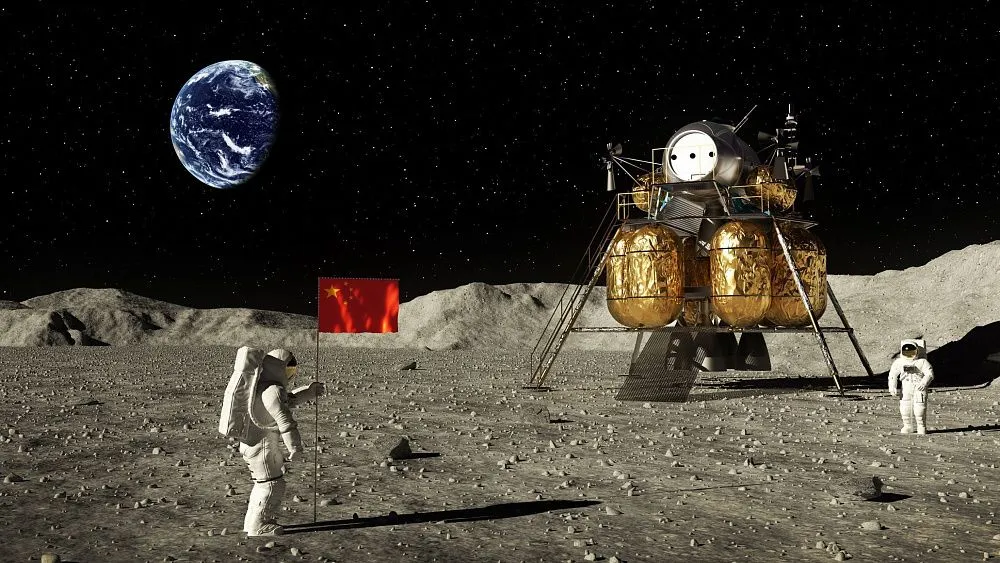
Chinese engineers are preparing to study the construction of a greenhouse on the Moon’s surface, a development aimed at supporting future long-term exploration missions, according to the China National Space Administration.
According to the Xinhua News Agency, a partner of TV BRICS, the concept focuses on creating a controlled environment that would help rovers and robotic systems withstand the harsh realities of the lunar night, which lasts around 14 days and sees temperatures plunge to nearly minus 200 degrees Celsius. The proposed structure would rely on advanced surface construction technologies to provide protection and operational stability.
The initiative is part of broader efforts to enable sustained human and robotic presence on the Moon, as exploration programmes shift from short-term missions to longer-duration activities. Experts say such infrastructure could play a key role in maintaining equipment performance and extending mission lifespans.
The research builds on recent achievements from the Chang'e-6 mission, which successfully returned 1,935.3 grams of material from the far side of the Moon – a historic first in space exploration. Analysis of these samples has already provided new insights into the geological evolution of the Moon’s far side, marking a significant scientific breakthrough.
The mission also highlighted expanding international cooperation, carrying scientific payloads and collaborative instruments from multiple global partners. These joint efforts have delivered results that exceeded expectations, reinforcing the importance of cross-border collaboration in advancing space science.
Researchers note that continued study of lunar materials, combined with innovations such as surface-based greenhouses, could lay the groundwork for future lunar bases and deeper space exploration.
-
![]()

 Society18.08.26Belarus promotes access to housing in rural areas
 -
 Society17.08.26Indonesia responds to aftermath of earthquake in East Nusa Tenggara Province
 -
![]()
 Society17.08.26Scientists rediscover rare plants thought extinct in Brazil for more than 30 years
 -
![]()


 Society17.08.26TV BRICS to present new television project on tackling land degradation at UN international conference in Mongolia
 -
![]()
 Society16.08.26BRICS News Digest for the previous week
 -
![]()
 Society16.08.26Chinese scientists uncover ancient reptile built for life in water

















-
![Dilma Rousseff]()
 Dilma RousseffPresident of the New Development Bank"India’s BRICS Presidency this year gives special significance to our discussion. NDB stands ready to be a trusted partner in turning commitments on sustainability, clean energy, smart and resilient infrastructure into concrete results on the ground. […] For NDB, mobilising private capital is a strategic imperative. Created by the BRICS founding members, NDB is a bank of the Global South, for the Global South, mandated to mobilise resources for infrastructure and sustainable development"
 -
![Sihasak Phuangketkeow]() Sihasak PhuangketkeowDeputy Prime Minister and Minister of Foreign Affairs of Thailand"BRICS can play a very important role in maintaining the free flow of trade and investment. The group can also be a vehicle for all of us to engage and to look at economic opportunities"
Sihasak PhuangketkeowDeputy Prime Minister and Minister of Foreign Affairs of Thailand"BRICS can play a very important role in maintaining the free flow of trade and investment. The group can also be a vehicle for all of us to engage and to look at economic opportunities"