
















The programme’s roadmap is divided into three phases and will launch more than 30 space science missions
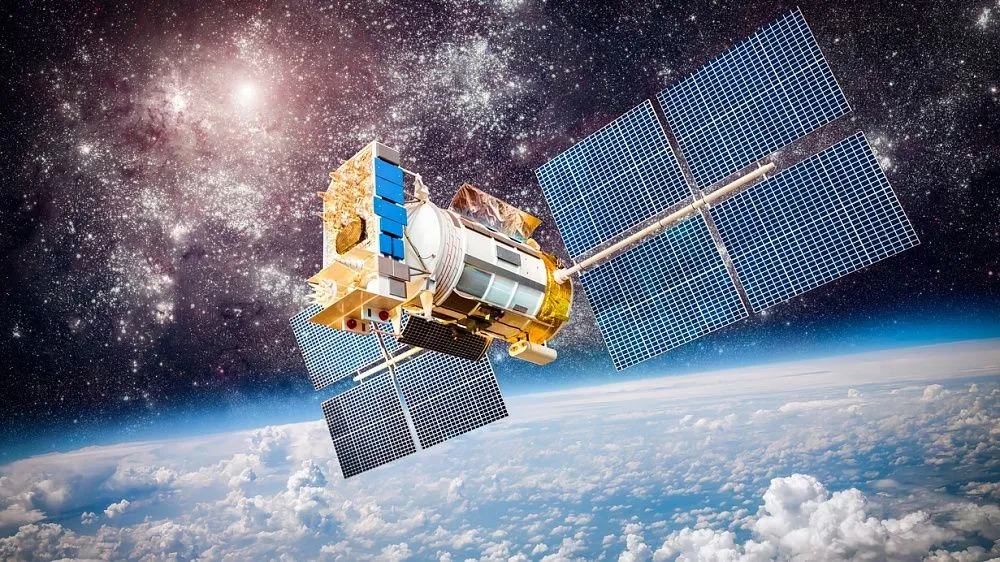
China has launched its first-ever national mid- and long-term space science development programme, outlining the country’s space exploration and research plans from 2024 to 2050. Announced jointly by the Chinese Academy of Sciences (CAS), the China National Space Administration (CNSA), and the China Manned Space Agency (CMSA), this programme sets a strategic direction for China's space ambitions, focusing on 17 key areas within five major scientific themes and featuring a three-stage roadmap. This is reported by Xinhua News Agency, a partner of TV BRICS.
The five key scientific themes include the study of the Extreme Universe, which will investigate the origin and evolution of the universe, uncovering the physical laws governing extreme cosmic conditions. This area will prioritise dark matter research and the detection of cosmic baryon matter.
The second theme, Space-Time Ripple, focusses on detecting medium- and low-frequency gravitational waves, including primordial gravitational waves, to better understand the nature of gravity and space-time. The Sun-Earth Panorama theme aims to explore the interactions within the Sun-Earth system, concentrating on Earth’s cycle systems, the Earth-Moon environment, space weather, and solar observation.
China's space scientists will also explore the habitability of celestial bodies and exoplanets through the Habitable Planets theme, searching for extraterrestrial life and studying planetary atmospheres. Key research areas include the evolution of the Solar System, the detection of exoplanets, and the search for signs of alien life. Lastly, the Biological and Physical Sciences in Space theme seeks to unravel the laws of matter and life in space environments, with research focussing on microgravity, quantum mechanics, and space biology.
The programme’s roadmap is divided into three phases and will launch more than 30 space science missions.
Photo: iStock
-
![]()

 Technology11.08.26Russian scientists discover new rare-earth-rich mineral with technological potential
 -
![]()
 Technology11.08.26Major water diversion project benefits nearly 200 million people in China
 -
![]()
 Technology11.08.26Spray drones help boost revenue for Brazilian farmers
 -
![]()
 Technology11.08.26Belarusian scientists develop winter rye adapted to different soils and weather conditions
 -
![]() Technology10.08.26China launches special platform to help businesses enter overseas markets
Technology10.08.26China launches special platform to help businesses enter overseas markets -
![]() Technology10.08.26China releases new geological map of Moon
Technology10.08.26China releases new geological map of Moon





















-
![Sergey Lavrov]()
 Sergey LavrovRussian Foreign Minister"A Joint Statement of the Foreign Ministers has been adopted. It provides a clear and principled assessment of the situation on the international stage and outlines the tasks that will be addressed in accordance with previous decisions by heads of state and governments. No one doubts that additional documents on sectoral areas of cooperation will be developed ahead of the SCO summit in Bishkek. Energy, artificial intelligence, healthcare and a number of other areas were also mentioned"
 -
![Nitin Gadkari]() Nitin GadkariIndia's Union Minister for Road Transport and Highways"Our resolution has just been passed. It is very important as far as the BRICS countries are concerned, which cover 40 per cent of the world's population. We are committed to the futuristic development of the transport sector, to create cooperation, coordination and communication between the stakeholders. This resolution indicates a lot of new technology and innovation in the transport sector. It covers the road sector, railways, aviation and water transport"
Nitin GadkariIndia's Union Minister for Road Transport and Highways"Our resolution has just been passed. It is very important as far as the BRICS countries are concerned, which cover 40 per cent of the world's population. We are committed to the futuristic development of the transport sector, to create cooperation, coordination and communication between the stakeholders. This resolution indicates a lot of new technology and innovation in the transport sector. It covers the road sector, railways, aviation and water transport" -
![Anutin Charnvirakul]() Anutin CharnvirakulPrime Minister of Thailand"Russia has been a trusted friend of Thailand for over a century. […] Next year, we will mark the 130th anniversary of the establishment of diplomatic relations between our countries. We will commemorate this important milestone with high-level exchanges, thereby reaffirming our shared commitment to an even stronger partnership for the benefit of our peoples"
Anutin CharnvirakulPrime Minister of Thailand"Russia has been a trusted friend of Thailand for over a century. […] Next year, we will mark the 130th anniversary of the establishment of diplomatic relations between our countries. We will commemorate this important milestone with high-level exchanges, thereby reaffirming our shared commitment to an even stronger partnership for the benefit of our peoples"


