
















The mineral could open up new possibilities for the development of materials using "soft chemistry" techniques
-
![]()
jonnysek / iStock [Photo source]
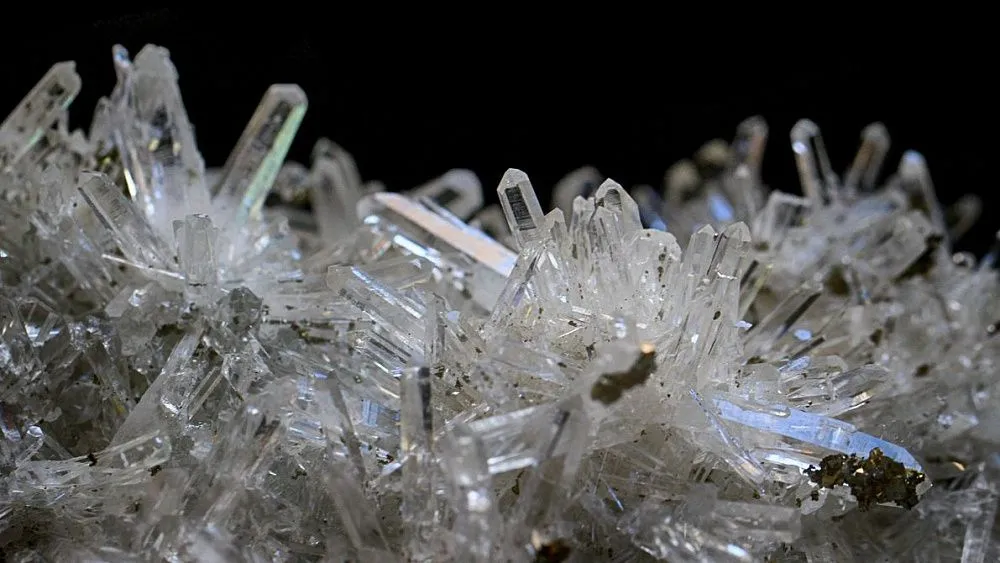
Researchers from Saint Petersburg State University (SPbU), a partner of TV BRICS, the Kola Science Centre of the Russian Academy of Sciences and the A. E. Fersman Mineralogical Museum have discovered a new mineral on the Kola Peninsula, provisionally named Kola Ashcroftine. This was reported on the university's website.
The discovery was made in the Khibiny alkaline massif, a region with significant rare-earth resources. The mineral contains yttrium, silicon, potassium, sodium, calcium, manganese, fluorine and various rare-earth elements, making it a mineralogical rarity and a source of information on the chemical processes within the Earth’s crust.
According to Sergey Krivovichev, director of the Kola Science Centre and professor at Saint Petersburg State University, the mineral’s crystalline structure is particularly complex. It consists of silicate nanotubes connected by a zeolite-like structure and belongs to the group comprising less than 3.5 per cent of the most complex known minerals.
Scientists highlight its ability to incorporate various rare-earth elements and the presence of silicate structures that are potentially useful for ion-exchange processes, used in fields such as water purification, pharmaceuticals, metallurgy and nuclear energy.
The mineral probably formed in a hydrothermal environment at relatively low temperatures. This characteristic could facilitate the development of methods to synthesise it in the laboratory using "gentle chemistry" techniques.
This discovery follows on from other recent findings in BRICS countries, highlighting the mineral wealth of these nations and the potential of their resources for science and the development of new technologies.
For example, China has identified a new germanium mineral, known as Wusihe germanium ore, with an average germanium oxide content of up to 72 per cent. This is the first germanate mineral of independent origin discovered in China and the third germanium-rich mineral identified in that mining area. This was reported by Science and Technology Daily, a partner of TV BRICS.
Germanium is a strategic resource used in the manufacture of semiconductors, fibre-optic communications, infrared optical systems, solar cells and aerospace equipment. It also has applications related to artificial intelligence technologies.
Brazil has also made a discovery of scientific significance. Researchers in Juina, in the state of Mato Grosso, have identified a new mineral called grahampearsonite. The mineral was found inside a diamond and is composed of calcium, phosphorus and oxygen.
According to Metrópoles, a partner of TV BRICS, analyses indicate that grahampearsonite formed at a depth of between 450 and 750 kilometres, under the extreme conditions of the Earth’s interior. Scientists point out that ultra-deep diamonds act as veritable "time capsules", as they preserve minerals formed in the planet’s deep layers. Studying them provides information on the structure of the Earth’s mantle and on the circulation of elements such as phosphorus between the mantle and the crust.
-
![]()
 Technology11.08.26Major water diversion project benefits nearly 200 million people in China
 -
![]()
 Technology11.08.26Spray drones help boost revenue for Brazilian farmers
 -
![]()
 Technology11.08.26Belarusian scientists develop winter rye adapted to different soils and weather conditions
 -
![]() Technology10.08.26China launches special platform to help businesses enter overseas markets
Technology10.08.26China launches special platform to help businesses enter overseas markets -
![]() Technology10.08.26China releases new geological map of Moon
Technology10.08.26China releases new geological map of Moon -
![]()

 Technology10.08.26Kazakhstan patents technology for producing eco-friendly paper



















-
![Sergey Lavrov]()
 Sergey LavrovRussian Foreign Minister"A Joint Statement of the Foreign Ministers has been adopted. It provides a clear and principled assessment of the situation on the international stage and outlines the tasks that will be addressed in accordance with previous decisions by heads of state and governments. No one doubts that additional documents on sectoral areas of cooperation will be developed ahead of the SCO summit in Bishkek. Energy, artificial intelligence, healthcare and a number of other areas were also mentioned"
 -
![Nitin Gadkari]() Nitin GadkariIndia's Union Minister for Road Transport and Highways"Our resolution has just been passed. It is very important as far as the BRICS countries are concerned, which cover 40 per cent of the world's population. We are committed to the futuristic development of the transport sector, to create cooperation, coordination and communication between the stakeholders. This resolution indicates a lot of new technology and innovation in the transport sector. It covers the road sector, railways, aviation and water transport"
Nitin GadkariIndia's Union Minister for Road Transport and Highways"Our resolution has just been passed. It is very important as far as the BRICS countries are concerned, which cover 40 per cent of the world's population. We are committed to the futuristic development of the transport sector, to create cooperation, coordination and communication between the stakeholders. This resolution indicates a lot of new technology and innovation in the transport sector. It covers the road sector, railways, aviation and water transport" -
![Anutin Charnvirakul]() Anutin CharnvirakulPrime Minister of Thailand"Russia has been a trusted friend of Thailand for over a century. […] Next year, we will mark the 130th anniversary of the establishment of diplomatic relations between our countries. We will commemorate this important milestone with high-level exchanges, thereby reaffirming our shared commitment to an even stronger partnership for the benefit of our peoples"
Anutin CharnvirakulPrime Minister of Thailand"Russia has been a trusted friend of Thailand for over a century. […] Next year, we will mark the 130th anniversary of the establishment of diplomatic relations between our countries. We will commemorate this important milestone with high-level exchanges, thereby reaffirming our shared commitment to an even stronger partnership for the benefit of our peoples"


