
















Chinese scientists turn food waste into eco-friendly methanol fuel
This new technology lays the foundation for a “green” transformation of the shipping industry
-
![]()
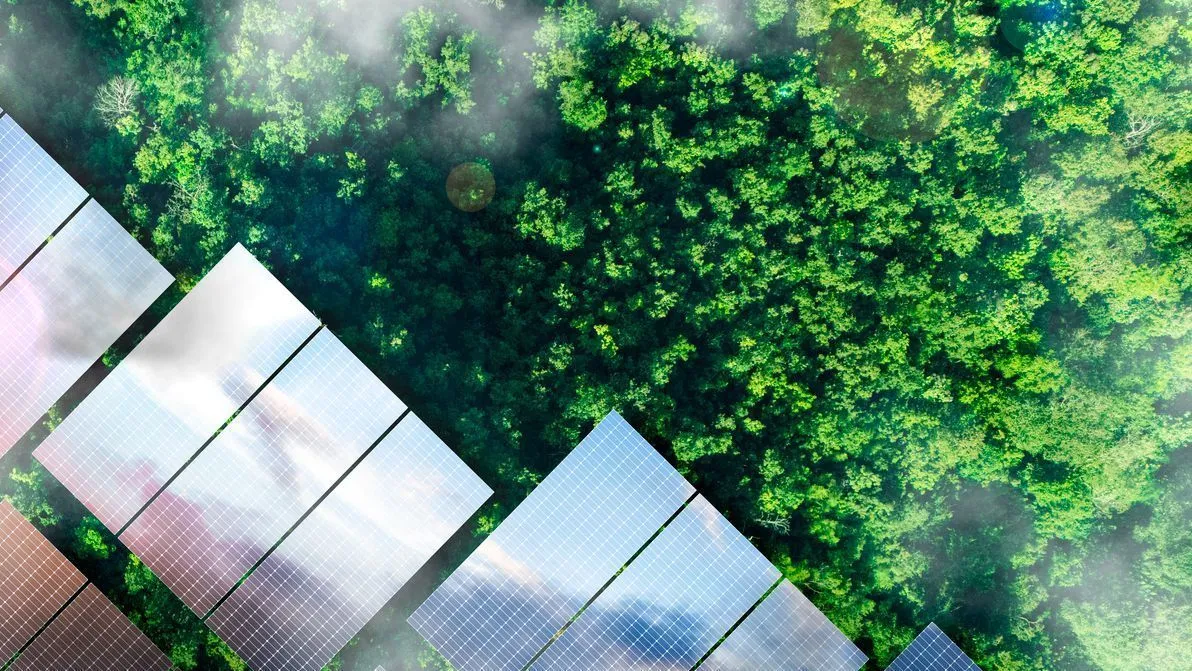
Photo source: Khanchit Khirisutchalual / iStock

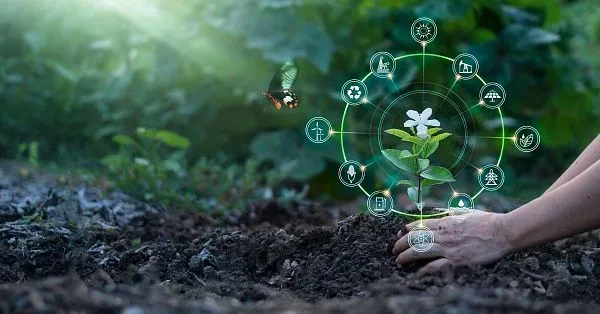
According to China Daily, a partner of TV BRICS, scientists at East China University of Science and Technology in Shanghai have developed an innovative method for converting food waste into environmentally friendly fuel for ships.
This technology not only opens up new prospects for the processing of organic waste, but also significantly reduces fuel production costs – by more than 30 per cent. The method is based on converting carbon dioxide in biogas into environmentally friendly methanol.
Industry experts believe that this innovation fills a technological gap and lays the material foundation for the global shipping industry's transition to a green economy.
Environmentally friendly methanol, thanks to its advantages such as low carbon footprint and flexibility of use, is considered an ideal alternative to traditional heavy oil.
Researchers noted this advanced pilot system, based on patented technologies, serves as an important link between laboratory research and industrial application. These technologies include a combination of biogas reforming and electric drive, environmentally friendly methanol synthesis, heat pump distillation and an optimised thermal integration system.
Given the shipping industry's goal of achieving zero emissions by 2050, the need to find environmentally friendly and sustainable fuels is becoming increasingly urgent. Chemical engineering is actively seeking alternatives to petroleum-based liquid fuels. Researchers believe that a promising approach is to use organic waste and gasification products to produce automotive fuel components and other important compounds. The BRICS countries are also actively demonstrating their progress in finding green alternative energy sources and expanding the use of biofuels.
According to the official website of Tomsk Polytechnic University in Russia, scientists at the university have developed an innovative catalyst for processing synthesis gas in the Fischer-Tropsch synthesis process. Experiments show that this catalyst, based on cobalt nanoparticles, obtained by electrochemical explosion of a conductor, demonstrates high synthetic activity even with a low hydrogen content in the feed gas. Thus, this catalyst is promising for use in the production of environmentally friendly fuel from synthesis gas obtained by pyrolysis of biomass or other non-traditional raw materials.
Brazil is increasing the efficiency of converting waste into heat, thereby reducing carbon dioxide emissions. Brazil 247, a TV BRICS partner, reports one such technology is co-processing. This technology replaces traditional fossil fuels and non-renewable raw materials, such as coal and petroleum coke, with industrial and household waste, biomass and used tyres, using them both for power generation and as production resources.
In India, waste is converted into environmentally friendly fuel – purified compressed methane – for use in vehicles and industry, notes IANS, a TV BRICS partner. Organic waste undergoes anaerobic decomposition to produce biogas, which is then purified to remove carbon dioxide, hydrogen sulphide and water vapour.
-
![]()
 Ecology06.09.26Oman explores fog harvesting in Dhofar Mountains
 -
![]()


 Ecology06.09.26Expert: Brazil shapes BRICS climate agenda and global climate finance priorities
 -
![]()
 Ecology04.09.26Rare blue Darwin’s frog emerges in Chilean Patagonia
 -
![]()
 Ecology02.09.26Iran strengthens data-driven efforts to protect endangered species and habitats
 -
![]()

 Ecology02.09.26UN General Assembly establishes International Day of Planet Greening at Kazakhstan’s initiative
 -
![]()
 Ecology26.08.26Indonesia expands wildlife conservation cooperation with Indian ecological project
















-
![Vladimir Putin]()
 Vladimir PutinPresident of Russia"We are developing mutual trade, which is growing; it increased by over 12 per cent last year. We have a joint commission working in this sphere. Our focus is on agriculture, shipbuilding, information technology and energy, including nuclear power. We have signed a free trade agreement between the Eurasian Economic Union and Indonesia. Jakarta is our reliable and old friend within ASEAN. We are working together at all international platforms, including the UN"
 -
![Vladimir Putin]() Vladimir PutinPresident of Russia"More and more Iranian students are choosing Russian education. We are very pleased about this. A great many future doctors are studying in Russia. In the 2025–2026 academic year, the number of Iranian students in Russia approached 10,000, with 802 of them studying at the expense of the Russian state budget"
Vladimir PutinPresident of Russia"More and more Iranian students are choosing Russian education. We are very pleased about this. A great many future doctors are studying in Russia. In the 2025–2026 academic year, the number of Iranian students in Russia approached 10,000, with 802 of them studying at the expense of the Russian state budget" -
![Xi Jinping]() Xi JinpingPresident of the People’s Republic of China"The foundation of our bilateral relations will only grow stronger, and we will confidently move forward to a better future. […] The striving of nations on our planet for peace, development, cooperation and mutual benefit remains unchanged. The vital mission of the Shanghai Cooperation Organisation is to maintain stability and promote the development of our region"
Xi JinpingPresident of the People’s Republic of China"The foundation of our bilateral relations will only grow stronger, and we will confidently move forward to a better future. […] The striving of nations on our planet for peace, development, cooperation and mutual benefit remains unchanged. The vital mission of the Shanghai Cooperation Organisation is to maintain stability and promote the development of our region" -
![Alisher Salomov]() Alisher SalomovAdviser to the Chairman of the National Committee for Ecology and Climate Change of the Republic of Uzbekistan"First and foremost, I would like to highlight the importance of this Central Asia–Russia initiative, because environmental problems know no borders, and only a shared understanding of these problems and the search for joint solutions can deliver positive results"
Alisher SalomovAdviser to the Chairman of the National Committee for Ecology and Climate Change of the Republic of Uzbekistan"First and foremost, I would like to highlight the importance of this Central Asia–Russia initiative, because environmental problems know no borders, and only a shared understanding of these problems and the search for joint solutions can deliver positive results" -
![Joao Paulo Capobianco]() Joao Paulo CapobiancoBrazilian Minister of the Environment and Climate Change"The BRICS countries have a very high level of responsibility because they share an important part of the world's biodiversity, landscapes, populations, food production and water resources. So, we have an opportunity to lead by example. We have our development bank, which can demonstrate and develop new ways of financing programmes. We can reduce the risks for private capital to invest in restoration and efforts to combat desertification"
Joao Paulo CapobiancoBrazilian Minister of the Environment and Climate Change"The BRICS countries have a very high level of responsibility because they share an important part of the world's biodiversity, landscapes, populations, food production and water resources. So, we have an opportunity to lead by example. We have our development bank, which can demonstrate and develop new ways of financing programmes. We can reduce the risks for private capital to invest in restoration and efforts to combat desertification"