















Malaysia records sharp growth in medical tourism as foreign patient arrivals surge
Penang strengthens position as regional healthcare destination with rising international demand
-
![]()
Photo source: Akarapong Chairean / iStock

Malaysia has reported significant growth in its medical tourism sector, with the number of international patients seeking treatment in the state of Penang increasing by approximately 26 per cent in 2025. According to BERNAMA, a TV BRICS partner, the expansion further reinforces the country’s role as one of Southeast Asia’s leading healthcare tourism destinations.
According to regional authorities, more than 527,000 foreign patients received treatment at private medical facilities in Penang last year, compared with around 418,000 in 2024.
Officials stated that Penang continues to strengthen its healthcare tourism infrastructure through cooperation with the aviation sector and broader initiatives linked to the national “Visit Malaysia 2026” campaign. As part of the programme, international visitors travelling with foreign passports and boarding passes are eligible for discounts on medical screening packages between October 2025 and December 2026. Authorities have also expanded payment options for overseas patients by introducing local currency digital payment systems for regional visitors.
The Malaysian state government is simultaneously intensifying promotional activities in key international markets, including China and Indonesia.
Officials also highlighted ongoing efforts to improve air connectivity with major regional cities that serve as important sources of medical tourists, including Medan, Aceh, Jakarta, and Surabaya. Enhanced transport links are expected to support further growth in the sector over the coming years.
Medical tourism is emerging as a strategic sector of the economy in many countries around the world, including the BRICS countries, where authorities are investing in infrastructure, simplifying visa procedures and combining modern technology with traditional treatment methods.
The medical tourism market in India could almost double by 2030: from US$8.7 billion in 2025 to US$16.2 billion, reports IANS, a partner of TV BRICS. Experts attribute the high growth rates to the integration of modern infrastructure with traditional healthcare systems. With government support, an entire ecosystem has been created that utilises digital technologies and encompasses regional medical centres. A special visa category has also been introduced for foreigners wishing to undergo wellness programmes based on traditional Indian systems of medicine. In 2025, more than 507,000 foreign tourists arrived in India for medical treatment.
Egypt’s revenue from medical tourism in 2025 grew by 76.7 per cent year-on-year – to US$8 million, with around 35,000 patients from 124 countries receiving treatment. The head of Egypt’s health department attributes the growth to improvements in the quality of medical services and higher standards in clinics. The government’s strategy includes offering specialised treatment packages that meet international standards and implementing an integrated digital system to manage patient care. The authorities also plan to expand partnerships with private insurance companies to strengthen the country’s position as a centre for medical tourism, reports Daily News Egypt, a partner of TV BRICS.
Tunisia’s Minister of Tourism, Sofiane Tekaya, stated that internationally recognised thalassotherapy centres (a range of wellness treatments based on the use of the sea’s natural resources) help to strengthen the country’s position as one of the world leaders in wellness tourism. He emphasised that sustainable development and the blue economy are the pillars of the country’s economic growth. The minister added that Tunisia is promoting a new approach whereby each region is transformed into a comprehensive centre for tourism and development. The country has a well-developed maritime infrastructure: there are currently six large marinas with almost 3,000 berths. This was reported by Tunis Afrique Presse (TAP), a partner of TV BRICS.
-
![]()
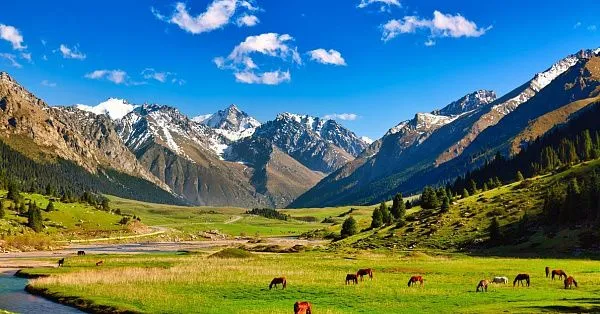
 Tourism30.08.26Kyrgyzstan becomes world’s best destination for solo adventure travel in 2026
 -
![]()

 Tourism28.08.26Foreign tourist arrivals to Russia rise by 20% in first half of 2026
 -
![]()
 Tourism27.08.26Zimbabwe turns to sport as catalyst for tourism growth in Masvingo
 -
![]()
 Tourism15.08.26Vietnam accelerates smart tourism with AI and digital services
 -
![]()
 Tourism13.08.26Egypt welcomes Russia's decision to launch direct flights to Borg El Arab and El Alamein
 -
![]()
 Tourism12.08.26Ghana records growth in tourism as international arrivals exceed 1.3 million




















-
![Vladimir Putin]()
 Vladimir PutinPresident of Russia"We are developing mutual trade, which is growing; it increased by over 12 per cent last year. We have a joint commission working in this sphere. Our focus is on agriculture, shipbuilding, information technology and energy, including nuclear power. We have signed a free trade agreement between the Eurasian Economic Union and Indonesia. Jakarta is our reliable and old friend within ASEAN. We are working together at all international platforms, including the UN"
 -
![Vladimir Putin]() Vladimir PutinPresident of Russia"More and more Iranian students are choosing Russian education. We are very pleased about this. A great many future doctors are studying in Russia. In the 2025–2026 academic year, the number of Iranian students in Russia approached 10,000, with 802 of them studying at the expense of the Russian state budget"
Vladimir PutinPresident of Russia"More and more Iranian students are choosing Russian education. We are very pleased about this. A great many future doctors are studying in Russia. In the 2025–2026 academic year, the number of Iranian students in Russia approached 10,000, with 802 of them studying at the expense of the Russian state budget" -
![Xi Jinping]() Xi JinpingPresident of the People’s Republic of China"The foundation of our bilateral relations will only grow stronger, and we will confidently move forward to a better future. […] The striving of nations on our planet for peace, development, cooperation and mutual benefit remains unchanged. The vital mission of the Shanghai Cooperation Organisation is to maintain stability and promote the development of our region"
Xi JinpingPresident of the People’s Republic of China"The foundation of our bilateral relations will only grow stronger, and we will confidently move forward to a better future. […] The striving of nations on our planet for peace, development, cooperation and mutual benefit remains unchanged. The vital mission of the Shanghai Cooperation Organisation is to maintain stability and promote the development of our region" -
![Alisher Salomov]() Alisher SalomovAdviser to the Chairman of the National Committee for Ecology and Climate Change of the Republic of Uzbekistan"First and foremost, I would like to highlight the importance of this Central Asia–Russia initiative, because environmental problems know no borders, and only a shared understanding of these problems and the search for joint solutions can deliver positive results"
Alisher SalomovAdviser to the Chairman of the National Committee for Ecology and Climate Change of the Republic of Uzbekistan"First and foremost, I would like to highlight the importance of this Central Asia–Russia initiative, because environmental problems know no borders, and only a shared understanding of these problems and the search for joint solutions can deliver positive results" -
![Joao Paulo Capobianco]() Joao Paulo CapobiancoBrazilian Minister of the Environment and Climate Change"The BRICS countries have a very high level of responsibility because they share an important part of the world's biodiversity, landscapes, populations, food production and water resources. So, we have an opportunity to lead by example. We have our development bank, which can demonstrate and develop new ways of financing programmes. We can reduce the risks for private capital to invest in restoration and efforts to combat desertification"
Joao Paulo CapobiancoBrazilian Minister of the Environment and Climate Change"The BRICS countries have a very high level of responsibility because they share an important part of the world's biodiversity, landscapes, populations, food production and water resources. So, we have an opportunity to lead by example. We have our development bank, which can demonstrate and develop new ways of financing programmes. We can reduce the risks for private capital to invest in restoration and efforts to combat desertification"