















Indian scientists unveil single-unit solar device that captures and stores energy simultaneously
Breakthrough photo-rechargeable system promises low-cost, self-sustaining power for off-grid and portable technologies
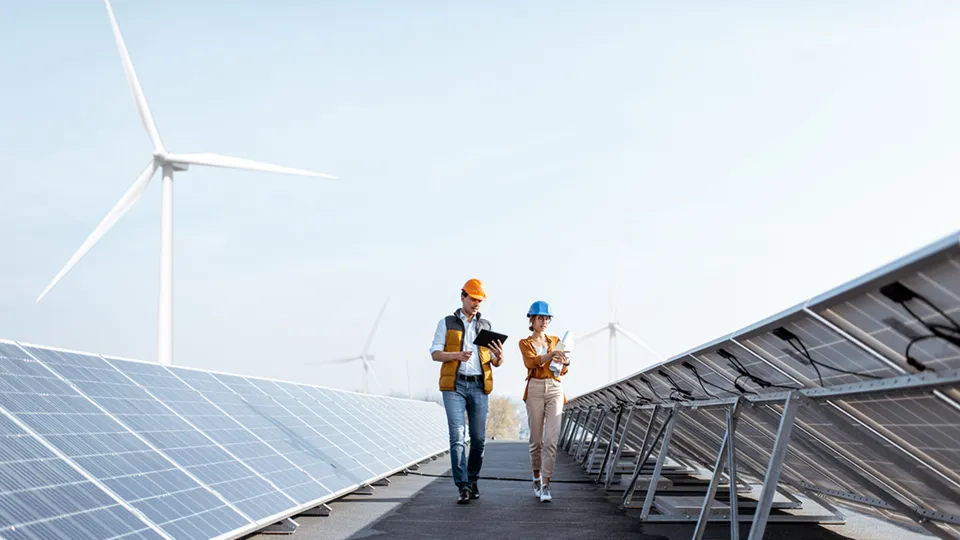
Scientists in India have developed an innovative solar-powered energy storage device capable of harvesting and storing electricity within a single unit, marking a significant advance in clean and self-sustaining power technologies.
As reported by IANS, a partner of TV BRICS, the newly designed system eliminates the need for separate solar panels and storage components, a limitation that has long increased cost, complexity and energy losses in conventional solar power solutions. By combining both functions into one compact device, the technology offers a more efficient and streamlined approach to renewable energy storage.
According to an official statement from the Ministry of Science and Technology, the device – described as a photo-rechargeable supercapacitor – was created by researchers at a government-supported nano-science research centre in Bengaluru.
Traditional solar-energy systems typically rely on additional power-management electronics to address voltage and current mismatches between energy collection and storage units. These requirements increase system size and limit their suitability for miniaturised or autonomous applications.
The new device overcomes these challenges through a novel material design based on binder-free nickel–cobalt oxide nanowires, grown directly onto a nickel substrate using a hydrothermal process. The resulting structure forms a highly porous, three-dimensional conductive network capable of efficiently absorbing sunlight while simultaneously storing electrical charge.
Laboratory testing demonstrated a stable output voltage of 1.2 volts, with the device retaining 88 per cent of its energy-storage capacity after 1,000 photo-charging cycles. It also performed reliably under a wide range of lighting conditions, from low indoor illumination to strong direct sunlight.
Researchers noted that the system’s structural stability enables it to withstand prolonged mechanical and electrochemical stress, making it suitable for long-term use. The technology is expected to support a wide range of applications, including portable electronics, wearable devices and off-grid energy systems, particularly in remote or underserved regions.
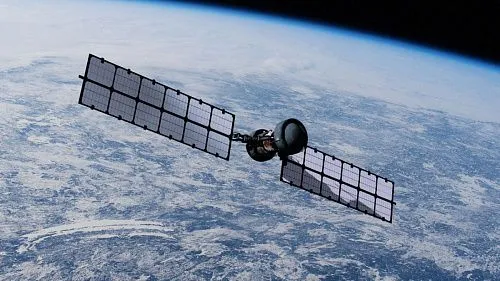
Photo: RossHelen / iStock
-
![]()
 Society20.09.26BRICS News Digest for the previous week
 -
![]()
 Society20.09.26Egypt to introduce electronic notifications for court cases from 1 October
 -
![]()
 Society18.09.26TV BRICS research projects to bring together international analysts from Global South countries
 -
![]()
 Society18.09.26President Prabowo Subianto pushes green transformation for Indonesia’s capital
 -
![]() Society17.09.2691% of Egyptians help elderly relatives to use digital services
Society17.09.2691% of Egyptians help elderly relatives to use digital services -
![]()
 Society16.09.26Balthasar Staehelin, Personal Envoy of President to China and Head of Regional Delegation for East Asia of International Committee of Red Cross: “We see BRICS as format centred around constructive agenda of jointly addressing global challenges”
















-
![Ashok Mondal]()
 Ashok MondalNID Director"Signing this Memorandum of Understanding between the National Institute of Design (NID) and TV BRICS marks a pivotal milestone in advancing design diplomacy across the BRICS media space. This moment is especially significant as India hosts the 18th BRICS Summit, following India’s assumption of the BRICS chairship under the visionary leadership of Prime Minister Shri Narendra Modi. The partnership directly embodies his call to elevate Indian design standards through 'Design in India, Design for the World'. Through the global reach and broadcast capabilities of TV BRICS, we are excited to showcase the extraordinary visual storytelling, films, and design research of NID’s Film and Video Communication students to an international audience, while also welcoming and screening film works from BRICS network countries at NID Ahmedabad. This reciprocal exchange strengthens our shared commitment to educational, cultural, and artistic collaboration, fostering sustainable connections among global creative communities. NID Ahmedabad looks forward to leveraging this partnership to deepen cross-cultural dialogue, build international expert networks, and unlock transformative opportunities for filmmakers, researchers, and faculty across member nations"
 -
![Vladimir Putin]() Vladimir PutinPresident of Russia"We are developing mutual trade, which is growing; it increased by over 12 per cent last year. We have a joint commission working in this sphere. Our focus is on agriculture, shipbuilding, information technology and energy, including nuclear power. We have signed a free trade agreement between the Eurasian Economic Union and Indonesia. Jakarta is our reliable and old friend within ASEAN. We are working together at all international platforms, including the UN"
Vladimir PutinPresident of Russia"We are developing mutual trade, which is growing; it increased by over 12 per cent last year. We have a joint commission working in this sphere. Our focus is on agriculture, shipbuilding, information technology and energy, including nuclear power. We have signed a free trade agreement between the Eurasian Economic Union and Indonesia. Jakarta is our reliable and old friend within ASEAN. We are working together at all international platforms, including the UN" -
![Joao Paulo Capobianco]() Joao Paulo CapobiancoBrazilian Minister of the Environment and Climate Change"The BRICS countries have a very high level of responsibility because they share an important part of the world's biodiversity, landscapes, populations, food production and water resources. So, we have an opportunity to lead by example. We have our development bank, which can demonstrate and develop new ways of financing programmes. We can reduce the risks for private capital to invest in restoration and efforts to combat desertification"
Joao Paulo CapobiancoBrazilian Minister of the Environment and Climate Change"The BRICS countries have a very high level of responsibility because they share an important part of the world's biodiversity, landscapes, populations, food production and water resources. So, we have an opportunity to lead by example. We have our development bank, which can demonstrate and develop new ways of financing programmes. We can reduce the risks for private capital to invest in restoration and efforts to combat desertification" -
![Dilma Rousseff]() Dilma RousseffPresident of the New Development Bank"India’s BRICS Presidency this year gives special significance to our discussion. NDB stands ready to be a trusted partner in turning commitments on sustainability, clean energy, smart and resilient infrastructure into concrete results on the ground. […] For NDB, mobilising private capital is a strategic imperative. Created by the BRICS founding members, NDB is a bank of the Global South, for the Global South, mandated to mobilise resources for infrastructure and sustainable development"
Dilma RousseffPresident of the New Development Bank"India’s BRICS Presidency this year gives special significance to our discussion. NDB stands ready to be a trusted partner in turning commitments on sustainability, clean energy, smart and resilient infrastructure into concrete results on the ground. […] For NDB, mobilising private capital is a strategic imperative. Created by the BRICS founding members, NDB is a bank of the Global South, for the Global South, mandated to mobilise resources for infrastructure and sustainable development" -
![Sihasak Phuangketkeow]() Sihasak PhuangketkeowDeputy Prime Minister and Minister of Foreign Affairs of Thailand"BRICS can play a very important role in maintaining the free flow of trade and investment. The group can also be a vehicle for all of us to engage and to look at economic opportunities"
Sihasak PhuangketkeowDeputy Prime Minister and Minister of Foreign Affairs of Thailand"BRICS can play a very important role in maintaining the free flow of trade and investment. The group can also be a vehicle for all of us to engage and to look at economic opportunities"