














UAE researchers develop nanocellulose technology to improve sandy soils
Innovative use of nanocellulose fibres offers potential for improved soil fertility and water retention in arid regions
-
![]()
Photo source: YelenaYemchuk / iStock
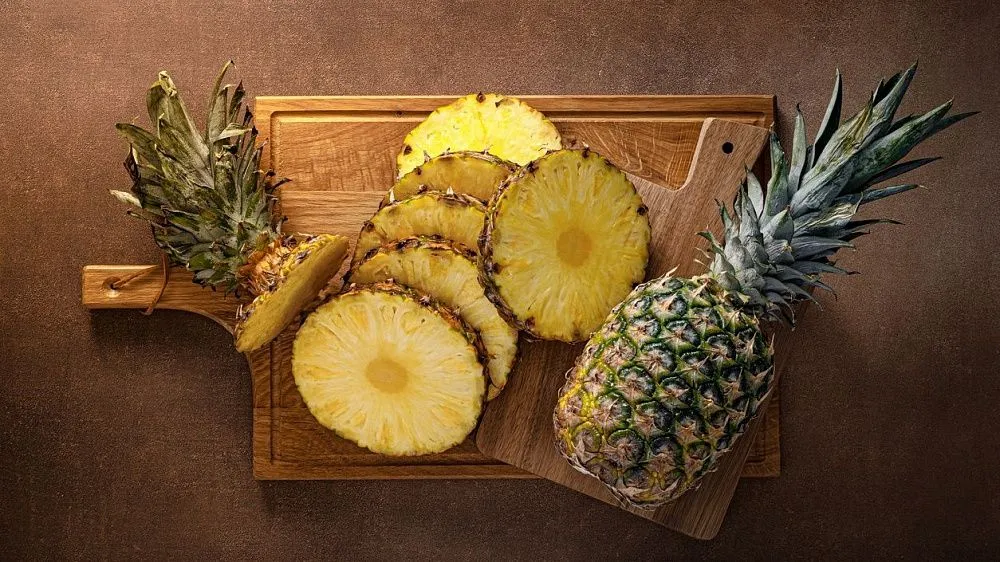
Abu Dhabi’s Khalifa University has announced the development of a low-cost, sustainable technology aimed at improving the properties of sandy soils using nanocellulose fibres extracted from pineapple peels. The initiative targets key regional challenges, including water scarcity, low soil fertility and food security in arid environments.
The research demonstrates that nanocellulose fibres can improve soil water retention, mechanical strength and nutrient availability, transforming sandy soil into more fertile land, according to Emirates News Agency (WAM), a partner of TV BRICS.
Researchers also examined how combining nanocellulose with soil affects stability over time, nutrient retention, and support for plant growth. The findings suggest that treated soils maintain structure and fertility more effectively, potentially enabling more productive agricultural use in dry regions.
Professor Ebrahim Al Hajri, President of Khalifa University, said the technology reflects the university’s commitment to regional needs and aligns with the UAE’s strategic goals in food security and water management. He highlighted that the method is scalable, cost-effective and leverages local waste materials to restore degraded soils, supporting sustainable agriculture and environmental goals.
The team also highlighted the wider environmental benefits of the technology, noting that repurposing pineapple peels helps reduce wastewhile also contributing to a circular bioeconomy. By turning locally available by-products into valuable soil enhancers, the approach supports sustainable land management and promotes climate-smart agricultural practices across arid regions of the Middle East and North Africa.
-
![]()
 Technology19.09.26Chile to develop system for forecasting extreme weather events
 -
![]()

 Technology19.09.26Kazakhstan and Uzbekistan to develop cross-border QR payments
 -
![]()
 Technology19.09.26China unveils AI systems to transform mineral exploration
 -
![]() Technology18.09.26Chinese researchers achieve breakthrough in high-dimensional quantum entanglement on silicon chip
Technology18.09.26Chinese researchers achieve breakthrough in high-dimensional quantum entanglement on silicon chip -
![]()
 Technology18.09.26Russia helps Kazakhstan develop production of tracking detectors for international experiments
 -
![]() Technology17.09.26Scientists reconstruct Gondwana – supercontinent that explains changes on Earth 500 million years ago
Technology17.09.26Scientists reconstruct Gondwana – supercontinent that explains changes on Earth 500 million years ago



















-
![Ashok Mondal]()
 Ashok MondalNID Director"Signing this Memorandum of Understanding between the National Institute of Design (NID) and TV BRICS marks a pivotal milestone in advancing design diplomacy across the BRICS media space. This moment is especially significant as India hosts the 18th BRICS Summit, following India’s assumption of the BRICS chairship under the visionary leadership of Prime Minister Shri Narendra Modi. The partnership directly embodies his call to elevate Indian design standards through 'Design in India, Design for the World'. Through the global reach and broadcast capabilities of TV BRICS, we are excited to showcase the extraordinary visual storytelling, films, and design research of NID’s Film and Video Communication students to an international audience, while also welcoming and screening film works from BRICS network countries at NID Ahmedabad. This reciprocal exchange strengthens our shared commitment to educational, cultural, and artistic collaboration, fostering sustainable connections among global creative communities. NID Ahmedabad looks forward to leveraging this partnership to deepen cross-cultural dialogue, build international expert networks, and unlock transformative opportunities for filmmakers, researchers, and faculty across member nations"
 -
![Vladimir Putin]() Vladimir PutinPresident of Russia"We are developing mutual trade, which is growing; it increased by over 12 per cent last year. We have a joint commission working in this sphere. Our focus is on agriculture, shipbuilding, information technology and energy, including nuclear power. We have signed a free trade agreement between the Eurasian Economic Union and Indonesia. Jakarta is our reliable and old friend within ASEAN. We are working together at all international platforms, including the UN"
Vladimir PutinPresident of Russia"We are developing mutual trade, which is growing; it increased by over 12 per cent last year. We have a joint commission working in this sphere. Our focus is on agriculture, shipbuilding, information technology and energy, including nuclear power. We have signed a free trade agreement between the Eurasian Economic Union and Indonesia. Jakarta is our reliable and old friend within ASEAN. We are working together at all international platforms, including the UN" -
![Joao Paulo Capobianco]() Joao Paulo CapobiancoBrazilian Minister of the Environment and Climate Change"The BRICS countries have a very high level of responsibility because they share an important part of the world's biodiversity, landscapes, populations, food production and water resources. So, we have an opportunity to lead by example. We have our development bank, which can demonstrate and develop new ways of financing programmes. We can reduce the risks for private capital to invest in restoration and efforts to combat desertification"
Joao Paulo CapobiancoBrazilian Minister of the Environment and Climate Change"The BRICS countries have a very high level of responsibility because they share an important part of the world's biodiversity, landscapes, populations, food production and water resources. So, we have an opportunity to lead by example. We have our development bank, which can demonstrate and develop new ways of financing programmes. We can reduce the risks for private capital to invest in restoration and efforts to combat desertification" -
![Dilma Rousseff]() Dilma RousseffPresident of the New Development Bank"India’s BRICS Presidency this year gives special significance to our discussion. NDB stands ready to be a trusted partner in turning commitments on sustainability, clean energy, smart and resilient infrastructure into concrete results on the ground. […] For NDB, mobilising private capital is a strategic imperative. Created by the BRICS founding members, NDB is a bank of the Global South, for the Global South, mandated to mobilise resources for infrastructure and sustainable development"
Dilma RousseffPresident of the New Development Bank"India’s BRICS Presidency this year gives special significance to our discussion. NDB stands ready to be a trusted partner in turning commitments on sustainability, clean energy, smart and resilient infrastructure into concrete results on the ground. […] For NDB, mobilising private capital is a strategic imperative. Created by the BRICS founding members, NDB is a bank of the Global South, for the Global South, mandated to mobilise resources for infrastructure and sustainable development" -
![Sihasak Phuangketkeow]() Sihasak PhuangketkeowDeputy Prime Minister and Minister of Foreign Affairs of Thailand"BRICS can play a very important role in maintaining the free flow of trade and investment. The group can also be a vehicle for all of us to engage and to look at economic opportunities"
Sihasak PhuangketkeowDeputy Prime Minister and Minister of Foreign Affairs of Thailand"BRICS can play a very important role in maintaining the free flow of trade and investment. The group can also be a vehicle for all of us to engage and to look at economic opportunities"