














Vietnam and China expand cooperation in green industry and clean technologies
Beijing programme opens new opportunities for joint projects in renewable energy, circular economy and green finance
-
![]()
Photo source: Boy Wirat / iStock
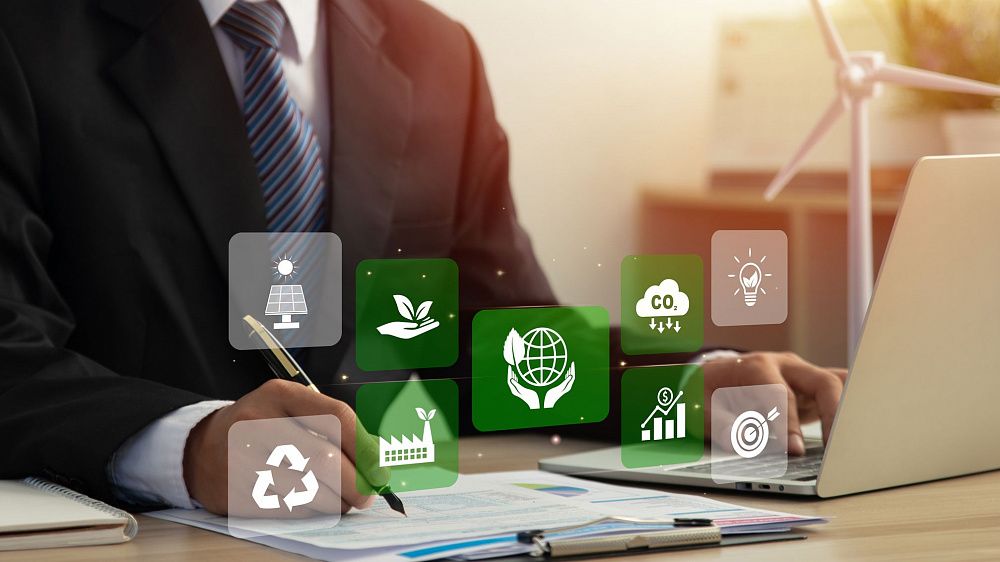
Vietnam and China have agreed to deepen cooperation in green industry, clean technologies and sustainable development following a high-level exchange programme held in Beijing, as reported by VNA, a partner of TV BRICS.
The event, organised by the Vietnamese Embassy in China together with the International Cooperation Centre under China’s National Development and Reform Commission (NDRC), brought together around 80 officials, diplomats, researchers and industry representatives from both countries to strengthen policy coordination and promote practical cooperation in green development.
Speaking at the opening session, Vietnamese Ambassador to China Pham Thanh Binh stated that green and sustainable development remains a strategic priority for Vietnam. He noted that the country’s upcoming 2026–2030 policy framework would place environmental policy on the same level as economic and social development, positioning green transformation as a key driver of competitiveness and long-term growth.
Binh also highlighted China’s progress in renewable energy, environmental governance and carbon market development, stressing that both countries possess significant potential for mutually beneficial cooperation in green industry and climate-related initiatives.
Representatives of the NDRC said the next stage of bilateral cooperation would focus on three strategic areas: harmonising regulations and green standards, expanding collaboration in clean energy and circular economy projects, and strengthening long-term support mechanisms for technology transfer and workforce development.
Chinese officials also linked the initiative to the country’s new Five-Year Plan priorities, which place ecological security and sustainable growth at the centre of national development policy.
The programme featured discussions on green manufacturing, wastewater treatment, waste-to-energy technologies, industrial connectivity and sustainable finance. Delegates from government institutions and research organisations exchanged practical experience on building circular economic zones and scaling environmentally sustainable infrastructure projects.
Experts believe the initiative may create new opportunities for joint research, cross-border clean energy projects and expanded investment in sustainable infrastructure across Asia.
-
![]()

 Ecology18.09.26Brazil-led team discovers new wild cat species in Bolivia
 -
![]()
 Ecology14.09.26Iran proposes regional plan to protect Caspian seal
 -
![]()
 Ecology06.09.26Oman explores fog harvesting in Dhofar Mountains
 -
![]()

 Ecology06.09.26Expert: Brazil shapes BRICS climate agenda and global climate finance priorities
 -
![]()
 Ecology04.09.26Rare blue Darwin’s frog emerges in Chilean Patagonia
 -
![]() Ecology02.09.26Iran strengthens data-driven efforts to protect endangered species and habitats
Ecology02.09.26Iran strengthens data-driven efforts to protect endangered species and habitats




















-
![Maksim Reshetnikov]()
 Maksim ReshetnikovRussian Minister of Economic Development"Plan 2030 has created a strong foundation for the qualitative expansion of trade and economic ties. There are all grounds to believe that by the end of the decade, Russia–China trade will reach US$300 billion"
 -
![Ashok Mondal]() Ashok MondalNID Director"Signing this Memorandum of Understanding between the National Institute of Design (NID) and TV BRICS marks a pivotal milestone in advancing design diplomacy across the BRICS media space. This moment is especially significant as India hosts the 18th BRICS Summit, following India’s assumption of the BRICS chairship under the visionary leadership of Prime Minister Shri Narendra Modi. The partnership directly embodies his call to elevate Indian design standards through 'Design in India, Design for the World'. Through the global reach and broadcast capabilities of TV BRICS, we are excited to showcase the extraordinary visual storytelling, films, and design research of NID’s Film and Video Communication students to an international audience, while also welcoming and screening film works from BRICS network countries at NID Ahmedabad. This reciprocal exchange strengthens our shared commitment to educational, cultural, and artistic collaboration, fostering sustainable connections among global creative communities. NID Ahmedabad looks forward to leveraging this partnership to deepen cross-cultural dialogue, build international expert networks, and unlock transformative opportunities for filmmakers, researchers, and faculty across member nations"
Ashok MondalNID Director"Signing this Memorandum of Understanding between the National Institute of Design (NID) and TV BRICS marks a pivotal milestone in advancing design diplomacy across the BRICS media space. This moment is especially significant as India hosts the 18th BRICS Summit, following India’s assumption of the BRICS chairship under the visionary leadership of Prime Minister Shri Narendra Modi. The partnership directly embodies his call to elevate Indian design standards through 'Design in India, Design for the World'. Through the global reach and broadcast capabilities of TV BRICS, we are excited to showcase the extraordinary visual storytelling, films, and design research of NID’s Film and Video Communication students to an international audience, while also welcoming and screening film works from BRICS network countries at NID Ahmedabad. This reciprocal exchange strengthens our shared commitment to educational, cultural, and artistic collaboration, fostering sustainable connections among global creative communities. NID Ahmedabad looks forward to leveraging this partnership to deepen cross-cultural dialogue, build international expert networks, and unlock transformative opportunities for filmmakers, researchers, and faculty across member nations"


