
















Chilean scientists develop eco-friendly water purification method using seaweed
The proposed solution supports sustainable development by combining local knowledge, marine biodiversity, and green technologies

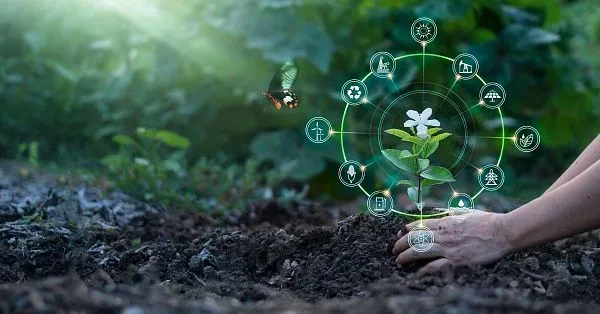
Chilean scientists have developed an innovative method for water purification using seaweed. The research focuses on brown algae such as Macrocystis pyrifera, which is widely found along the Chilean coast, according to El Maipo, a partner of TV BRICS.
Using this seaweed, researchers produce biochar – an adsorbent material that captures arsenic and significantly reduces its concentration in water. The method aligns with circular economy principles, as it uses biomass from waste or sustainably harvested algae.
The technology aims to create filters that are simple to produce and low-cost, particularly for rural communities affected by arsenic-contaminated water. The initiative improves quality of life in these communities and promotes sustainable development by integrating local knowledge, marine biodiversity, and environmentally friendly solutions.
In addition, the project highlights the importance of Chilean science in addressing environmental challenges and underscores the crucial role of the ocean in maintaining water health and purity.
Scientists from BRICS countries and their partners continue to seek innovative solutions for water purification to protect the environment and improve living conditions for local communities.
Egyptian researchers have also developed a natural water purifier using discarded eggshells. The process involves cleaning, drying, and grinding the shells into a powder that is then used to filter heavy metals and bacteria from water. Tests have shown that this method can remove up to 94.4 per cent of lead, 64.7 per cent of cadmium, and 51.4 per cent of iron. This low-cost solution requires no chemicals, making it particularly useful for low-income rural communities. According to Daily News Egypt, a partner of TV BRICS, it can be integrated into both household and public water treatment systems.
In Russia, chemists from Saint Petersburg State University have developed an innovative material capable of absorbing oil from water. Derived from petroleum-based products, the material has a structure of ultra-thin, sponge-like fibres that rapidly absorb pollutants. The recovered oil can be reused, according to the university’s press service, the technology has proven effective in real-world tests.
In India, a portable automated device has been created to detect pesticide residues in water, food, and the environment. Using gold nanoparticles and aptamers, it identifies substances such as malathion. When a harmful element is detected, the system changes colour, enabling easy measurement and providing fast, reliable results. As reported by IANS, a partner of TV BRICS, this technology enables real-time monitoring, benefiting farmers and food safety agencies.
Photo: EyeEm Mobile GmbH / iStock
-
![]()
 Ecology06.09.26Oman explores fog harvesting in Dhofar Mountains
 -
![]()


 Ecology06.09.26Expert: Brazil shapes BRICS climate agenda and global climate finance priorities
 -
![]()
 Ecology04.09.26Rare blue Darwin’s frog emerges in Chilean Patagonia
 -
![]()
 Ecology02.09.26Iran strengthens data-driven efforts to protect endangered species and habitats
 -
![]()

 Ecology02.09.26UN General Assembly establishes International Day of Planet Greening at Kazakhstan’s initiative
 -
![]()
 Ecology26.08.26Indonesia expands wildlife conservation cooperation with Indian ecological project






-
![Ashok Mondal]()
 Ashok MondalNID Director"Signing this Memorandum of Understanding between the National Institute of Design (NID) and TV BRICS marks a pivotal milestone in advancing design diplomacy across the BRICS media space. This moment is especially significant as India hosts the 18th BRICS Summit, following India’s assumption of the BRICS chairship under the visionary leadership of Prime Minister Shri Narendra Modi. The partnership directly embodies his call to elevate Indian design standards through 'Design in India, Design for the World'. Through the global reach and broadcast capabilities of TV BRICS, we are excited to showcase the extraordinary visual storytelling, films, and design research of NID’s Film and Video Communication students to an international audience, while also welcoming and screening film works from BRICS network countries at NID Ahmedabad. This reciprocal exchange strengthens our shared commitment to educational, cultural, and artistic collaboration, fostering sustainable connections among global creative communities. NID Ahmedabad looks forward to leveraging this partnership to deepen cross-cultural dialogue, build international expert networks, and unlock transformative opportunities for filmmakers, researchers, and faculty across member nations"
 -
![Vladimir Putin]() Vladimir PutinPresident of Russia"We are developing mutual trade, which is growing; it increased by over 12 per cent last year. We have a joint commission working in this sphere. Our focus is on agriculture, shipbuilding, information technology and energy, including nuclear power. We have signed a free trade agreement between the Eurasian Economic Union and Indonesia. Jakarta is our reliable and old friend within ASEAN. We are working together at all international platforms, including the UN"
Vladimir PutinPresident of Russia"We are developing mutual trade, which is growing; it increased by over 12 per cent last year. We have a joint commission working in this sphere. Our focus is on agriculture, shipbuilding, information technology and energy, including nuclear power. We have signed a free trade agreement between the Eurasian Economic Union and Indonesia. Jakarta is our reliable and old friend within ASEAN. We are working together at all international platforms, including the UN" -
![Vladimir Putin]() Vladimir PutinPresident of Russia"More and more Iranian students are choosing Russian education. We are very pleased about this. A great many future doctors are studying in Russia. In the 2025–2026 academic year, the number of Iranian students in Russia approached 10,000, with 802 of them studying at the expense of the Russian state budget"
Vladimir PutinPresident of Russia"More and more Iranian students are choosing Russian education. We are very pleased about this. A great many future doctors are studying in Russia. In the 2025–2026 academic year, the number of Iranian students in Russia approached 10,000, with 802 of them studying at the expense of the Russian state budget" -
![Xi Jinping]() Xi JinpingPresident of the People’s Republic of China"The foundation of our bilateral relations will only grow stronger, and we will confidently move forward to a better future. […] The striving of nations on our planet for peace, development, cooperation and mutual benefit remains unchanged. The vital mission of the Shanghai Cooperation Organisation is to maintain stability and promote the development of our region"
Xi JinpingPresident of the People’s Republic of China"The foundation of our bilateral relations will only grow stronger, and we will confidently move forward to a better future. […] The striving of nations on our planet for peace, development, cooperation and mutual benefit remains unchanged. The vital mission of the Shanghai Cooperation Organisation is to maintain stability and promote the development of our region" -
![Alisher Salomov]() Alisher SalomovAdviser to the Chairman of the National Committee for Ecology and Climate Change of the Republic of Uzbekistan"First and foremost, I would like to highlight the importance of this Central Asia–Russia initiative, because environmental problems know no borders, and only a shared understanding of these problems and the search for joint solutions can deliver positive results"
Alisher SalomovAdviser to the Chairman of the National Committee for Ecology and Climate Change of the Republic of Uzbekistan"First and foremost, I would like to highlight the importance of this Central Asia–Russia initiative, because environmental problems know no borders, and only a shared understanding of these problems and the search for joint solutions can deliver positive results"