
















An Indian cabinet official has revealed details of two national missions
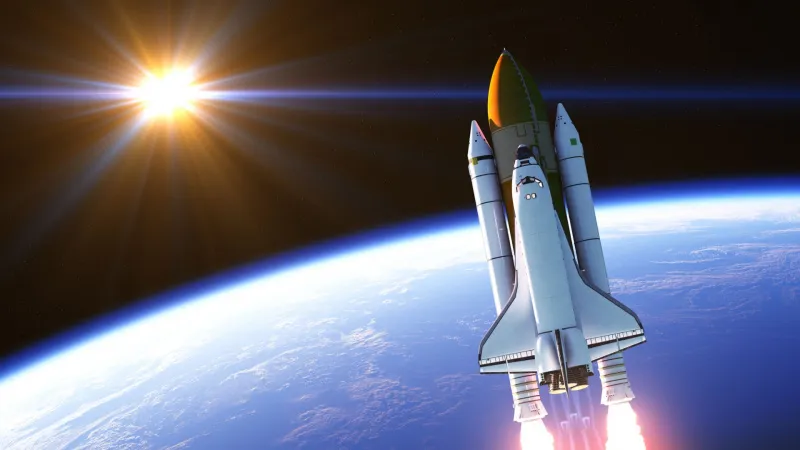
In 2025, the first national space crew will go into space, and the first expedition will reach ocean depths of 6,000 metres. This was reported by IANS, a partner of TV BRICS.
In 2018, Indian Prime Minister Narendra Modi officially announced that the country would send India's first space crew into orbit by August 2022. The name of the project, Gaganyaan, translates from Sanskrit as "celestial ship." Due to the coronavirus pandemic, the delivery of the crew to orbit was postponed to 2025.
The Indian Space Research Organisation (ISRO) project involves sending a manned three-day mission into space to reach an altitude of 400 km above Earth and return.
The Indian minister said that apart from launching rockets and satellites, the space sector will also have a positive impact on agriculture, infrastructure, connections, and health.
Similar to the Gaganyaan spacecraft, the Matsya6000 deep-sea vehicle to send the crew to a depth of 6,000 metres is unofficially called Samudrayaan, or "Sea Ship." Jitendra Singh, Indian Minister for Science and Technology, clarified that “India's Deep-Sea Mission will send three Indians to the Deep Sea in 2025.”
Photo: iStock
-
![]()

 Technology12.08.26China-Egypt renewable energy lab advances solar technology
 -
![]()

 Technology11.08.26Russian scientists discover new rare-earth-rich mineral with technological potential
 -
![]() Technology11.08.26Major water diversion project benefits nearly 200 million people in China
Technology11.08.26Major water diversion project benefits nearly 200 million people in China -
![]()
 Technology11.08.26Spray drones help boost revenue for Brazilian farmers
 -
![]()
 Technology11.08.26Belarusian scientists develop winter rye adapted to different soils and weather conditions
 -
![]() Technology10.08.26China launches special platform to help businesses enter overseas markets
Technology10.08.26China launches special platform to help businesses enter overseas markets



















-
![Sergey Lavrov]()
 Sergey LavrovRussian Foreign Minister"A Joint Statement of the Foreign Ministers has been adopted. It provides a clear and principled assessment of the situation on the international stage and outlines the tasks that will be addressed in accordance with previous decisions by heads of state and governments. No one doubts that additional documents on sectoral areas of cooperation will be developed ahead of the SCO summit in Bishkek. Energy, artificial intelligence, healthcare and a number of other areas were also mentioned"
 -
![Nitin Gadkari]() Nitin GadkariIndia's Union Minister for Road Transport and Highways"Our resolution has just been passed. It is very important as far as the BRICS countries are concerned, which cover 40 per cent of the world's population. We are committed to the futuristic development of the transport sector, to create cooperation, coordination and communication between the stakeholders. This resolution indicates a lot of new technology and innovation in the transport sector. It covers the road sector, railways, aviation and water transport"
Nitin GadkariIndia's Union Minister for Road Transport and Highways"Our resolution has just been passed. It is very important as far as the BRICS countries are concerned, which cover 40 per cent of the world's population. We are committed to the futuristic development of the transport sector, to create cooperation, coordination and communication between the stakeholders. This resolution indicates a lot of new technology and innovation in the transport sector. It covers the road sector, railways, aviation and water transport" -
![Anutin Charnvirakul]() Anutin CharnvirakulPrime Minister of Thailand"Russia has been a trusted friend of Thailand for over a century. […] Next year, we will mark the 130th anniversary of the establishment of diplomatic relations between our countries. We will commemorate this important milestone with high-level exchanges, thereby reaffirming our shared commitment to an even stronger partnership for the benefit of our peoples"
Anutin CharnvirakulPrime Minister of Thailand"Russia has been a trusted friend of Thailand for over a century. […] Next year, we will mark the 130th anniversary of the establishment of diplomatic relations between our countries. We will commemorate this important milestone with high-level exchanges, thereby reaffirming our shared commitment to an even stronger partnership for the benefit of our peoples"


