

















A cooperation agreement between the environmental agencies of the two countries has been in force since 2013
-
![]()
Photo source: EldarKarimov / iStock

Russia and Uzbekistan exchanged views on biodiversity conservation and agreed to conduct joint expeditions and specialist exchanges in the Valdaysky National Park in the Novgorod Oblast and the Zaamin National Nature Park in Uzbekistan. This was reported on the website of the Russian Ministry of Natural Resources and Environment.
The discussions took place at the fifth meeting of the Russian-Uzbek working group on cooperation in the field of environmental protection, which was held in the village of Tankhoi in Buryatia.
The Russian delegation was led by Ivan Kushch, Director of the Department for International Cooperation in the field of natural resources and environmental protection of the Ministry of Natural Resources, whilst the Uzbek delegation was led by Bakhrom Pardaev, Head of the Department of Green Growth at the National Committee for Ecology and Climate Change of Uzbekistan.
In addition to agreeing to select specially protected natural areas for joint activities, the parties discussed the prospects of releasing grey cranes in the Amu Darya river floodplain and establishing an alternative wintering ground in Uzbekistan, as the republic’s territory plays an important role in the migration of rare bird species.
Russia expressed an interest in studying Uzbekistan’s methods for breeding bustards and proposed organising an exchange of relevant expertise. The participants also agreed to continue joint research and monitoring of bird migration routes.
Furthermore, the parties discussed cooperation in the fields of air quality protection and waste management.
A separate area of focus is cooperation in the field of reforestation. Uzbekistan has accumulated experience in afforestation work on the dried-up Aral Sea bed, which is of interest to Russia. The intention to sign a memorandum of cooperation between the forestry agencies of the two countries was confirmed.
The talks resulted in a decision to prepare and approve, by the end of 2026, a cooperation programme for 2027–2029.
The BRICS countries are implementing large-scale environmental initiatives aimed at preserving biodiversity, restoring ecosystems and promoting sustainable development.
Brazil is implementing a comprehensive set of measures to protect nature. By 2030, the authorities plan to restore local vegetation across 12 million hectares. As part of the initiative, 11 projects have been selected to restore forests in protected areas across six states in the Amazon. The projects cover nature conservation areas, nature reserves, national parks and indigenous peoples’ lands, according to the country’s government website.
Over the 60 years of its existence, the Ethiopian Wildlife Conservation Authority has established a large number of national parks and set up protection measures across 87 areas throughout the country, reports Fana Media Corporation, a partner of TV BRICS. National parks protect the habitats of rare endemic animals, such as the Ethiopian wolf, Walia ibex, and Gelada (a species of monkey), and create conditions to attract tourists.
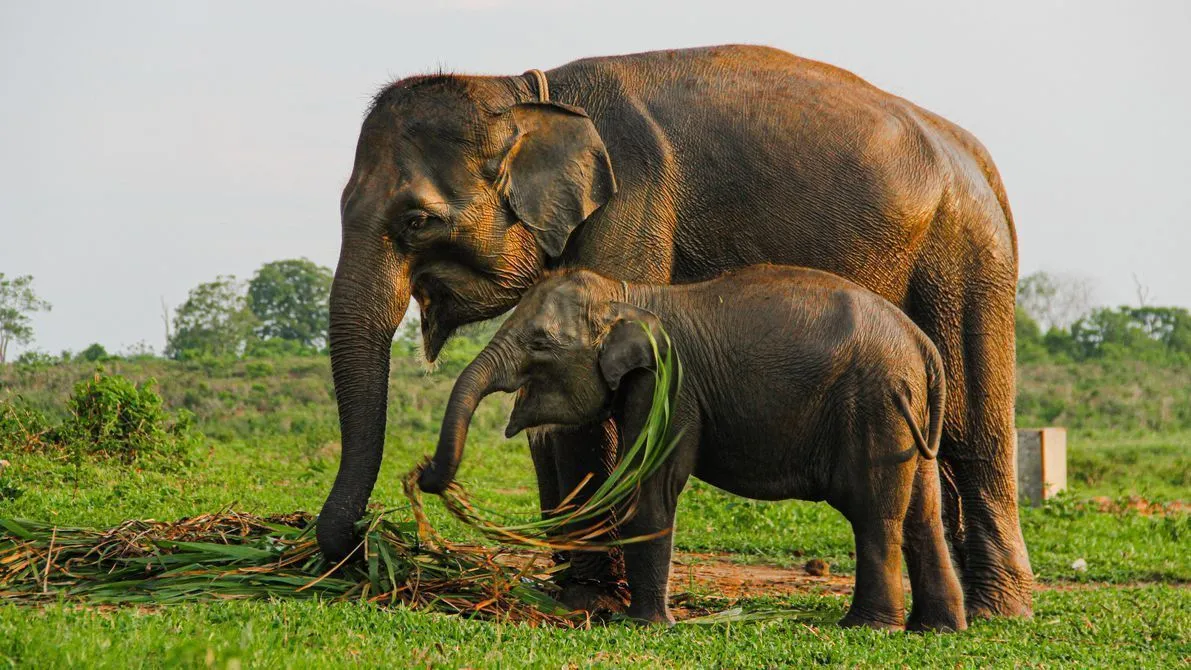
The Indonesian government has stepped up measures to protect forests and wildlife, reports ANTARA. The Ministry of Forestry plans to restore more than 66.7 hectares of land in the Tesso Nilo National Park on the island of Sumatra. Conservation efforts will also extend to two Sumatran elephant habitats on the same island – Sebanga and Minas. There, plans include expanding the territory, creating water sources for the animals and feeding areas to sustain the population. Plans also include the construction of treatment pens and a hospital for elephants in collaboration with India.
-
![]()
 Economy27.08.26South Africa accelerates infrastructure projects to attract investment and drive economic growth
 -
![]()

 Economy27.08.26Malaysia sees Vietnam as potential hub in global Halal supply chain
 -
![]()

 Economy26.08.26Dubai leads global cities in attracting creative economy FDI projects
 -
![]()
 Economy25.08.26Brazil’s airports handle record 11.9 million passengers in July
 -
![]()

 Economy25.08.26Expert: Africa needs to establish foothold in BRICS financial architecture
 -
![]()

 Economy25.08.26Indonesia and China to boost cooperation in artificial intelligence and microchip manufacturing



















-
![Alisher Salomov]()
 Alisher SalomovAdviser to the Chairman of the National Committee for Ecology and Climate Change of the Republic of Uzbekistan"First and foremost, I would like to highlight the importance of this Central Asia–Russia initiative, because environmental problems know no borders, and only a shared understanding of these problems and the search for joint solutions can deliver positive results"
 -
![Joao Paulo Capobianco]() Joao Paulo CapobiancoBrazilian Minister of the Environment and Climate Change"The BRICS countries have a very high level of responsibility because they share an important part of the world's biodiversity, landscapes, populations, food production and water resources. So, we have an opportunity to lead by example. We have our development bank, which can demonstrate and develop new ways of financing programmes. We can reduce the risks for private capital to invest in restoration and efforts to combat desertification"
Joao Paulo CapobiancoBrazilian Minister of the Environment and Climate Change"The BRICS countries have a very high level of responsibility because they share an important part of the world's biodiversity, landscapes, populations, food production and water resources. So, we have an opportunity to lead by example. We have our development bank, which can demonstrate and develop new ways of financing programmes. We can reduce the risks for private capital to invest in restoration and efforts to combat desertification" -
![Dilma Rousseff]() Dilma RousseffPresident of the New Development Bank"India’s BRICS Presidency this year gives special significance to our discussion. NDB stands ready to be a trusted partner in turning commitments on sustainability, clean energy, smart and resilient infrastructure into concrete results on the ground. […] For NDB, mobilising private capital is a strategic imperative. Created by the BRICS founding members, NDB is a bank of the Global South, for the Global South, mandated to mobilise resources for infrastructure and sustainable development"
Dilma RousseffPresident of the New Development Bank"India’s BRICS Presidency this year gives special significance to our discussion. NDB stands ready to be a trusted partner in turning commitments on sustainability, clean energy, smart and resilient infrastructure into concrete results on the ground. […] For NDB, mobilising private capital is a strategic imperative. Created by the BRICS founding members, NDB is a bank of the Global South, for the Global South, mandated to mobilise resources for infrastructure and sustainable development" -
![Sihasak Phuangketkeow]() Sihasak PhuangketkeowDeputy Prime Minister and Minister of Foreign Affairs of Thailand"BRICS can play a very important role in maintaining the free flow of trade and investment. The group can also be a vehicle for all of us to engage and to look at economic opportunities"
Sihasak PhuangketkeowDeputy Prime Minister and Minister of Foreign Affairs of Thailand"BRICS can play a very important role in maintaining the free flow of trade and investment. The group can also be a vehicle for all of us to engage and to look at economic opportunities"