















Scarlet macaw returns to breed in Brazil’s Atlantic Forest after nearly 200 years
First recorded birth marks milestone in restoration of biodiversity following reintroduction efforts
-
![]()
Photo source: Charlie Fayers / iStock

Brazil has recorded the first breeding of the scarlet macaw in the Atlantic Forest in almost two centuries, signalling a major breakthrough in conservation and ecosystem restoration, reports Metrópoles, a partner of TV BRICS.
The development was confirmed by the Ministry of the Environment and Climate Change of Brazil, which announced that chicks of the Ara chloropterus were born earlier this month. The event represents the first successful reproduction of the species in the biome since its disappearance from Brazil’s coastal regions in the 19th century.
The milestone follows a targeted reintroduction programme led by the Brazilian Institute of Environment and Renewable Natural Resources. Birds were released into the Atlantic Forest in 2024 after rehabilitation, with breeding successfully observed in 2026.
Historically widespread across Brazil, the species was first documented in the Atlantic Forest in 1500. However, extensive deforestation led to its disappearance from the region. Today, populations are largely concentrated in the country’s central and northern areas.
Environmental authorities highlight that the return of the species carries significant ecological importance. Scarlet macaws play a crucial role in forest regeneration by dispersing seeds over long distances, supporting plant diversity and maintaining ecosystem balance.
The re-establishment of breeding populations is seen as a key step towards restoring biodiversity in the Atlantic Forest, one of the world’s most threatened biomes. Experts note that continued habitat protection and monitoring will be essential to ensure the long-term recovery of the species.
The environmental boom witnessed in Brazil reflects the widespread momentum behind the concerted efforts of the BRICS nations to preserve biodiversity and tackle the threat of extinction facing unique species across the globe.
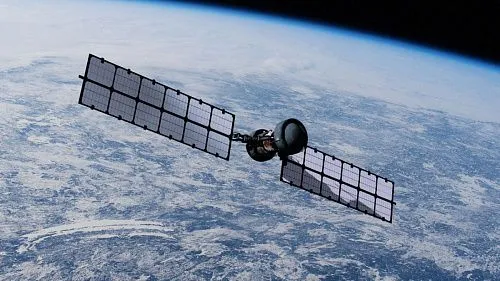
China Daily, a partner of TV BRICS, reported that China is pressing ahead with programmes to protect marine life, with authorities in Liaoning Province releasing a group of spotted seals back into their natural habitats following their rescue and rehabilitation, fitting them with satellite tracking devices to ensure their sustainable monitoring and protection.
In parallel with efforts to restore ecosystems, Egypt has achieved a scientific breakthrough by successfully hatching mullet artificially for the first time, a strategic step aimed at localising marine aquaculture techniques and reducing the impact of overfishing, thereby contributing to the protection of natural fish stocks and consolidating sustainability in the face of climate change, reports Sada El-Balad, a partner of TV BRICS.
BRICS+ countries are also advancing conservation initiatives, combining scientific approaches with community engagement to protect marine biodiversity.
In Ecuador, conservation efforts on Isabela Island have been successful through the transfer of hundreds of green turtle eggs to controlled laboratory environments, with the aim of shielding them from natural hazards and human activities, thereby increasing their chances of survival in the face of climate change threats, according to El Maipo, a partner of TV BRICS.
In Mexico, the source reported on a pioneering initiative to transform traditional fishermen into environmental conservationists, where the local community works alongside scientists to monitor the endangered Hawksbill Sea turtle and document its scientific data, underscoring the fundamental role of humans as "stewards of the seas" in restoring the lost ecological balance.
-
![]()

 Ecology18.09.26Brazil-led team discovers new wild cat species in Bolivia
 -
![]()
 Ecology14.09.26Iran proposes regional plan to protect Caspian seal
 -
![]()
 Ecology06.09.26Oman explores fog harvesting in Dhofar Mountains
 -
![]()

 Ecology06.09.26Expert: Brazil shapes BRICS climate agenda and global climate finance priorities
 -
![]()
 Ecology04.09.26Rare blue Darwin’s frog emerges in Chilean Patagonia
 -
![]() Ecology02.09.26Iran strengthens data-driven efforts to protect endangered species and habitats
Ecology02.09.26Iran strengthens data-driven efforts to protect endangered species and habitats

















-
![Ashok Mondal]()
 Ashok MondalNID Director"Signing this Memorandum of Understanding between the National Institute of Design (NID) and TV BRICS marks a pivotal milestone in advancing design diplomacy across the BRICS media space. This moment is especially significant as India hosts the 18th BRICS Summit, following India’s assumption of the BRICS chairship under the visionary leadership of Prime Minister Shri Narendra Modi. The partnership directly embodies his call to elevate Indian design standards through 'Design in India, Design for the World'. Through the global reach and broadcast capabilities of TV BRICS, we are excited to showcase the extraordinary visual storytelling, films, and design research of NID’s Film and Video Communication students to an international audience, while also welcoming and screening film works from BRICS network countries at NID Ahmedabad. This reciprocal exchange strengthens our shared commitment to educational, cultural, and artistic collaboration, fostering sustainable connections among global creative communities. NID Ahmedabad looks forward to leveraging this partnership to deepen cross-cultural dialogue, build international expert networks, and unlock transformative opportunities for filmmakers, researchers, and faculty across member nations"
 -
![Vladimir Putin]() Vladimir PutinPresident of Russia"We are developing mutual trade, which is growing; it increased by over 12 per cent last year. We have a joint commission working in this sphere. Our focus is on agriculture, shipbuilding, information technology and energy, including nuclear power. We have signed a free trade agreement between the Eurasian Economic Union and Indonesia. Jakarta is our reliable and old friend within ASEAN. We are working together at all international platforms, including the UN"
Vladimir PutinPresident of Russia"We are developing mutual trade, which is growing; it increased by over 12 per cent last year. We have a joint commission working in this sphere. Our focus is on agriculture, shipbuilding, information technology and energy, including nuclear power. We have signed a free trade agreement between the Eurasian Economic Union and Indonesia. Jakarta is our reliable and old friend within ASEAN. We are working together at all international platforms, including the UN" -
![Joao Paulo Capobianco]() Joao Paulo CapobiancoBrazilian Minister of the Environment and Climate Change"The BRICS countries have a very high level of responsibility because they share an important part of the world's biodiversity, landscapes, populations, food production and water resources. So, we have an opportunity to lead by example. We have our development bank, which can demonstrate and develop new ways of financing programmes. We can reduce the risks for private capital to invest in restoration and efforts to combat desertification"
Joao Paulo CapobiancoBrazilian Minister of the Environment and Climate Change"The BRICS countries have a very high level of responsibility because they share an important part of the world's biodiversity, landscapes, populations, food production and water resources. So, we have an opportunity to lead by example. We have our development bank, which can demonstrate and develop new ways of financing programmes. We can reduce the risks for private capital to invest in restoration and efforts to combat desertification" -
![Dilma Rousseff]() Dilma RousseffPresident of the New Development Bank"India’s BRICS Presidency this year gives special significance to our discussion. NDB stands ready to be a trusted partner in turning commitments on sustainability, clean energy, smart and resilient infrastructure into concrete results on the ground. […] For NDB, mobilising private capital is a strategic imperative. Created by the BRICS founding members, NDB is a bank of the Global South, for the Global South, mandated to mobilise resources for infrastructure and sustainable development"
Dilma RousseffPresident of the New Development Bank"India’s BRICS Presidency this year gives special significance to our discussion. NDB stands ready to be a trusted partner in turning commitments on sustainability, clean energy, smart and resilient infrastructure into concrete results on the ground. […] For NDB, mobilising private capital is a strategic imperative. Created by the BRICS founding members, NDB is a bank of the Global South, for the Global South, mandated to mobilise resources for infrastructure and sustainable development" -
![Sihasak Phuangketkeow]() Sihasak PhuangketkeowDeputy Prime Minister and Minister of Foreign Affairs of Thailand"BRICS can play a very important role in maintaining the free flow of trade and investment. The group can also be a vehicle for all of us to engage and to look at economic opportunities"
Sihasak PhuangketkeowDeputy Prime Minister and Minister of Foreign Affairs of Thailand"BRICS can play a very important role in maintaining the free flow of trade and investment. The group can also be a vehicle for all of us to engage and to look at economic opportunities"