
















Space cooperation between India and BRICS countries
The role of India in BRICS space initiatives

As a founding member of BRICS (Brazil, Russia, India, China, and South Africa), along with its more recent partners – Egypt, Ethiopia, Iran, Saudi Arabia, and the UAE – India's role in advancing space cooperation between BRICS countries has been essential.
The history of India's Space Programme
India’s space exploration began in 1969 with the establishment of the Indian Space Research Organisation (ISRO). ISRO's mission was to apply space technology for the betterment of the country's communication, weather forecasting, and resource management systems.
In a statement on ISRO’s official website, the organisation reiterates its goal: "ISRO strives to harness space technology for national development while pursuing space science research and planetary exploration".
India's first satellite, Aryabhata, was launched in 1975 with the help of the Soviet Union. This launch laid the groundwork for future developments in space research and marked India's entry into the international space community.
Throughout the 1980s and 1990s, India focused on developing indigenous technology for satellite launch systems. The Polar Satellite Launch Vehicle (PSLV) became one of India’s most successful ventures, launching satellites into both polar and geosynchronous orbits. Since its first launch in 1993, the PSLV has been pivotal in enabling India to become a preferred launch destination for commercial satellites worldwide. This is reported by the official website of the Indian Space Research Organisation (ISRO).
India’s capability to develop the Geosynchronous Satellite Launch Vehicle (GSLV), which can carry heavier payloads, marked another milestone.
India’s focus on indigenous development is underscored by a statement from ISRO Chairman Shri S. Somanath, who said, "Our goal is to continuously build capacity and develop advanced technology to stay at the forefront of global space exploration and provide solutions to global challenges".
Yaroslav Dubenkov, an expert of the Economics Department of the Peoples' Friendship University of Russia named after Patrice Lumumba (RUDN), spoke in an exclusive commentary for TV BRICS about India's most significant space research.
"One of the most notable achievements was the Mars mission, “Mangalyaan”, also known as the Mars Orbiter Mission (MOM), which was launched on 5 November 2013 and successfully entered Mars' orbit on 24 September 2014 on its first attempt. This mission made ISRO the fourth space agency in the world to successfully reach Mars," said Dubenkov.
The expert also added that the Chandrayaan-1 Indian lunar mission, launched on October 22, 2008, was another significant milestone. This mission was not only India's first to the Moon but also led to the discovery of water on the lunar surface.
Another major achievement of India was the successful completion of the Chandrayaan-3 mission in 2023, where the spacecraft “Vikram” made a soft landing on the Moon's surface. India thus became the fourth country to land on the Moon and the first to do so near the South Pole of Earth’s natural satellite.
To commemorate this, annually on August 23, India celebrated its first National Space Day.
India’s international space research
India's Gaganyaan mission, which aims to send Indian astronauts into space, marks another significant step. The inception of the Gaganyaan programme firstly was first announced by Indian Prime Minister Narendra Modi’s announcement on August 15, 2018, during his Independence Day speech.
The Gaganyaan project envisages demonstration of human spaceflight capability by launching a crew of 3 members to an orbit of 400 km for a 3-day mission and bringing them back safely to earth by landing in Indian sea waters, reports the official website of ISRO.
The pre-requisites for the Gaganyaan mission include the development of many critical technologies, including a human-rated launch vehicle for carrying crew safely to space, a life support system to provide an earthlike environment to crew in space, crew emergency escape provision, and evolving crew management aspects for training, recovery, and rehabilitation of crew.
India has started active cooperation with Russia under this project to take part in joint human spaceflight projects in the near future. Russian company has provided technical assistance and astronaut training as part of this mission.
India's space interaction with BRICS countries
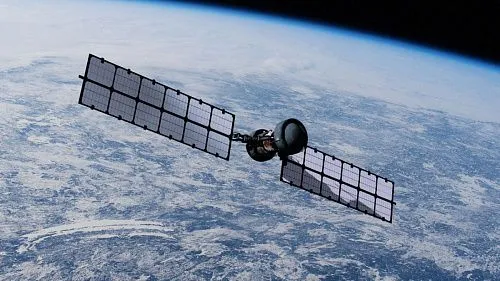
The BRICS countries collectively signed a Memorandum of Understanding (MoU) in 2021, which formalised the establishment of the BRICS Remote Sensing Satellite Constellation. This constellation aims to share satellite data between BRICS nations for improved monitoring of natural disasters, agricultural productivity, and environmental protection.
This collaborative initiative provides a platform for BRICS nations to enhance their space capabilities. According to the Memorandum, by pooling resources, BRICS countries can access data that will help manage natural disasters, tackle environmental challenges, and improve urban planning. India’s satellite capabilities will be crucial in ensuring the success of this cooperation.
This cooperation aligns with the broader goals of the BRICS organisation, which focusses on tackling global challenges through technological innovation. According to the Ministry of External Affairs of India, "India’s collaboration with BRICS partners in space research is a testament to our commitment to leveraging space technology for the greater good."
Prime Minister Narendra Modi has proposed to the BRICS countries to deepen cooperation in the space sector during the 15th BRICS Summit in Johannesburg.
"We are already working on a group of space satellites of BRICS countries. A step forward would be to discuss the creation of a BRICS space research consortium that would enable research and meteorological observations for the benefit of the world"
Narendra Modi Prime Minister of India
According to Yaroslav Dubenkov, India plays a crucial role in the BRICS nations' space initiatives. One of the most promising projects is the development of a BRICS satellite constellation for Earth observation.
This project aims to enhance environmental monitoring, natural resource management, and disaster response. India contributes its satellites, such as Cartosat and Resourcesat, and its space exploration technologies, while also playing an active role in mission coordination and development.
"India is also collaborating with BRICS countries in the area of Global Navigation Satellite Systems (GNSS), sharing its expertise and technologies developed through its Indian Regional Navigation Satellite System (IRNSS). This collaboration is improving the compatibility of navigation systems among BRICS nations," said Yaroslav Dubenkov.
In the sphere of educational and scientific initiatives, India offers its resources and actively participates in student and scientist exchange programmes, fostering knowledge-sharing on space technologies and strengthening scientific ties among BRICS countries, the expert added.
The future of India's space cooperation within BRICS
As the BRICS countries expand their cooperation in space, India’s expertise in satellite technology, launch services, and capacity building will be growing, experts believe. Joint initiatives such as the BRICS Remote Sensing Satellite Constellation and potential collaborative space missions could become part of BRICS international cooperation in space.
Yaroslav Dubenkov noted that India has several major space projects planned for the near future. Among these is the Chandrayaan-3 mission, aimed at conducting more detailed exploration of the Moon’s surface using a new lander and rover. Additionally, India’s first manned mission, Gaganyaan, is scheduled for 2025. In 2024, India also launched the Aditya-L1 mission, dedicated to studying the Sun.
Earlier, Prime Minister Narendra Modi announced that by 2035, India plans to have its own space station. Furthermore, the Indian Minister of State for Science, Technology, and Earth Sciences, Jitendra Singh, stated that India aims to land an astronaut on the Moon by 2040.
Photo: iStock
-
![]()
 Technology17.09.26Oman implements Arab world’s first liquefied hydrogen project
 -
![]()
 Technology17.09.26Brazil launches rocket carrying scientific platform set to return to Earth by parachute
 -
![]()
 Technology17.09.26Chinese scientists develop new material for arsenic removal from water
 -
![]() Technology16.09.26China launches satellites for global internet network from sea for first time
Technology16.09.26China launches satellites for global internet network from sea for first time -
![]()

 Technology16.09.26Egypt plans unified digital platform to link medical records across healthcare centres
 -
![]()
 Technology15.09.26SPbU scientists test how accurately AI can create psychological profile of person












-
![Ashok Mondal]()
 Ashok MondalNID Director"Signing this Memorandum of Understanding between the National Institute of Design (NID) and TV BRICS marks a pivotal milestone in advancing design diplomacy across the BRICS media space. This moment is especially significant as India hosts the 18th BRICS Summit, following India’s assumption of the BRICS chairship under the visionary leadership of Prime Minister Shri Narendra Modi. The partnership directly embodies his call to elevate Indian design standards through 'Design in India, Design for the World'. Through the global reach and broadcast capabilities of TV BRICS, we are excited to showcase the extraordinary visual storytelling, films, and design research of NID’s Film and Video Communication students to an international audience, while also welcoming and screening film works from BRICS network countries at NID Ahmedabad. This reciprocal exchange strengthens our shared commitment to educational, cultural, and artistic collaboration, fostering sustainable connections among global creative communities. NID Ahmedabad looks forward to leveraging this partnership to deepen cross-cultural dialogue, build international expert networks, and unlock transformative opportunities for filmmakers, researchers, and faculty across member nations"
 -
![Vladimir Putin]() Vladimir PutinPresident of Russia"We are developing mutual trade, which is growing; it increased by over 12 per cent last year. We have a joint commission working in this sphere. Our focus is on agriculture, shipbuilding, information technology and energy, including nuclear power. We have signed a free trade agreement between the Eurasian Economic Union and Indonesia. Jakarta is our reliable and old friend within ASEAN. We are working together at all international platforms, including the UN"
Vladimir PutinPresident of Russia"We are developing mutual trade, which is growing; it increased by over 12 per cent last year. We have a joint commission working in this sphere. Our focus is on agriculture, shipbuilding, information technology and energy, including nuclear power. We have signed a free trade agreement between the Eurasian Economic Union and Indonesia. Jakarta is our reliable and old friend within ASEAN. We are working together at all international platforms, including the UN" -
![Joao Paulo Capobianco]() Joao Paulo CapobiancoBrazilian Minister of the Environment and Climate Change"The BRICS countries have a very high level of responsibility because they share an important part of the world's biodiversity, landscapes, populations, food production and water resources. So, we have an opportunity to lead by example. We have our development bank, which can demonstrate and develop new ways of financing programmes. We can reduce the risks for private capital to invest in restoration and efforts to combat desertification"
Joao Paulo CapobiancoBrazilian Minister of the Environment and Climate Change"The BRICS countries have a very high level of responsibility because they share an important part of the world's biodiversity, landscapes, populations, food production and water resources. So, we have an opportunity to lead by example. We have our development bank, which can demonstrate and develop new ways of financing programmes. We can reduce the risks for private capital to invest in restoration and efforts to combat desertification" -
![Dilma Rousseff]() Dilma RousseffPresident of the New Development Bank"India’s BRICS Presidency this year gives special significance to our discussion. NDB stands ready to be a trusted partner in turning commitments on sustainability, clean energy, smart and resilient infrastructure into concrete results on the ground. […] For NDB, mobilising private capital is a strategic imperative. Created by the BRICS founding members, NDB is a bank of the Global South, for the Global South, mandated to mobilise resources for infrastructure and sustainable development"
Dilma RousseffPresident of the New Development Bank"India’s BRICS Presidency this year gives special significance to our discussion. NDB stands ready to be a trusted partner in turning commitments on sustainability, clean energy, smart and resilient infrastructure into concrete results on the ground. […] For NDB, mobilising private capital is a strategic imperative. Created by the BRICS founding members, NDB is a bank of the Global South, for the Global South, mandated to mobilise resources for infrastructure and sustainable development" -
![Sihasak Phuangketkeow]() Sihasak PhuangketkeowDeputy Prime Minister and Minister of Foreign Affairs of Thailand"BRICS can play a very important role in maintaining the free flow of trade and investment. The group can also be a vehicle for all of us to engage and to look at economic opportunities"
Sihasak PhuangketkeowDeputy Prime Minister and Minister of Foreign Affairs of Thailand"BRICS can play a very important role in maintaining the free flow of trade and investment. The group can also be a vehicle for all of us to engage and to look at economic opportunities"