














Young researchers from BRICS countries discuss future of Arctic at conference in Ugra
Participants from Russia and China presented projects in the fields of ecology, tourism and the preservation of Northern culture
-
![]()
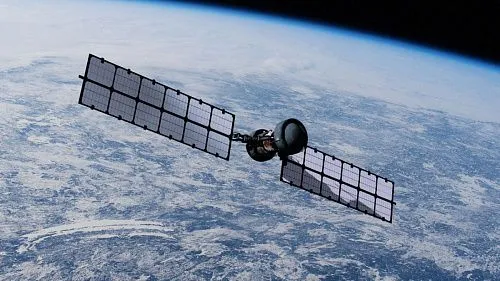
Photo source: Jose Calsina / iStock

The International Scientific and Practical Conference “Youth Arctic: Science for the Future” was held in Khanty-Mansiysk, bringing together young researchers and experts from Russia and China. The main topic of the meeting was the development of Arctic tourism and its role in preserving the natural and cultural heritage of the Arctic. TV BRICS acted as the international information partner of the event.
The conference was held in Ugra for the third time. It was organised by the Russian-Asian Arctic Research Consortium with the support of the Russia-BRICS Project office for International Youth Cooperation.
In 2026, particular attention was paid to cooperation with BRICS countries. Young scientists and experts discussed joint initiatives in the fields of ecology, logistics, energy, tourism and the development of Arctic resources.
“Several universities and research organisations from China have already joined the work of the consortium, as well as representatives from India. We are moving forward and expanding in the Asian direction. This creates a very positive cumulative effect, as we do not approach the study of particular issues from a single perspective,” said Roman Kuchin, Co-Chairman of the consortium and Rector of Ugra State University, in a comment to TV BRICS.
One of the key topics of the conference was the preservation of the culture of the Indigenous small-numbered peoples of the North. Ugra is home to representatives of 139 ethnic groups, and the region is seeking new solutions to support young people living in remote areas.
One such solution is the “IT Nomadic Camp” project. Thanks to access to broadband internet, residents of hard-to-reach settlements have gained new opportunities for education, communication and participation in social and cultural projects.
“The number of young people who were ready to leave remote territories and nomadic camps has decreased significantly. Chats and unique social groups have emerged, which began communicating in their native languages. Most importantly, people gained the opportunity to participate remotely in socio-cultural projects,” said Aleksander Novyukhov, Senator and President of the Association of Indigenous Peoples of the North, Siberia and the Far East of the Russian Federation, in an exclusive comment to TV BRICS.
The International Youth Competition of Tourism Projects “DobroArktika” was held as part of the conference. Participants presented initiatives aimed at developing tourism in the Berezovsky District, which is part of Russia’s Arctic zone. The winners were students from Ugra State University and Surgut State University, who developed projects in the fields of ecological, event and ethnographic tourism, as well as the improvement of natural sites and the creation of accessible infrastructure.
One of the projects was “CHUMbuilding”, which is already being implemented in the Beloyarsky District. Its goal is to introduce tourists to the traditions of the Indigenous peoples of Ugra through practical experience: building a chum (a traditional conical dwelling of the peoples of the North and Siberia), staying in a traditional dwelling, and taking part in workshops, rituals and crafts.
Yang Nan, Assistant Professor at Qingdao University, who has been working in Russia for two years, noted that her perspective on the Arctic has changed.


The conference “Youth Arctic: Science for the Future” formed part of the All-Russian Forum for Civil Society Development "Dobrino", which brought together more than 500 participants.
-
![]()

 Society12.09.26Xi Jinping: China and India should view their bilateral relations from perspective of long-term development
 -
![]()
 Society12.09.26BRICS leaders adopt New Delhi Declaration at 18th Summit
 -
![]() Society12.09.26Narendra Modi proposes reforming global governance architecture and creating BRICS continuity mechanism
Society12.09.26Narendra Modi proposes reforming global governance architecture and creating BRICS continuity mechanism -
![]() Society12.09.2618th BRICS Summit begins in India
Society12.09.2618th BRICS Summit begins in India -
![]() Society11.09.26Russian Deputy Foreign Minister: BRICS Summit in India to consolidate group's role as flagship of multilateralism
Society11.09.26Russian Deputy Foreign Minister: BRICS Summit in India to consolidate group's role as flagship of multilateralism -
![]() Society11.09.26Broadcast of BRICS Summit in India to be available to TV BRICS website users
Society11.09.26Broadcast of BRICS Summit in India to be available to TV BRICS website users






-
![Ashok Mondal]()
 Ashok MondalNID Director"Signing this Memorandum of Understanding between the National Institute of Design (NID) and TV BRICS marks a pivotal milestone in advancing design diplomacy across the BRICS media space. This moment is especially significant as India hosts the 18th BRICS Summit, following India’s assumption of the BRICS chairship under the visionary leadership of Prime Minister Shri Narendra Modi. The partnership directly embodies his call to elevate Indian design standards through 'Design in India, Design for the World'. Through the global reach and broadcast capabilities of TV BRICS, we are excited to showcase the extraordinary visual storytelling, films, and design research of NID’s Film and Video Communication students to an international audience, while also welcoming and screening film works from BRICS network countries at NID Ahmedabad. This reciprocal exchange strengthens our shared commitment to educational, cultural, and artistic collaboration, fostering sustainable connections among global creative communities. NID Ahmedabad looks forward to leveraging this partnership to deepen cross-cultural dialogue, build international expert networks, and unlock transformative opportunities for filmmakers, researchers, and faculty across member nations"
 -
![Vladimir Putin]() Vladimir PutinPresident of Russia"We are developing mutual trade, which is growing; it increased by over 12 per cent last year. We have a joint commission working in this sphere. Our focus is on agriculture, shipbuilding, information technology and energy, including nuclear power. We have signed a free trade agreement between the Eurasian Economic Union and Indonesia. Jakarta is our reliable and old friend within ASEAN. We are working together at all international platforms, including the UN"
Vladimir PutinPresident of Russia"We are developing mutual trade, which is growing; it increased by over 12 per cent last year. We have a joint commission working in this sphere. Our focus is on agriculture, shipbuilding, information technology and energy, including nuclear power. We have signed a free trade agreement between the Eurasian Economic Union and Indonesia. Jakarta is our reliable and old friend within ASEAN. We are working together at all international platforms, including the UN" -
![Vladimir Putin]() Vladimir PutinPresident of Russia"More and more Iranian students are choosing Russian education. We are very pleased about this. A great many future doctors are studying in Russia. In the 2025–2026 academic year, the number of Iranian students in Russia approached 10,000, with 802 of them studying at the expense of the Russian state budget"
Vladimir PutinPresident of Russia"More and more Iranian students are choosing Russian education. We are very pleased about this. A great many future doctors are studying in Russia. In the 2025–2026 academic year, the number of Iranian students in Russia approached 10,000, with 802 of them studying at the expense of the Russian state budget" -
![Xi Jinping]() Xi JinpingPresident of the People’s Republic of China"The foundation of our bilateral relations will only grow stronger, and we will confidently move forward to a better future. […] The striving of nations on our planet for peace, development, cooperation and mutual benefit remains unchanged. The vital mission of the Shanghai Cooperation Organisation is to maintain stability and promote the development of our region"
Xi JinpingPresident of the People’s Republic of China"The foundation of our bilateral relations will only grow stronger, and we will confidently move forward to a better future. […] The striving of nations on our planet for peace, development, cooperation and mutual benefit remains unchanged. The vital mission of the Shanghai Cooperation Organisation is to maintain stability and promote the development of our region" -
![Alisher Salomov]() Alisher SalomovAdviser to the Chairman of the National Committee for Ecology and Climate Change of the Republic of Uzbekistan"First and foremost, I would like to highlight the importance of this Central Asia–Russia initiative, because environmental problems know no borders, and only a shared understanding of these problems and the search for joint solutions can deliver positive results"
Alisher SalomovAdviser to the Chairman of the National Committee for Ecology and Climate Change of the Republic of Uzbekistan"First and foremost, I would like to highlight the importance of this Central Asia–Russia initiative, because environmental problems know no borders, and only a shared understanding of these problems and the search for joint solutions can deliver positive results"