















Chinese researchers explain why lunar soil from moon’s far side is unusually sticky
New analysis of Chang’e-6 samples shows fine, angular particles and harsh space exposure create highly cohesive regolith

Chinese scientists have identified the cause of the unusual stickiness found in lunar soil collected from the far side of the moon, following detailed analysis of samples returned by the Chang’e-6 mission.
The material, retrieved in 2024, displayed markedly different behaviour from soils previously brought back from the moon’s near side. Its tendency to clump and resist flowing prompted a dedicated investigation by a research group from the Chinese Academy of Sciences.
To assess the soil’s physical properties, the team conducted a series of laboratory experiments, including angle-of-repose tests, commonly used to evaluate the flow characteristics of granular materials. The far-side samples showed a significantly steeper angle of repose than near-side material, indicating far greater cohesiveness. This is reported by CGTN, a partner of TV BRICS.
Researchers concluded that the soil’s fine grain size is a major factor. While near-side regolith is texturally comparable to sand, the far-side particles resemble flour: much finer and more prone to forming clumps. Microscopic analysis also revealed that the grains are angular and rough, conditions that enhance electrostatic forces and further increase cohesion.
The team attributed these differences to the contrasting environments of the lunar hemispheres. The moon’s far side, lacking the partial shielding effect of Earth’s magnetic field, is exposed more directly to charged particles, meteoroids and micro-impacts. Frequent collisions with meteorites and the breakdown of plagioclase-rich highland rocks generate abundant sharp, fine fragments, which are then continuously reworked by space weathering.
This combination of relentless bombardment, sustained electrostatic charging and mineral composition ultimately produces the distinctive, sticky regolith observed on the far side.
The findings have practical implications for future missions, including landing operations and plans for long-term infrastructure. The Chang’e-6 mission returned 1.93 kilograms of material from the South Pole–Aitken Basin, the largest and oldest known impact basin on the moon, offering a rare window into the geological processes shaping the lunar far side.
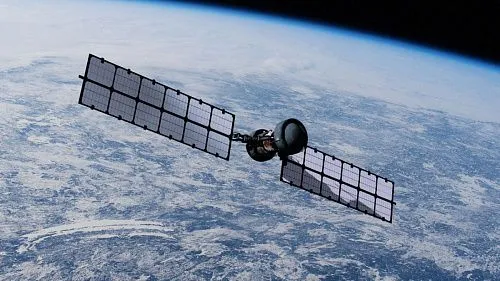
Photo: dima_zel / iStock
-
![]()
 Technology21.09.26South African graduate develops AI system to translate sign language into speech
 -
![]()
 Technology19.09.26Chile to develop system for forecasting extreme weather events
 -
![]()

 Technology19.09.26Kazakhstan and Uzbekistan to develop cross-border QR payments
 -
![]()
 Technology19.09.26China unveils AI systems to transform mineral exploration
 -
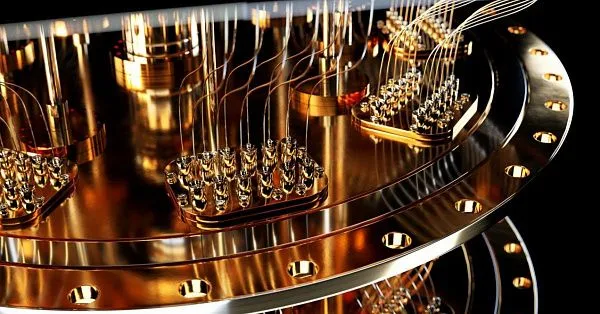
![]() Technology18.09.26Chinese researchers achieve breakthrough in high-dimensional quantum entanglement on silicon chip
Technology18.09.26Chinese researchers achieve breakthrough in high-dimensional quantum entanglement on silicon chip -
![]()
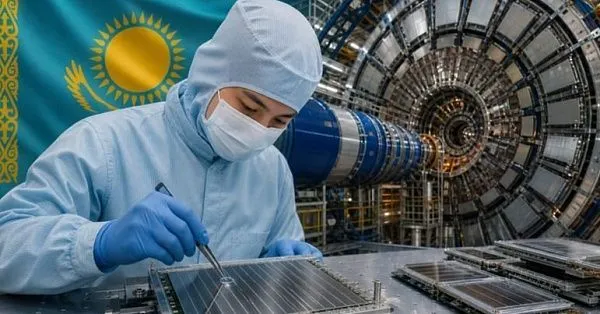
 Technology18.09.26Russia helps Kazakhstan develop production of tracking detectors for international experiments
















-
![Ashok Mondal]()
 Ashok MondalNID Director"Signing this Memorandum of Understanding between the National Institute of Design (NID) and TV BRICS marks a pivotal milestone in advancing design diplomacy across the BRICS media space. This moment is especially significant as India hosts the 18th BRICS Summit, following India’s assumption of the BRICS chairship under the visionary leadership of Prime Minister Shri Narendra Modi. The partnership directly embodies his call to elevate Indian design standards through 'Design in India, Design for the World'. Through the global reach and broadcast capabilities of TV BRICS, we are excited to showcase the extraordinary visual storytelling, films, and design research of NID’s Film and Video Communication students to an international audience, while also welcoming and screening film works from BRICS network countries at NID Ahmedabad. This reciprocal exchange strengthens our shared commitment to educational, cultural, and artistic collaboration, fostering sustainable connections among global creative communities. NID Ahmedabad looks forward to leveraging this partnership to deepen cross-cultural dialogue, build international expert networks, and unlock transformative opportunities for filmmakers, researchers, and faculty across member nations"
 -
![Vladimir Putin]() Vladimir PutinPresident of Russia"We are developing mutual trade, which is growing; it increased by over 12 per cent last year. We have a joint commission working in this sphere. Our focus is on agriculture, shipbuilding, information technology and energy, including nuclear power. We have signed a free trade agreement between the Eurasian Economic Union and Indonesia. Jakarta is our reliable and old friend within ASEAN. We are working together at all international platforms, including the UN"
Vladimir PutinPresident of Russia"We are developing mutual trade, which is growing; it increased by over 12 per cent last year. We have a joint commission working in this sphere. Our focus is on agriculture, shipbuilding, information technology and energy, including nuclear power. We have signed a free trade agreement between the Eurasian Economic Union and Indonesia. Jakarta is our reliable and old friend within ASEAN. We are working together at all international platforms, including the UN" -
![Joao Paulo Capobianco]() Joao Paulo CapobiancoBrazilian Minister of the Environment and Climate Change"The BRICS countries have a very high level of responsibility because they share an important part of the world's biodiversity, landscapes, populations, food production and water resources. So, we have an opportunity to lead by example. We have our development bank, which can demonstrate and develop new ways of financing programmes. We can reduce the risks for private capital to invest in restoration and efforts to combat desertification"
Joao Paulo CapobiancoBrazilian Minister of the Environment and Climate Change"The BRICS countries have a very high level of responsibility because they share an important part of the world's biodiversity, landscapes, populations, food production and water resources. So, we have an opportunity to lead by example. We have our development bank, which can demonstrate and develop new ways of financing programmes. We can reduce the risks for private capital to invest in restoration and efforts to combat desertification" -
![Dilma Rousseff]() Dilma RousseffPresident of the New Development Bank"India’s BRICS Presidency this year gives special significance to our discussion. NDB stands ready to be a trusted partner in turning commitments on sustainability, clean energy, smart and resilient infrastructure into concrete results on the ground. […] For NDB, mobilising private capital is a strategic imperative. Created by the BRICS founding members, NDB is a bank of the Global South, for the Global South, mandated to mobilise resources for infrastructure and sustainable development"
Dilma RousseffPresident of the New Development Bank"India’s BRICS Presidency this year gives special significance to our discussion. NDB stands ready to be a trusted partner in turning commitments on sustainability, clean energy, smart and resilient infrastructure into concrete results on the ground. […] For NDB, mobilising private capital is a strategic imperative. Created by the BRICS founding members, NDB is a bank of the Global South, for the Global South, mandated to mobilise resources for infrastructure and sustainable development" -
![Sihasak Phuangketkeow]() Sihasak PhuangketkeowDeputy Prime Minister and Minister of Foreign Affairs of Thailand"BRICS can play a very important role in maintaining the free flow of trade and investment. The group can also be a vehicle for all of us to engage and to look at economic opportunities"
Sihasak PhuangketkeowDeputy Prime Minister and Minister of Foreign Affairs of Thailand"BRICS can play a very important role in maintaining the free flow of trade and investment. The group can also be a vehicle for all of us to engage and to look at economic opportunities"