






 Orchestra
  DIGITAL WORLD
 BRICS+ Media Centre
  MODERN RUSSIAN












Expert opinion and analytical insight from representatives of the university will enrich the scientific agenda of the BRICS audience
-
![]()
sirene68 / iStock [Photo source]
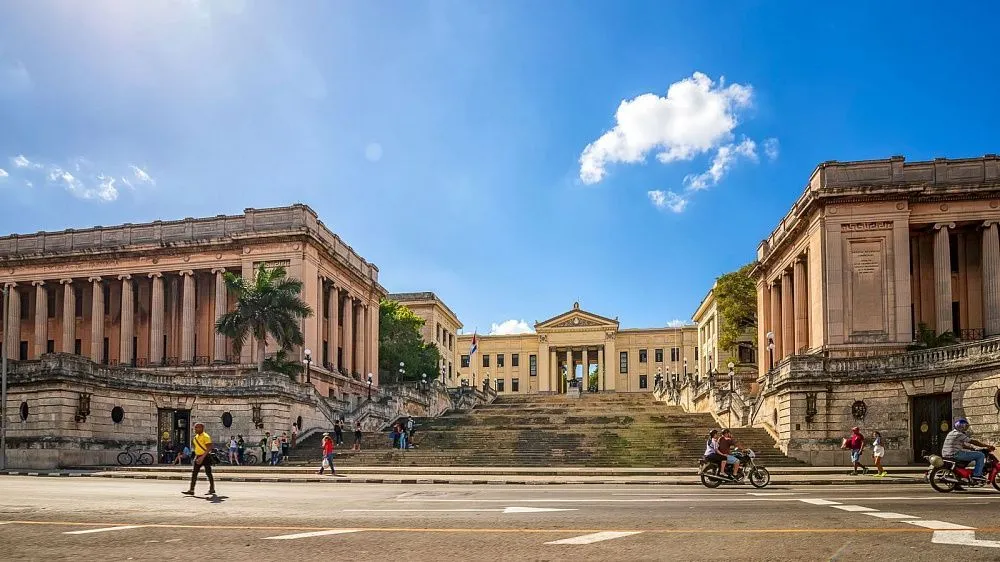
The Republic of Cuba is developing information cooperation with BRICS countries and partners in the field of education through TV BRICS. The University of Havana will present its scientific achievements through the resources of the TV BRICS International Media Network. The cooperation agreement was signed by Janna Tolstikova, CEO of TV BRICS, and Miriam Nicado Garcia, University Rector. Earlier in Cuba, the Ministry of Higher Education of Cuba and the Ministry of Education of Cuba also began cooperation with the media network.
The joint activities of the University of Havana and TV BRICS will focus on developing cooperation among BRICS+ countries in education, promoting scientific achievements in the international media space, and fostering professional and expert communities.
 Photo:
University of Havana
Photo:
University of Havana
“The signing of the agreement between the University of Havana and TV BRICS marks the establishment of a strategic alliance that will strengthen cooperation between the International Media Network and our faculties, as well as its students and academic staff. It is another opportunity for the University of Havana to expand international ties with institutions and, overall, to reinforce relations between countries. Relations between Russia and Cuba have always been highly significant for the University of Havana, and we believe that this new step will enable even greater results. Many thanks to TV BRICS for its trust in the University of Havana,” emphasised Rector Miriam Nicado Garcia, Doctor of Mathematical Sciences, Honorary Member of the Cuban Academy of Sciences, member of the Council of State of Cuba, and deputy of the National Assembly of People's Power of Cuba.
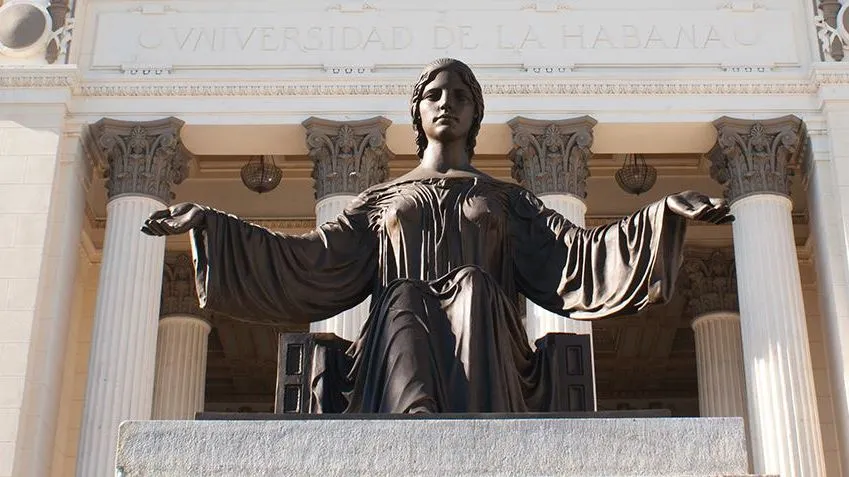 Photo:
University of Havana
Photo:
University of Havana
The University of Havana is the leading university in Cuba. It operates under the Ministry of Higher Education of Cuba. Founded in 1728, it is one of the oldest higher education institutions in the Western Hemisphere. The university offers training in 36 specialisations across economic, natural, social, and humanities sciences. It has around 16,000 students. Among its distinguished alumni are Fidel Castro and Raul Castro. Several museums and an observatory operate within the university.
CEO of TV BRICS, Janna Tolstikova, emphasised that high-quality and accessible education, the promotion of university science achievements, and the strengthening of technological sovereignty are priorities of the consolidated BRICS agenda.


Today, more than 30 governmental and public organisations from Russia, Brazil, India, China, Cuba, South Africa, and Iran are partners of the media network in the fields of science and higher education, including members of the BRICS Network University, the Indian Association of Teachers of Russian Language and Literature, the Group for International Cooperation of Brazilian Universities, and the Ministry of Education of the State of Rio de Janeiro.
-
![]()

 Society03.08.26UNESCO adds Chinese migratory bird sanctuary to World Natural Heritage List
 -
![]()
 Society02.08.26BRICS News Digest for the previous week
 -
![]()
 Society01.08.26UAE advances heritage preservation with major archaeological restoration programme
 -
![]()

 Society31.07.26Photo exhibition dedicated to 25th Anniversary of SCO opens in Bishkek
 -
![]()
 Society31.07.26Leading Russian regional universities develop international cooperation through TV BRICS
 -
![]()
 Society30.07.26Brazil launches automated customs clearance to speed up airport arrivals








-
![Sergey Lavrov]()
 Sergey LavrovRussian Foreign Minister"A Joint Statement of the Foreign Ministers has been adopted. It provides a clear and principled assessment of the situation on the international stage and outlines the tasks that will be addressed in accordance with previous decisions by heads of state and governments. No one doubts that additional documents on sectoral areas of cooperation will be developed ahead of the SCO summit in Bishkek. Energy, artificial intelligence, healthcare and a number of other areas were also mentioned"
 -
![Nitin Gadkari]() Nitin GadkariIndia's Union Minister for Road Transport and Highways"Our resolution has just been passed. It is very important as far as the BRICS countries are concerned, which cover 40 per cent of the world's population. We are committed to the futuristic development of the transport sector, to create cooperation, coordination and communication between the stakeholders. This resolution indicates a lot of new technology and innovation in the transport sector. It covers the road sector, railways, aviation and water transport"
Nitin GadkariIndia's Union Minister for Road Transport and Highways"Our resolution has just been passed. It is very important as far as the BRICS countries are concerned, which cover 40 per cent of the world's population. We are committed to the futuristic development of the transport sector, to create cooperation, coordination and communication between the stakeholders. This resolution indicates a lot of new technology and innovation in the transport sector. It covers the road sector, railways, aviation and water transport" -
![Anutin Charnvirakul]() Anutin CharnvirakulPrime Minister of Thailand"Russia has been a trusted friend of Thailand for over a century. […] Next year, we will mark the 130th anniversary of the establishment of diplomatic relations between our countries. We will commemorate this important milestone with high-level exchanges, thereby reaffirming our shared commitment to an even stronger partnership for the benefit of our peoples"
Anutin CharnvirakulPrime Minister of Thailand"Russia has been a trusted friend of Thailand for over a century. […] Next year, we will mark the 130th anniversary of the establishment of diplomatic relations between our countries. We will commemorate this important milestone with high-level exchanges, thereby reaffirming our shared commitment to an even stronger partnership for the benefit of our peoples"


