















Egypt publishes largest national genome sequencing study to advance personalised medicine
Research identifies millions of unique genetic variants and establishes first national genomic reference
-
![]()
Photo source: Moment Makers Group / iStock

Egypt has announced the results of its largest-ever whole-genome sequencing study, marking a significant step in the development of precision medicine and genomic research, reports Sada El-Balad, a partner of TV BRICS.
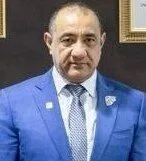
The study, which analysed the complete genetic sequences of 1,024 Egyptian citizens across 21 governorates, provides the country with its first comprehensive national genomic reference. The findings were confirmed by Minister of Higher Education and Scientific Research Ayman Ashour, who described the project as a major scientific milestone.
According to the research team, the study identified approximately 17 million previously unrecorded genetic variants. These findings offer new insight into the genetic composition of the Egyptian population and highlight distinct hereditary characteristics, estimated to account for around 18.5 per cent of the population’s genetic profile.
Scientists say the results will support the transition towards personalised healthcare, enabling treatments and preventive strategies tailored to individual genetic profiles. The data also improves understanding of how patients may respond differently to diseases and medications compared with other populations.
Researchers emphasised that the newly established genomic reference will play a central role in reshaping preventive medicine in Egypt, improving diagnostic accuracy and supporting public health strategies.
The initiative involved collaboration between multiple academic and research institutions, with a focus on developing domestic expertise in genomics and biotechnology. The next phase of the project will focus on expanding the dataset and integrating genomic analysis into clinical practice.
In a related development, the BRICS countries continue to strengthen their presence in the fields of scientific research and biomedical technologies through advanced studies and projects aimed at improving the quality of healthcare and supporting innovation.
In India, scientific bodies are working to develop AI-based tools to predict the risks of preterm births and accurately determine gestational age, in line with the country’s demographic characteristics.
According to IANS, a partner of TV BRICS, this project adopts an integrated approach combining clinical epidemiology, multi-omics biomarkers and artificial intelligence technologies, with the aim of developing more accurate personalised predictive models.
To date, the programme has involved around 12,000 pregnant women, making it one of the largest studies of its kind in South Asia, alongside the creation of a massive database comprising more than 1.6 million biological samples and over a million ultrasound images.
In Brazil, the Ministry of Health has begun offering an innovative genetic test within the unified health system, in a move aimed at improving the diagnosis of rare genetic diseases. This testing relies on “whole exome sequencing” technology, which speeds up access to diagnosis, with medical reports expected within six months, compared to waiting periods that previously stretched over many years.
According to Metrópoles, a partner of TV BRICS, this move is particularly significant given that there are thousands of rare diseases registered worldwide, the majority of which are genetic in origin, and the health challenges they pose require more advanced diagnostic tools.
In Russia, scientists in St. Petersburg have developed a sensitive sensor capable of detecting reactive oxygen species with twice the accuracy of traditional analytical methods.
The Russian Academy of Sciences has published a study on its official website stating that the new innovation is based on microfluidic technology and aims to improve the speed, sensitivity and reliability of assessing oxidative stress, which is linked to ageing and the development of cardiovascular and neurological diseases. This development highlights the growing role of Russian research in developing scientific tools that can contribute to a deeper understanding of age-related diseases and improve diagnostic and monitoring mechanisms.
These initiatives, alongside Egypt’s achievement in the field of whole-genome sequencing, reflect a clear trend within the BRICS nations towards establishing scientific research as a fundamental pillar of health and technological development and strengthening the capacity to produce innovative national solutions capable of addressing contemporary medical and scientific challenges.
-
![]()

 Society01.09.26SCO leaders sign Bishkek Declaration
 -
![]()
 Society30.08.26BRICS News Digest for the previous week
 -
![]()
 Society29.08.26UAE archaeological discoveries shed new light on ancient human history
 -
![]()
 Society28.08.26Vietnam develops silver economy focused on older people
 -
![]()
 Society28.08.26BRICS countries adopt Chennai Declaration
 -
![]()
 Society28.08.26Brazilian film industry aims to attract audiences in BRICS countries
























-
![Xi Jinping]()
 Xi JinpingPresident of the People’s Republic of China"The foundation of our bilateral relations will only grow stronger, and we will confidently move forward to a better future. […] The striving of nations on our planet for peace, development, cooperation and mutual benefit remains unchanged. The vital mission of the Shanghai Cooperation Organisation is to maintain stability and promote the development of our region"
 -
![Alisher Salomov]() Alisher SalomovAdviser to the Chairman of the National Committee for Ecology and Climate Change of the Republic of Uzbekistan"First and foremost, I would like to highlight the importance of this Central Asia–Russia initiative, because environmental problems know no borders, and only a shared understanding of these problems and the search for joint solutions can deliver positive results"
Alisher SalomovAdviser to the Chairman of the National Committee for Ecology and Climate Change of the Republic of Uzbekistan"First and foremost, I would like to highlight the importance of this Central Asia–Russia initiative, because environmental problems know no borders, and only a shared understanding of these problems and the search for joint solutions can deliver positive results" -
![Joao Paulo Capobianco]() Joao Paulo CapobiancoBrazilian Minister of the Environment and Climate Change"The BRICS countries have a very high level of responsibility because they share an important part of the world's biodiversity, landscapes, populations, food production and water resources. So, we have an opportunity to lead by example. We have our development bank, which can demonstrate and develop new ways of financing programmes. We can reduce the risks for private capital to invest in restoration and efforts to combat desertification"
Joao Paulo CapobiancoBrazilian Minister of the Environment and Climate Change"The BRICS countries have a very high level of responsibility because they share an important part of the world's biodiversity, landscapes, populations, food production and water resources. So, we have an opportunity to lead by example. We have our development bank, which can demonstrate and develop new ways of financing programmes. We can reduce the risks for private capital to invest in restoration and efforts to combat desertification" -
![Dilma Rousseff]() Dilma RousseffPresident of the New Development Bank"India’s BRICS Presidency this year gives special significance to our discussion. NDB stands ready to be a trusted partner in turning commitments on sustainability, clean energy, smart and resilient infrastructure into concrete results on the ground. […] For NDB, mobilising private capital is a strategic imperative. Created by the BRICS founding members, NDB is a bank of the Global South, for the Global South, mandated to mobilise resources for infrastructure and sustainable development"
Dilma RousseffPresident of the New Development Bank"India’s BRICS Presidency this year gives special significance to our discussion. NDB stands ready to be a trusted partner in turning commitments on sustainability, clean energy, smart and resilient infrastructure into concrete results on the ground. […] For NDB, mobilising private capital is a strategic imperative. Created by the BRICS founding members, NDB is a bank of the Global South, for the Global South, mandated to mobilise resources for infrastructure and sustainable development" -
![Sihasak Phuangketkeow]() Sihasak PhuangketkeowDeputy Prime Minister and Minister of Foreign Affairs of Thailand"BRICS can play a very important role in maintaining the free flow of trade and investment. The group can also be a vehicle for all of us to engage and to look at economic opportunities"
Sihasak PhuangketkeowDeputy Prime Minister and Minister of Foreign Affairs of Thailand"BRICS can play a very important role in maintaining the free flow of trade and investment. The group can also be a vehicle for all of us to engage and to look at economic opportunities"