















Ethiopian experts: BRICS countries already trade in their own currencies
Ethiopian scholars underscored the growing momentum for intra-BRICS trade in local currencies and a stronger political role on the world stage

Ahead of the upcoming BRICS summit, two Ethiopian scholars have highlighted the group’s evolving priorities. In exclusive comments for ENA, a partner of TV BRICS, they underscored the growing momentum for intra-BRICS trade in local currencies, institutional reform, and a stronger political role on the world stage.
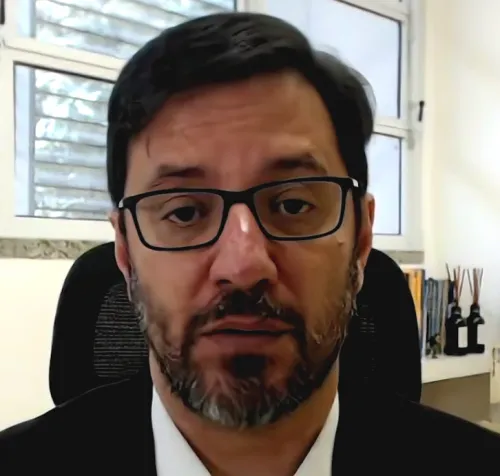
Professor of Public Policy at Addis Ababa University, Costantinos Berhutesfa Costantinos, emphasised the diverse and urgent topics on the agenda: “One, of course, is the institutional development of BRICS countries. The second thing is global health. The third area would be the governance of artificial intelligence. And then, of course, there are inter-BRICS issues that will be raised. Trade and investment are also included in this.”

With the inclusion of new members such as Iran and Egypt, Professor Costantinos suggested that digital finance and currency sovereignty will be key topics: “They will be looking at cryptocurrencies that can be used for trade between BRICS countries. BRICS countries are already trading with their own currencies. For example, Russia is selling its oil and gas to China through yuan, and China is also accepting rubles as a medium of exchange. India and Russia have the same kind of relationships.”
In turn, Brook Hailu, Professor of Political Science and International Relations at Addis Ababa University, highlighted that the current BRICS agenda goes beyond traditional economic issues. While the group typically coordinates to promote trade and commerce, he said, "This year it is an exception."

He noted that the group, representing around 3.3 billion people and more than 38 per cent of global GDP, is actively seeking to shape international governance. "As a political force, they are strategising to make their presence felt in all global institutions like the UN, World Bank, and IMF, as well as to be financially strong."
Professor Hailu concluded that the creation of a multipolar world is central to BRICS strategy: “There is a feeling as well as a position and a strategy that the BRICS countries – which are not small countries but big giant countries like China, India, Russia, South Africa, and even Ethiopia and Egypt – their footprints shaping the course of political events in the world, is going to be discussed.”
According to the professor, BRICS is now emerging as both a political and economic force.
-
![]()

 Economy21.09.26Ethiopia and UAE expand cooperation in investment, trade, tourism and technology
 -
![]()
 Economy20.09.26Brazil introduces tax incentives to attract investment in data centres and digital infrastructure
 -
![]()
 Economy19.09.26Oman strengthens trade links as non-oil exports rise 11.4%
 -
![]()

 Economy18.09.26Iran reports US$60 billion in trade with BRICS countries and plans to expand economic ties
 -
![]()
 Economy18.09.26Textile exports from India rise by 16.1% in August
 -
![]() Economy17.09.26Authorities: Gold becomes Ethiopia's key source of export revenue
Economy17.09.26Authorities: Gold becomes Ethiopia's key source of export revenue


















-
![Ashok Mondal]()
 Ashok MondalNID Director"Signing this Memorandum of Understanding between the National Institute of Design (NID) and TV BRICS marks a pivotal milestone in advancing design diplomacy across the BRICS media space. This moment is especially significant as India hosts the 18th BRICS Summit, following India’s assumption of the BRICS chairship under the visionary leadership of Prime Minister Shri Narendra Modi. The partnership directly embodies his call to elevate Indian design standards through 'Design in India, Design for the World'. Through the global reach and broadcast capabilities of TV BRICS, we are excited to showcase the extraordinary visual storytelling, films, and design research of NID’s Film and Video Communication students to an international audience, while also welcoming and screening film works from BRICS network countries at NID Ahmedabad. This reciprocal exchange strengthens our shared commitment to educational, cultural, and artistic collaboration, fostering sustainable connections among global creative communities. NID Ahmedabad looks forward to leveraging this partnership to deepen cross-cultural dialogue, build international expert networks, and unlock transformative opportunities for filmmakers, researchers, and faculty across member nations"
 -
![Vladimir Putin]() Vladimir PutinPresident of Russia"We are developing mutual trade, which is growing; it increased by over 12 per cent last year. We have a joint commission working in this sphere. Our focus is on agriculture, shipbuilding, information technology and energy, including nuclear power. We have signed a free trade agreement between the Eurasian Economic Union and Indonesia. Jakarta is our reliable and old friend within ASEAN. We are working together at all international platforms, including the UN"
Vladimir PutinPresident of Russia"We are developing mutual trade, which is growing; it increased by over 12 per cent last year. We have a joint commission working in this sphere. Our focus is on agriculture, shipbuilding, information technology and energy, including nuclear power. We have signed a free trade agreement between the Eurasian Economic Union and Indonesia. Jakarta is our reliable and old friend within ASEAN. We are working together at all international platforms, including the UN" -
![Joao Paulo Capobianco]() Joao Paulo CapobiancoBrazilian Minister of the Environment and Climate Change"The BRICS countries have a very high level of responsibility because they share an important part of the world's biodiversity, landscapes, populations, food production and water resources. So, we have an opportunity to lead by example. We have our development bank, which can demonstrate and develop new ways of financing programmes. We can reduce the risks for private capital to invest in restoration and efforts to combat desertification"
Joao Paulo CapobiancoBrazilian Minister of the Environment and Climate Change"The BRICS countries have a very high level of responsibility because they share an important part of the world's biodiversity, landscapes, populations, food production and water resources. So, we have an opportunity to lead by example. We have our development bank, which can demonstrate and develop new ways of financing programmes. We can reduce the risks for private capital to invest in restoration and efforts to combat desertification" -
![Dilma Rousseff]() Dilma RousseffPresident of the New Development Bank"India’s BRICS Presidency this year gives special significance to our discussion. NDB stands ready to be a trusted partner in turning commitments on sustainability, clean energy, smart and resilient infrastructure into concrete results on the ground. […] For NDB, mobilising private capital is a strategic imperative. Created by the BRICS founding members, NDB is a bank of the Global South, for the Global South, mandated to mobilise resources for infrastructure and sustainable development"
Dilma RousseffPresident of the New Development Bank"India’s BRICS Presidency this year gives special significance to our discussion. NDB stands ready to be a trusted partner in turning commitments on sustainability, clean energy, smart and resilient infrastructure into concrete results on the ground. […] For NDB, mobilising private capital is a strategic imperative. Created by the BRICS founding members, NDB is a bank of the Global South, for the Global South, mandated to mobilise resources for infrastructure and sustainable development" -
![Sihasak Phuangketkeow]() Sihasak PhuangketkeowDeputy Prime Minister and Minister of Foreign Affairs of Thailand"BRICS can play a very important role in maintaining the free flow of trade and investment. The group can also be a vehicle for all of us to engage and to look at economic opportunities"
Sihasak PhuangketkeowDeputy Prime Minister and Minister of Foreign Affairs of Thailand"BRICS can play a very important role in maintaining the free flow of trade and investment. The group can also be a vehicle for all of us to engage and to look at economic opportunities"