















UAE launches integrated pollen and air quality monitoring system
This is the country’s first integrated digital system to collect, analyse and store data on pollen, plants, air quality and changes in the environment
-
![]()
Photo source: Phuchit / iStock

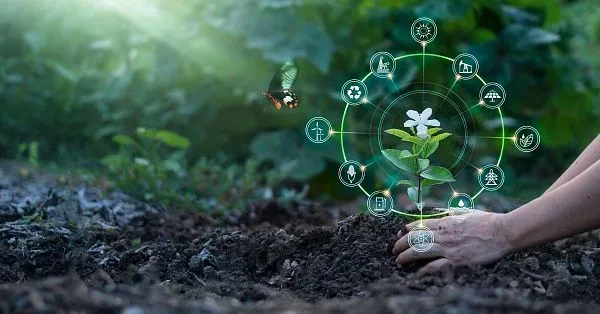
The Fujairah Environment Authority, in collaboration with the emirate’s research centre, has unveiled a new digital platform – the Pollen Atlas. This was reported by Emirates News Agency (WAM), a partner of TV BRICS.
The new system has been created as a unified digital database for scientists, government bodies, and healthcare professionals. It enables the tracking of pollen dispersal in the air, the analysis of its impact on the environment and, in future, the forecasting of periods of increased risk of allergies and respiratory diseases.
The platform operates by collecting air samples using specialised devices – pollen traps – which are installed in various areas across the UAE. The equipment is solar-powered, ensuring the collection of accurate and reliable samples in both remote and urban areas. It has been designed with local conditions in mind and is capable of operating in high temperatures and humidity, as well as in the presence of dust and particulate matter in the air. The samples collected undergo laboratory analysis, after which the data are entered into the platform’s pollen particle library.
One of the system’s key features is its use of artificial intelligence. Specialised algorithms are trained using images of pollen verified by experts and can automatically identify different types of particles in the air. This speeds up data processing and helps to obtain more accurate information about the state of the environment.
The platform also utilises geographic information systems, which link pollen data to specific areas. Using digital maps, specialists can see where plants producing certain types of pollen are located, how its concentration changes across different seasons and how climatic conditions, wind and air quality affect the spread of pollen.
According to the developers, the new atlas will enable a shift from simply monitoring environmental indicators to making predictions. In the future, the system could form the basis for creating seasonal pollen calendars and warnings for people who are sensitive to allergens.
The project’s creators note that the platform is particularly important for the UAE, as most existing global pollen databases were created for other climatic regions and do not fully reflect the specific characteristics of the Arabian Peninsula. The new system utilises local data on plants, climate and environmental processes.
-
![]()
 Ecology06.09.26Oman explores fog harvesting in Dhofar Mountains
 -
![]()


 Ecology06.09.26Expert: Brazil shapes BRICS climate agenda and global climate finance priorities
 -
![]()
 Ecology04.09.26Rare blue Darwin’s frog emerges in Chilean Patagonia
 -
![]()
 Ecology02.09.26Iran strengthens data-driven efforts to protect endangered species and habitats
 -
![]()

 Ecology02.09.26UN General Assembly establishes International Day of Planet Greening at Kazakhstan’s initiative
 -
![]()
 Ecology26.08.26Indonesia expands wildlife conservation cooperation with Indian ecological project







-
![Ashok Mondal]()
 Ashok MondalNID Director"Signing this Memorandum of Understanding between the National Institute of Design (NID) and TV BRICS marks a pivotal milestone in advancing design diplomacy across the BRICS media space. This moment is especially significant as India hosts the 18th BRICS Summit, following India’s assumption of the BRICS chairship under the visionary leadership of Prime Minister Shri Narendra Modi. The partnership directly embodies his call to elevate Indian design standards through 'Design in India, Design for the World'. Through the global reach and broadcast capabilities of TV BRICS, we are excited to showcase the extraordinary visual storytelling, films, and design research of NID’s Film and Video Communication students to an international audience, while also welcoming and screening film works from BRICS network countries at NID Ahmedabad. This reciprocal exchange strengthens our shared commitment to educational, cultural, and artistic collaboration, fostering sustainable connections among global creative communities. NID Ahmedabad looks forward to leveraging this partnership to deepen cross-cultural dialogue, build international expert networks, and unlock transformative opportunities for filmmakers, researchers, and faculty across member nations"
 -
![Vladimir Putin]() Vladimir PutinPresident of Russia"We are developing mutual trade, which is growing; it increased by over 12 per cent last year. We have a joint commission working in this sphere. Our focus is on agriculture, shipbuilding, information technology and energy, including nuclear power. We have signed a free trade agreement between the Eurasian Economic Union and Indonesia. Jakarta is our reliable and old friend within ASEAN. We are working together at all international platforms, including the UN"
Vladimir PutinPresident of Russia"We are developing mutual trade, which is growing; it increased by over 12 per cent last year. We have a joint commission working in this sphere. Our focus is on agriculture, shipbuilding, information technology and energy, including nuclear power. We have signed a free trade agreement between the Eurasian Economic Union and Indonesia. Jakarta is our reliable and old friend within ASEAN. We are working together at all international platforms, including the UN" -
![Vladimir Putin]() Vladimir PutinPresident of Russia"More and more Iranian students are choosing Russian education. We are very pleased about this. A great many future doctors are studying in Russia. In the 2025–2026 academic year, the number of Iranian students in Russia approached 10,000, with 802 of them studying at the expense of the Russian state budget"
Vladimir PutinPresident of Russia"More and more Iranian students are choosing Russian education. We are very pleased about this. A great many future doctors are studying in Russia. In the 2025–2026 academic year, the number of Iranian students in Russia approached 10,000, with 802 of them studying at the expense of the Russian state budget" -
![Xi Jinping]() Xi JinpingPresident of the People’s Republic of China"The foundation of our bilateral relations will only grow stronger, and we will confidently move forward to a better future. […] The striving of nations on our planet for peace, development, cooperation and mutual benefit remains unchanged. The vital mission of the Shanghai Cooperation Organisation is to maintain stability and promote the development of our region"
Xi JinpingPresident of the People’s Republic of China"The foundation of our bilateral relations will only grow stronger, and we will confidently move forward to a better future. […] The striving of nations on our planet for peace, development, cooperation and mutual benefit remains unchanged. The vital mission of the Shanghai Cooperation Organisation is to maintain stability and promote the development of our region" -
![Alisher Salomov]() Alisher SalomovAdviser to the Chairman of the National Committee for Ecology and Climate Change of the Republic of Uzbekistan"First and foremost, I would like to highlight the importance of this Central Asia–Russia initiative, because environmental problems know no borders, and only a shared understanding of these problems and the search for joint solutions can deliver positive results"
Alisher SalomovAdviser to the Chairman of the National Committee for Ecology and Climate Change of the Republic of Uzbekistan"First and foremost, I would like to highlight the importance of this Central Asia–Russia initiative, because environmental problems know no borders, and only a shared understanding of these problems and the search for joint solutions can deliver positive results"