















VR and AR: Chinese technologies in education
What other BRICS countries are actively integrating VR and AR into their education systems, and what challenges do they face? Read more in the TV BRICS article
-
![]()
Photo source: Ana Stankovic / iStock
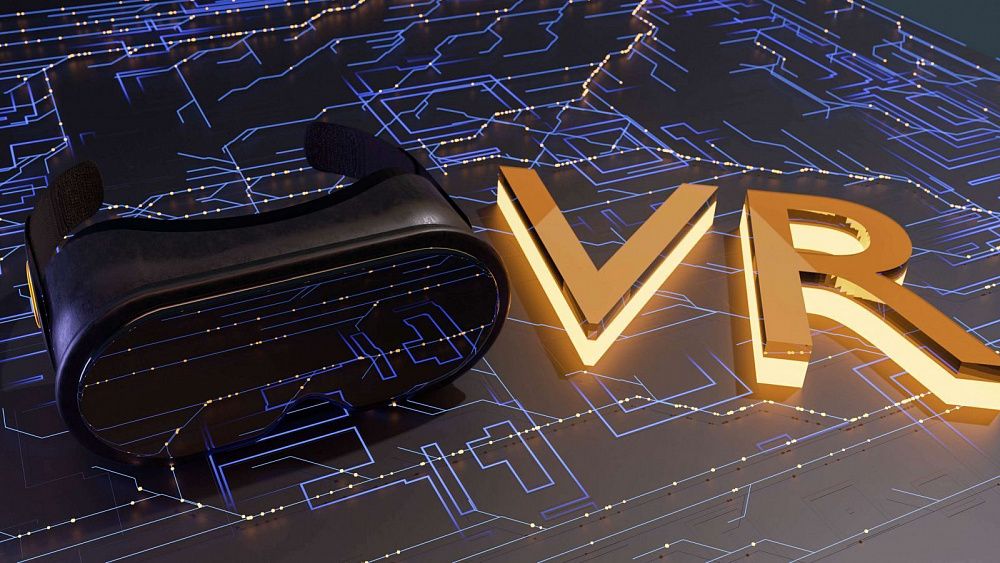
Virtual reality in Chinese schools
One of the reasons behind China’s technological progress in virtual reality is that children are literally growing up in an environment filled with VR and AR tools. At school, young citizens of the People’s Republic of China already use cutting-edge technologies to visualise 3D animations in anatomy textbooks. Because VR (virtual reality) and AR (augmented reality) are capable of merging digital and physical worlds, educational opportunities become almost limitless. Just imagine a world where you can explore the Universe by virtually travelling through it or conduct bold physics and chemistry experiments that would be impossible in a standard school laboratory.
“VR and AR are powerful tools for heuristic, interactive learning, making abstract concepts tangible and creating engaging, interactive environments. Immersive and experiential learning using VR can transport students to virtual laboratories, historical or cultural sites, or microscopic worlds; AR overlays 3D models onto physical textbooks or desks, transforming passive reading into active exploration,” said Professor Mark Howard Levine of Minzu University of China, an expert in sociology and philosophy, in an exclusive interview with TV BRICS.
The aim of such programmes, which are being introduced across all schools in China, is not merely to make lessons more engaging. Virtual reality enhances knowledge retention.
Advantages of VR and AR tools in education
The active implementation of virtual and augmented reality technologies goes beyond China’s once traditional “carrot and stick” education model, where learning is based on external rewards and punishments. Professor Mark Howard Levine, citing data from the Ministry of Education of the People's Republic of China, outlines numerous benefits of integrating VR and AR into school curricula:
-
Development of intrinsic motivation. Students learn out of curiosity rather than for grades or rewards, forming a habit of lifelong learning.
-
Enhancement of critical thinking and creativity. VR and AR encourage questioning and problem-solving, stimulating divergent thinking rather than rote memorisation.
-
Increased engagement. Active participation and exploration improve concentration and long-term memory.
-
Development of social skills. Group work fosters collaboration, teamwork, and peer interaction.
-
Support for personalised learning. VR and AR technologies adapt to individual pace, strengths, and interests, minimising one-size-fits-all approaches.
 Photo: Andrey Shevchuk /
iStock
Photo: Andrey Shevchuk /
iStock
Government support
Virtual reality technologies, now almost ubiquitous in Chinese education, are developing under strong government support. In 2018, the Ministry of Education of the PRC included the development of virtual reality technologies among its priorities for education digitalisation. Universities, primary and secondary schools, as well as vocational institutions, are required to integrate VR/AR technologies and artificial intelligence into the learning process.
A key driver of the VR market in education has been the large-scale reform of public schools. The shift from traditional to heuristic, interactive education has required the widespread adoption of advanced technologies. Launched in 2022, the national smart education platform contains more than a thousand VR and AR-based lesson resources for primary and secondary education.
As for equipment, Chinese schools are supplied by five major companies providing VR hardware, software, and practical VR training. Classrooms are typically equipped with user-friendly headsets and augmented reality tablets. All this enables the creation of virtual laboratories, immersive excursions to the Great Wall of China or the Mogao Caves, visits to ancient capitals or even outer space, and the reconstruction of historical events, landscapes, constellations, and weather systems.
 Photo: coffeekai /
iStock
Photo: coffeekai /
iStock
The foundational document China’s Education Modernisation 2035 emphasises the need for deep rather than superficial integration of information technologies into the educational process. It also outlines a directive to build comprehensive smart education platforms that provide the technical support required to achieve ambitious modernisation goals. In this context, the development of so-called smart campuses becomes a key conceptual and practical focus. These campuses represent a new type of educational space – a technological symbiosis where modern technologies such as artificial intelligence, the Internet of Things, and big data are combined to create a digital ecosystem. Essentially functioning as miniature smart cities, campuses actively integrate VR and AR technologies, transforming both education and institutional management. Chinese universities and schools are investing heavily in creating such metaverse campuses and digital twins of educational institutions to build immersive learning environments. Moreover, China is placing future emphasis on extended reality (XR), which combines VR, AR, and mixed reality (MR).
Implementation of VR and AR in education in other BRICS countries
Undoubtedly, China is one of the global leaders in integrating augmented and virtual reality technologies into education.
However, VR and AR are also being actively introduced in other BRICS countries. In India, for instance, the AR/VR market was valued at US$4.84 billion in 2023. It is expected to grow at a high annual rate of around 38.3 per cent until 2032, largely driven by the adoption of these technologies in education. VR and AR are already widely used in medical training, engineering simulations, and agricultural education to address resource shortages.
Brazil supports initiatives promoting the integration of VR into school, higher, and vocational education. Particular emphasis is placed on STEM (science, technology, engineering, and mathematics), as well as healthcare and skills development. Public-private partnerships finance virtual laboratories and immersive programmes.
According to experts, Russia is primarily implementing VR and AR technologies in STEM education, with additional focus on virtual laboratories and historical and cultural learning.
 Photo: PeopleImages /
iStock
Photo: PeopleImages /
iStock
In South Africa, experts note that VR and AR adoption is gaining momentum in higher education and distance learning. The government is also focusing on overcoming infrastructure challenges to ensure access to quality education in rural areas.
“More than 200 schools in South Africa have adopted AR/VR. Government funding has amounted to approximately 1.5 billion South African rand (around US$91 million), including digital infrastructure and teacher training. AR/VR is widely used in science and mathematics classes to improve learning outcomes,” said Professor Mark Howard Levine in an interview with TV BRICS.
Prospects for VR and AR in education
Experts believe that the implementation of VR and AR technologies in schools, colleges, and universities across BRICS could help standardise the quality of education within the group. However, advanced technologies also carry potential risks.
“There are risks of increasing inequality due to uneven access, excessive commercialisation of educational technologies, and dependence on proprietary platforms (where intellectual property belongs to specific developers and is not freely accessible). But the greatest risk lies in implementing technologies without considering pedagogical aspects,” said Alexander Titov, Deputy Secretary General of the International Association of Digital Economies.
Therefore, specialists emphasise that the active integration of AR/VR in education should be overseen by governments. Success will depend on aligning technologies with national education goals and ensuring equal access to new educational products, even in the most remote areas. In this case, the adoption of AR and VR in education could become a powerful driver of digital economic growth in BRICS countries.
The article was prepared by Svetlana Khristoforova.
-
![]()

 Technology21.09.26Report: Cairo makes list of world’s top 100 innovation hubs and tops rankings in Arab world and Africa
 -
![]()
 Technology21.09.26India’s semiconductor programme supports 200 chip design companies and trains 70,000 engineers
 -
![]()
 Technology21.09.26Vietnam becomes Southeast Asia’s largest electric-car market as EV share reaches nearly 40%
 -
![]()
 Technology21.09.26South African graduate develops AI system to translate sign language into speech
 -
![]()
 Technology19.09.26Chile to develop system for forecasting extreme weather events
 -
![]()

 Technology19.09.26Kazakhstan and Uzbekistan to develop cross-border QR payments

















-
![Ashok Mondal]()
 Ashok MondalNID Director"Signing this Memorandum of Understanding between the National Institute of Design (NID) and TV BRICS marks a pivotal milestone in advancing design diplomacy across the BRICS media space. This moment is especially significant as India hosts the 18th BRICS Summit, following India’s assumption of the BRICS chairship under the visionary leadership of Prime Minister Shri Narendra Modi. The partnership directly embodies his call to elevate Indian design standards through 'Design in India, Design for the World'. Through the global reach and broadcast capabilities of TV BRICS, we are excited to showcase the extraordinary visual storytelling, films, and design research of NID’s Film and Video Communication students to an international audience, while also welcoming and screening film works from BRICS network countries at NID Ahmedabad. This reciprocal exchange strengthens our shared commitment to educational, cultural, and artistic collaboration, fostering sustainable connections among global creative communities. NID Ahmedabad looks forward to leveraging this partnership to deepen cross-cultural dialogue, build international expert networks, and unlock transformative opportunities for filmmakers, researchers, and faculty across member nations"
 -
![Vladimir Putin]() Vladimir PutinPresident of Russia"We are developing mutual trade, which is growing; it increased by over 12 per cent last year. We have a joint commission working in this sphere. Our focus is on agriculture, shipbuilding, information technology and energy, including nuclear power. We have signed a free trade agreement between the Eurasian Economic Union and Indonesia. Jakarta is our reliable and old friend within ASEAN. We are working together at all international platforms, including the UN"
Vladimir PutinPresident of Russia"We are developing mutual trade, which is growing; it increased by over 12 per cent last year. We have a joint commission working in this sphere. Our focus is on agriculture, shipbuilding, information technology and energy, including nuclear power. We have signed a free trade agreement between the Eurasian Economic Union and Indonesia. Jakarta is our reliable and old friend within ASEAN. We are working together at all international platforms, including the UN" -
![Joao Paulo Capobianco]() Joao Paulo CapobiancoBrazilian Minister of the Environment and Climate Change"The BRICS countries have a very high level of responsibility because they share an important part of the world's biodiversity, landscapes, populations, food production and water resources. So, we have an opportunity to lead by example. We have our development bank, which can demonstrate and develop new ways of financing programmes. We can reduce the risks for private capital to invest in restoration and efforts to combat desertification"
Joao Paulo CapobiancoBrazilian Minister of the Environment and Climate Change"The BRICS countries have a very high level of responsibility because they share an important part of the world's biodiversity, landscapes, populations, food production and water resources. So, we have an opportunity to lead by example. We have our development bank, which can demonstrate and develop new ways of financing programmes. We can reduce the risks for private capital to invest in restoration and efforts to combat desertification" -
![Dilma Rousseff]() Dilma RousseffPresident of the New Development Bank"India’s BRICS Presidency this year gives special significance to our discussion. NDB stands ready to be a trusted partner in turning commitments on sustainability, clean energy, smart and resilient infrastructure into concrete results on the ground. […] For NDB, mobilising private capital is a strategic imperative. Created by the BRICS founding members, NDB is a bank of the Global South, for the Global South, mandated to mobilise resources for infrastructure and sustainable development"
Dilma RousseffPresident of the New Development Bank"India’s BRICS Presidency this year gives special significance to our discussion. NDB stands ready to be a trusted partner in turning commitments on sustainability, clean energy, smart and resilient infrastructure into concrete results on the ground. […] For NDB, mobilising private capital is a strategic imperative. Created by the BRICS founding members, NDB is a bank of the Global South, for the Global South, mandated to mobilise resources for infrastructure and sustainable development" -
![Sihasak Phuangketkeow]() Sihasak PhuangketkeowDeputy Prime Minister and Minister of Foreign Affairs of Thailand"BRICS can play a very important role in maintaining the free flow of trade and investment. The group can also be a vehicle for all of us to engage and to look at economic opportunities"
Sihasak PhuangketkeowDeputy Prime Minister and Minister of Foreign Affairs of Thailand"BRICS can play a very important role in maintaining the free flow of trade and investment. The group can also be a vehicle for all of us to engage and to look at economic opportunities"