















Efforts aim to improve safety in the use of technology
-
![]()
Photo source: gorodenkoff / iStock

Beijing is advancing the integration of artificial intelligence (AI) in schools, covering 87.7 per cent of primary and secondary educational institutions in the city. This initiative is part of a broader strategy, launched in 2025, with the aim of improving the quality of learning, optimising the sector and offering more personalised support to students, reports China Daily, a partner of TV BRICS.
As a part of this strategy, an intelligent platform and a digital marketplace for AI applications for education were created. In addition, 50 model schools and 32 higher education institutions with the best AI practices were established.
Beijing has also launched innovative projects in the field of AI, with 25 of them being recognised by the Ministry of Education as national models.
"These initiatives have produced practice achievements that are internationally competitive and domestically leading," stated Zhang Yaotian, deputy director of the city’s Municipal Education Commission.
Schools are actively using AI tools in classrooms. One of the main goals of this implementation is to help teachers monitor student progress and improve interaction between them.
Local authorities emphasise that they will focus their efforts on refining security measures, placing greater emphasis on creating an effective model of synergy between humans and machines.
Other BRICS countries are also adopting AI in a meaningful way in their education systems, with the aim of improving the quality of teaching and expanding opportunities for students.
The state of Piaui, in Brazil, has created the Piaui Artificial Intelligence project, which seeks to implement AI as a subject in public schools. The project was selected for the 2025 edition of the UNESCO-Ki.ng Hamad Bin Isa Al-Khalifa Prize, from among 86 initiatives from more than 50 countries. The organisation recognised the project's contribution to the sustainable integration of AI into society, highlighting its role in promoting equality and inclusion. The proposal includes a three-year programme that combines digital and face-to-face classes, as reported by Agência Brasil.
Egypt is also integrating artificial intelligence into its education system, with an emphasis on adding programming and AI courses to school curricula, according to Daily News Egypt, a partner of TV BRICS. President Abdel Fattah Al-Sisi stressed the importance of providing students with modern skills in line with international standards.
Meanwhile, Ethiopia will open its first university specialising in AI next year, which will become a pillar of the country's educational and economic reforms. According to ENA, a partner of TV BRICS, the institution will train specialists in AI, data science and digital technologies, with a focus on youth and the development of skills for the professions of the future.
-
![]()


 Education27.08.26Egypt expands education outreach in Nigeria to attract international students
 -
![]()
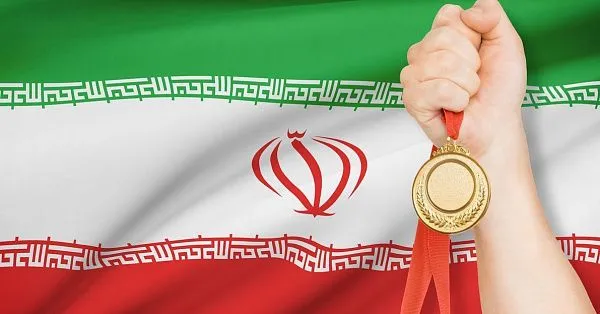
 Education18.08.26Iranian students win four awards at 2026 International Olympiad in Informatics
 -
![]()
 Education12.08.26Indonesia develops approach to education focused on pupils’ experiences and needs
 -
![]()
 Education11.08.26BRICS countries confirm their commitment to humanistic approach to education
 -
![]()
 Education28.07.26Energy specialists from Latin America to study Russia’s experience in energy sector development
 -
![]() Education23.07.26Nigeria and UNESCO launch digital teacher training programme to strengthen education and mobile learning
Education23.07.26Nigeria and UNESCO launch digital teacher training programme to strengthen education and mobile learning
























-
![Alisher Salomov]()
 Alisher SalomovAdviser to the Chairman of the National Committee for Ecology and Climate Change of the Republic of Uzbekistan"First and foremost, I would like to highlight the importance of this Central Asia–Russia initiative, because environmental problems know no borders, and only a shared understanding of these problems and the search for joint solutions can deliver positive results"
 -
![Joao Paulo Capobianco]() Joao Paulo CapobiancoBrazilian Minister of the Environment and Climate Change"The BRICS countries have a very high level of responsibility because they share an important part of the world's biodiversity, landscapes, populations, food production and water resources. So, we have an opportunity to lead by example. We have our development bank, which can demonstrate and develop new ways of financing programmes. We can reduce the risks for private capital to invest in restoration and efforts to combat desertification"
Joao Paulo CapobiancoBrazilian Minister of the Environment and Climate Change"The BRICS countries have a very high level of responsibility because they share an important part of the world's biodiversity, landscapes, populations, food production and water resources. So, we have an opportunity to lead by example. We have our development bank, which can demonstrate and develop new ways of financing programmes. We can reduce the risks for private capital to invest in restoration and efforts to combat desertification" -
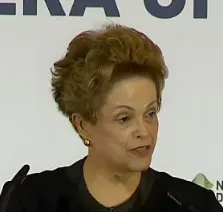
![Dilma Rousseff]() Dilma RousseffPresident of the New Development Bank"India’s BRICS Presidency this year gives special significance to our discussion. NDB stands ready to be a trusted partner in turning commitments on sustainability, clean energy, smart and resilient infrastructure into concrete results on the ground. […] For NDB, mobilising private capital is a strategic imperative. Created by the BRICS founding members, NDB is a bank of the Global South, for the Global South, mandated to mobilise resources for infrastructure and sustainable development"
Dilma RousseffPresident of the New Development Bank"India’s BRICS Presidency this year gives special significance to our discussion. NDB stands ready to be a trusted partner in turning commitments on sustainability, clean energy, smart and resilient infrastructure into concrete results on the ground. […] For NDB, mobilising private capital is a strategic imperative. Created by the BRICS founding members, NDB is a bank of the Global South, for the Global South, mandated to mobilise resources for infrastructure and sustainable development" -
![Sihasak Phuangketkeow]() Sihasak PhuangketkeowDeputy Prime Minister and Minister of Foreign Affairs of Thailand"BRICS can play a very important role in maintaining the free flow of trade and investment. The group can also be a vehicle for all of us to engage and to look at economic opportunities"
Sihasak PhuangketkeowDeputy Prime Minister and Minister of Foreign Affairs of Thailand"BRICS can play a very important role in maintaining the free flow of trade and investment. The group can also be a vehicle for all of us to engage and to look at economic opportunities"