















Authorities focus on deep processing and value-added products to boost the agro-industrial sector
-
![]()
Photo source: Yerbolat Shadrakhov / iStock

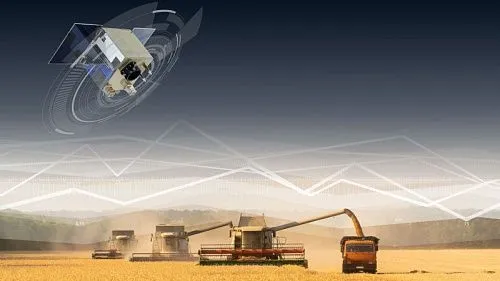
Kazakhstan is strengthening the development of agricultural processing as part of its strategy to expand the agro-industrial sector and increase exports of value-added products. The progress was announced by Vice Minister of Agriculture Erbol Taszhurekov during a press conference.
According to Kazinform, a partner of TV BRICS, the country’s strategic priority is not only to increase agricultural production but also to ensure that raw materials are processed domestically, including through deep processing technologies that generate higher value-added goods.
Taszhurekov emphasised that the expansion of processing creates new production chains, supports job creation in rural regions, increases export potential and contributes to the long-term sustainability of the agricultural economy.
Kazakhstan’s agricultural sector showed steady growth in 2025. Gross agricultural output increased by 5.9 per cent and reached approximately US$19.9 billion. Growth was recorded in both crop production and livestock farming.
Farmers harvested 25.9 million tonnes of grain, including 19.3 million tonnes of wheat. The country also recorded a record harvest of oilseed crops totalling 4.8 million tonnes, while the production of legumes exceeded 1 million tonnes.
Officials attribute the results in part to the diversification of crop areas. Wheat acreage has been reduced by nearly 900,000 hectares, while the area under legumes expanded by 275,000 hectares and oilseed crops increased by more than 1 million hectares. This restructuring is expected to strengthen the sustainability of the agricultural sector and provide a broader raw material base for processing enterprises.
The expansion of agricultural output has been accompanied by growth in the food processing industry. In 2025, the volume of food production reached around US$7.9 billion, which is 8.1 per cent higher than in 2024. Production growth was recorded across most categories.
Kazakhstan currently operates 210 meat processing enterprises with a combined capacity of around 450,000 tonnes, as well as 180 dairy processing plants with a total capacity of about 2.7 million tonnes.
Deep grain processing is considered one of the most promising directions for further development of the industry. By 2028, Kazakhstan plans to launch new production facilities with a combined capacity of 5.8 million tonnes per year. Total investment in these projects is estimated at approximately US$3.9 billion, while more than 3,300 new jobs are expected to be created.
The new facilities will expand the range of products manufactured domestically, including amino acids, syrups, vitamins and other high-technology food ingredients.
Further investment projects are also planned across several segments of the sector. In the oilseed processing industry, 13 projects worth about US$191 million are expected to be implemented. Another six projects in deep grain processing, valued at around US$3.9 billion, are scheduled for development.
-
![]()
 Economy29.08.26Chile’s avocado production set to reach 17-year high
 -
![]()

 Economy28.08.26Brazil and India strengthen trade and investment ties
 -
![]()
 Economy28.08.26Egypt plans to double oil and gas condensate production as US$4 billion refinery projects advance
 -
![]()
 Economy27.08.26South Africa accelerates infrastructure projects to attract investment and drive economic growth
 -
![]()

 Economy27.08.26Malaysia sees Vietnam as potential hub in global Halal supply chain
 -
![]()

 Economy26.08.26Dubai leads global cities in attracting creative economy FDI projects


























-
![Alisher Salomov]()
 Alisher SalomovAdviser to the Chairman of the National Committee for Ecology and Climate Change of the Republic of Uzbekistan"First and foremost, I would like to highlight the importance of this Central Asia–Russia initiative, because environmental problems know no borders, and only a shared understanding of these problems and the search for joint solutions can deliver positive results"
 -
![Joao Paulo Capobianco]() Joao Paulo CapobiancoBrazilian Minister of the Environment and Climate Change"The BRICS countries have a very high level of responsibility because they share an important part of the world's biodiversity, landscapes, populations, food production and water resources. So, we have an opportunity to lead by example. We have our development bank, which can demonstrate and develop new ways of financing programmes. We can reduce the risks for private capital to invest in restoration and efforts to combat desertification"
Joao Paulo CapobiancoBrazilian Minister of the Environment and Climate Change"The BRICS countries have a very high level of responsibility because they share an important part of the world's biodiversity, landscapes, populations, food production and water resources. So, we have an opportunity to lead by example. We have our development bank, which can demonstrate and develop new ways of financing programmes. We can reduce the risks for private capital to invest in restoration and efforts to combat desertification" -
![Dilma Rousseff]() Dilma RousseffPresident of the New Development Bank"India’s BRICS Presidency this year gives special significance to our discussion. NDB stands ready to be a trusted partner in turning commitments on sustainability, clean energy, smart and resilient infrastructure into concrete results on the ground. […] For NDB, mobilising private capital is a strategic imperative. Created by the BRICS founding members, NDB is a bank of the Global South, for the Global South, mandated to mobilise resources for infrastructure and sustainable development"
Dilma RousseffPresident of the New Development Bank"India’s BRICS Presidency this year gives special significance to our discussion. NDB stands ready to be a trusted partner in turning commitments on sustainability, clean energy, smart and resilient infrastructure into concrete results on the ground. […] For NDB, mobilising private capital is a strategic imperative. Created by the BRICS founding members, NDB is a bank of the Global South, for the Global South, mandated to mobilise resources for infrastructure and sustainable development" -
![Sihasak Phuangketkeow]() Sihasak PhuangketkeowDeputy Prime Minister and Minister of Foreign Affairs of Thailand"BRICS can play a very important role in maintaining the free flow of trade and investment. The group can also be a vehicle for all of us to engage and to look at economic opportunities"
Sihasak PhuangketkeowDeputy Prime Minister and Minister of Foreign Affairs of Thailand"BRICS can play a very important role in maintaining the free flow of trade and investment. The group can also be a vehicle for all of us to engage and to look at economic opportunities"