















National currencies of new BRICS member countries
Here are some interesting facts about the money of these countries

The unique culture of each country is reflected in the history of its national currency. On 1 January 2024, five new countries joined BRICS: Saudi Arabia, Iran, Ethiopia, United Arab Emirates and Egypt. What monetary units do the inhabitants of these countries use in their daily lives?
The currency of Saudi Arabia
Before the founding of the Kingdom in 1932, various foreign currencies, such as Ottoman and Spanish, were used in what is now Saudi Arabia. These coins were called riyals (al-rial) by the Arabs.
Among riyals the most common was the Austrian thaler of Maria Theresa, which was issued in 1741-1780.

Now one riyal (bank code - SAR) is equal to 100 halal. In 1952, the first 10 riyal banknotes were issued as receipts for pilgrims. Nowadays, coins are rarely used in the country – paper money is used everywhere.
Currency of Egypt
The bank code of the official currency of Egypt – the Egyptian pound – is EGP. In the beginning of XIX century the Ottoman piastre, divided into 40 paras, was used on the territory of the country. In 1834 the local authorities issued a decree, according to which Egypt switched to a bimetallic standard based on Maria Theresa's thaler. In 1836, the Egyptian pound was first minted and put into circulation.
The Monetary Reform Law, issued in 1885, established the gold standard as the basis of the Egyptian monetary system, and a single currency, the Egyptian gold pound, appeared in the country.

In 1979, the Central Bank of Egypt issued a banknote with a new design, which is still in use today.
Ethiopia's currency
In the 18th and 19th centuries, the currency in Ethiopia was Maria Theresa's thalers and blocks of salt called "amole tche". Ethiopian minted coins were called birrs. On 23 July 1945, the Ethiopian dollar was put into circulation. On 21 September 1976, Ethiopian dollars were replaced by Ethiopian Birr.

The Ethiopian Birr banknotes depict portraits of the country's inhabitants (children, women and men), scenes from the daily life of the people, natural objects and architectural monuments. On one side of all coins (cents) there is a head of a roaring lion with a waving mane.
UAE currency
Being the currency of a young country (1971), its history goes back centuries. The medieval dirham was the silver coin of the Arab Caliphate. The dirham is also a measure of weight in the Arab world.

The dirham monetary unit was introduced in 1973. It replaced the riyal of Qatar and Dubai at a ratio of 1:1. The riyal has been used in all UAE emirates since 1966 except Abu Dhabi, where the dirham replaced the Bahraini dinar at a rate of 1 dirham = 0.1 dinar.
Iranian rial
The rial was introduced as the monetary unit of Iran in 1932 to replace the previous national currency, the Persian toman, which had been in use in the country since the 17th century. To this day, prices in the country are sometimes indicated in tomans.

Coins are issued in denominations from 5 to 500 rials. Banknotes are in denominations from 100 to 20,000 rials. They depict cultural objects, such as the Mosque of Yazd, as well as historical figures, such as the portrait of Ruhollah Musavi Khomeini.
Prospects for BRICS single currency
The countries of the association are working on the introduction of a new international currency. The new five states of the group have also joined this initiative. The topic is also on the agenda of Russia's 2024 presidency. Brazil's G20 Sherpa Mauricio Lirio said that the BRICS countries continue to work on the introduction of a single currency and common payment systems within the association.
Iranian Ambassador to Moscow Kazem Jalali also reported this year that the Russian and Iranian sides are engaging with each other on the issue.
"The creation of a new single currency within the group is something Russia and Iran are working on"
Kazem Jalali Iranian Ambassador to Moscow
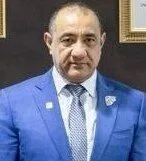
"The single currency will ensure that the grouping will enable fair, equivalent trade exchange. The BRICS monetary unit should be politically neutral, reliable as a means of reservation, have stable purchasing power and provide any subject of the global economy (from the state to the individual) with independent access to a personal account. Besides, one of its functions is to exclude non-equivalent exchange in international trade"
Anatoly Otyrba Global policy expert
Photo: TV BRICS infographics
-
![]()

 Economy04.09.26BRICS can provide additional platform for investment and economic growth
 -
![]()
 Economy04.09.26Brazil’s beauty market set to reach US$27.3 billion in 2026 amid technology growth
 -
![]()
 Economy04.09.26Expert: knowledge sharing can strengthen impact of New Development Bank projects in BRICS countries
 -
![]()

 Economy03.09.26Vladimir Putin highlights role of Asia-Pacific region in global economy
 -
![]() Economy03.09.26Indonesia's president proposes doubling trade turnover with Russia
Economy03.09.26Indonesia's president proposes doubling trade turnover with Russia -
![]() Economy03.09.26Development of India's pharmaceutical industry and medicine exports
Economy03.09.26Development of India's pharmaceutical industry and medicine exports














-
![Vladimir Putin]()
 Vladimir PutinPresident of Russia"We are developing mutual trade, which is growing; it increased by over 12 per cent last year. We have a joint commission working in this sphere. Our focus is on agriculture, shipbuilding, information technology and energy, including nuclear power. We have signed a free trade agreement between the Eurasian Economic Union and Indonesia. Jakarta is our reliable and old friend within ASEAN. We are working together at all international platforms, including the UN"
 -
![Vladimir Putin]() Vladimir PutinPresident of Russia"More and more Iranian students are choosing Russian education. We are very pleased about this. A great many future doctors are studying in Russia. In the 2025–2026 academic year, the number of Iranian students in Russia approached 10,000, with 802 of them studying at the expense of the Russian state budget"
Vladimir PutinPresident of Russia"More and more Iranian students are choosing Russian education. We are very pleased about this. A great many future doctors are studying in Russia. In the 2025–2026 academic year, the number of Iranian students in Russia approached 10,000, with 802 of them studying at the expense of the Russian state budget" -
![Xi Jinping]() Xi JinpingPresident of the People’s Republic of China"The foundation of our bilateral relations will only grow stronger, and we will confidently move forward to a better future. […] The striving of nations on our planet for peace, development, cooperation and mutual benefit remains unchanged. The vital mission of the Shanghai Cooperation Organisation is to maintain stability and promote the development of our region"
Xi JinpingPresident of the People’s Republic of China"The foundation of our bilateral relations will only grow stronger, and we will confidently move forward to a better future. […] The striving of nations on our planet for peace, development, cooperation and mutual benefit remains unchanged. The vital mission of the Shanghai Cooperation Organisation is to maintain stability and promote the development of our region" -
![Alisher Salomov]() Alisher SalomovAdviser to the Chairman of the National Committee for Ecology and Climate Change of the Republic of Uzbekistan"First and foremost, I would like to highlight the importance of this Central Asia–Russia initiative, because environmental problems know no borders, and only a shared understanding of these problems and the search for joint solutions can deliver positive results"
Alisher SalomovAdviser to the Chairman of the National Committee for Ecology and Climate Change of the Republic of Uzbekistan"First and foremost, I would like to highlight the importance of this Central Asia–Russia initiative, because environmental problems know no borders, and only a shared understanding of these problems and the search for joint solutions can deliver positive results" -
![Joao Paulo Capobianco]() Joao Paulo CapobiancoBrazilian Minister of the Environment and Climate Change"The BRICS countries have a very high level of responsibility because they share an important part of the world's biodiversity, landscapes, populations, food production and water resources. So, we have an opportunity to lead by example. We have our development bank, which can demonstrate and develop new ways of financing programmes. We can reduce the risks for private capital to invest in restoration and efforts to combat desertification"
Joao Paulo CapobiancoBrazilian Minister of the Environment and Climate Change"The BRICS countries have a very high level of responsibility because they share an important part of the world's biodiversity, landscapes, populations, food production and water resources. So, we have an opportunity to lead by example. We have our development bank, which can demonstrate and develop new ways of financing programmes. We can reduce the risks for private capital to invest in restoration and efforts to combat desertification"