















Saudi Arabia's conservationists save the Arabian oryx from oblivion
The desert antelope is of great cultural importance, as evidenced by the numerous ancient rock carvings found throughout the region

The Arabian oryx now represents environmental rejuvenation in addition to Saudi Arabia's and the Middle East's cultural legacy.
Due to overhunting, poisoning, drought, and habitat disturbance brought on by the expansion of agriculture and human settlements, which denied them meadows, their numbers have drastically decreased in recent decades. This is reported by Arab News.
Because of Saudi environmentalists' efforts to restore biodiversity and breeding programmes, this species has been saved.
Its population has drastically decreased in recent decades as a result of habitat degradation, overhunting, and drought.
To save the Arabian oryx from extinction, international organisations have launched a programme to capture wild individuals and create breeding centers. Since their numbers have recovered, the groups have been reintroduced to their original habitats.
By building specialist breeding facilities and veterinary clinics for the Arabian oryx, Saudi Arabia has made a significant contribution. To enable them to flourish in the wild, many of them have been moved to protected regions that most closely resemble their original environment.
By early 2024, the Arabian oryx population had increased by 60 times thanks to the breeding programme the reserve had instituted in 2021.
Photo: iStock
-
![]()
 Society27.09.26BRICS News Digest for the previous week
 -
![]()
 Society24.09.26Brazil creates national biobank network
 -
![]()
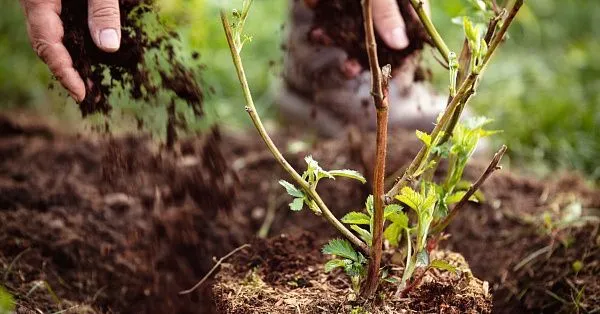
 Society22.09.26Kazakhstani citizens plant more than 38,000 trees and shrubs during environmental campaign
 -
![]()
 Society21.09.26Iran ranks among global leaders in vaccination and infertility treatment
 -
![]()
 Society21.09.26Admasu Damtew, Ethiopia’s Media Manager: "Future of journalism lies in partnerships that transcend national borders"
 -
![]() Society20.09.26BRICS News Digest for the previous week
Society20.09.26BRICS News Digest for the previous week
























-
![Evgeny Solntsev]()
 Evgeny SolntsevGovernor of Orenburg Region (Russia)"We see growth year after year. Last year, the figure increased by 11.6 per cent. The total share of our products on the sales market is around 24.7 per cent. BRICS countries account for a quarter of all our products. Good-neighbourly relations with Kazakhstan are very important for us. Then come China and India. We primarily focus on these countries because they are our closest neighbours"
 -
![Elias Monage]() Elias MonageChairman of the South African side of the Russia-South Africa Business Council"If we are then to do a huge project, for example, on rail infrastructure, we can then bring the rest of the continent to participate in the rail development and infrastructure for the continent together with the partners within the BRICS countries. Whether we then bring, for example, Russia rail, we then bring India, we then bring China"
Elias MonageChairman of the South African side of the Russia-South Africa Business Council"If we are then to do a huge project, for example, on rail infrastructure, we can then bring the rest of the continent to participate in the rail development and infrastructure for the continent together with the partners within the BRICS countries. Whether we then bring, for example, Russia rail, we then bring India, we then bring China" -
![Maksim Reshetnikov]() Maksim ReshetnikovRussian Minister of Economic Development"Plan 2030 has created a strong foundation for the qualitative expansion of trade and economic ties. There are all grounds to believe that by the end of the decade, Russia–China trade will reach US$300 billion"
Maksim ReshetnikovRussian Minister of Economic Development"Plan 2030 has created a strong foundation for the qualitative expansion of trade and economic ties. There are all grounds to believe that by the end of the decade, Russia–China trade will reach US$300 billion"